



There’s nothing like the sheer panic that comes with realizing you forgot to lock your front door, especially when you don’t have enough time to go back and secure it. Even the most robust security system becomes ineffective when the door is unlocked. That’s how roughly one third of burglars enter the homes they rob.1
Fortunately, if you have a smart lock, you can lock or unlock your door from anywhere using your smartphone. Of course, smart locks are a fairly complex topic, with factors to consider like digital security, installation requirements, and equipment costs. This guide covers everything you need to know. Let’s get started!
Who Should Get A Smart Lock?
Is a smart lock for you? In a perfect world, the answer would be yes, as anyone can benefit from the convenience of a smart lock, but realistically, it makes sense for some people more than others.
Homeowners
If you’re a homeowner willing to replace your existing deadbolt, a smart lock is definitely worth considering. This is especially true if you have family members, roommates, or visitors who need access to your home when you’re away.
With smart locks, you can create unique access codes for different users and track who comes and goes. That’s far safer than handing out keys or hiding one where it could easily fall into the wrong hands. Smart locks are also excellent for online deliveries, as you can let delivery personnel into a mudroom remotely to prevent porch piracy.
Renters
While renters can certainly benefit from smart locks as well, things get slightly more complicated when a security deposit is involved. For renters, look for retrofit smart locks that attach to your existing deadbolt without requiring full replacement. Then, make sure to check with your landlord before installing it. You might also want to consider installing one of the best security systems for renters while you’re at it.
TIp: To protect your security deposit, renters should ask their landlords before installing smart locks.
Which Doors To Secure
It’s pretty obvious that any door that allows for outside access to your home on the ground level should be secured with a lock, smart or otherwise. But different kinds of doors work with different kinds of locks, and no two are created equal.
- Front door: If you’re securing one door with a smart lock, start with your front door or any ground-level door that leads outside.
- Bedroom door: If you live with roommates and want extra privacy (we’ve all been there), consider adding a smart lock to your bedroom door. However, most bedroom doors lack deadbolts, which limits your options.
- Sliding glass doors: Ground-level sliding glass doors need security too, though they’re trickier to secure than standard doors. Fortunately, a few smart locks are designed specifically for sliding doors, like the Aqara Smart Door Lock U300 or retrofit options that work with various door types.
- Garage doors: Before buying a garage door smart lock, make sure to do your research and ensure it’s compatible. Most locks will specify which garage door models they work with. Alternatively, they may provide a range of door thicknesses that work with a given model.
Smart Lock Pros and Cons
Still unsure if a smart lock fits your smart home? Let’s break down the best and worst features of smart locks.
Pros
- Convenience: There’s nothing more convenient than your front door locking for you when you have arms full of groceries. And being able to give guests temporary passcodes takes the stress out of leaving a physical key under a fake rock.
- Remote access: From out of town visitors to Amazon delivery workers, being able to control your lock remotely makes your home safer and easier to manage.
- No keys needed: Although most smart locks also accept physical keys, they don’t require them, so you never have to worry about losing your keys again.
- Smart platform integrations: With integrations with voice assistants like Alexa and Google Assistant, you can literally open your door using your voice alone; again, useful when your hands are full.
Cons
- May be dependent on power or WiFi: One drawback of electronic smart locks is their dependency on power or WiFi. If either fails, the lock may not work, though most models include battery backup or manual key access.
- Might be hackable: Like any Internet of Things (IoT) device, smart locks can be vulnerable to hacking if digital security features aren’t in place (more on those later). However, most modern locks include encryption and two-factor authentication to minimize risk.
- Expensive: Smart locks typically cost between $150 to $400, which is significantly more expensive than the average deadbolt.
- Difficult installation: Especially if you’re replacing the deadbolt, installing a smart lock can be challenging, even for experienced DIYers. Professional installation costs range up to $250, adding to the already considerable equipment expense.
Smart Lock Buying Guide
Okay, so you’ve decided the pros outweigh the cons and you’re ready to shop for a smart lock until you drop (or at least fall asleep over your laptop). But unlike many other IoT devices, smart locks require a good amount of thought before you buy.
Compatibility
First, let’s talk requirements. Different door types require different smart locks, so it’s important to research compatibility with both your door and your existing smart home ecosystem.
- Lock setup: The first decision is whether to keep or replace your existing deadbolt. Some locks are retrofit, meaning you can keep your deadbolt — an ideal choice for renters with landlord approval. However, most smart locks completely replace your deadbolt, which requires more effort during installation.
- Hub: Some smart locks require hubs to connect the lock to the internet, either through your router or via Z-Wave or Zigbee protocols built into the hub. If you already have a smart home hub like Samsung SmartThings or Hubitat, look for a compatible smart lock, which brings us to our next point…
- Control protocol: The control protocol is the language that lets your smart lock communicate with the internet and your mobile app. Today’s smart locks use several different protocols for connectivity and control.
- Wi-Fi: Since most people already have Wi-Fi installed in their homes, having your smart lock use it will be a simple choice that won’t require a hub. However, if your Internet goes haywire, you may have some issues controlling your smart lock through the app.
- Z-Wave: Z-Wave is a wireless technology that operates on low power, specifically 908.42 MHz in the U.S.2 Its biggest advantage? Z-Wave doesn’t interfere with Wi-Fi, so your smart lock won’t slow down that Netflix show you’ve been binging all week.
- Bluetooth: Bluetooth is a mesh technology that many people already use for devices like Bluetooth trackers, AirPods and smart speakers. It doesn’t require a hub, which is certainly advantageous.
- ZigBee: Finally, ZigBee is another mesh network that IoT devices use. To compare it with Z-Wave, read our head-to-head review on Z-Wave vs. ZigBee.
- Matter: The newest protocol transforming smart home compatibility is Matter,3 which allows devices from different manufacturers to work together seamlessly. That includes Apple HomeKit, Google Home, and Amazon Alexa platforms. Matter-certified locks are widely available, with major brands like Yale, Schlage, Aqara, and Level releasing Matter-compatible models.
- Third Party Integrations: If you already use voice assistants or have IoT devices in your home, you want to make sure your smart lock will fit in as easily as socks in a drawer.
- Security system integration: It’s especially important that your smart lock works with your current security system so that you can have it lock when the system is armed and vice versa. Kwikset and Yale locks, for example, work with the systems from abode, while some ADT systems work with Schlage in addition to Kwikset and Yale. To learn more, read our abode review and our ADT review.
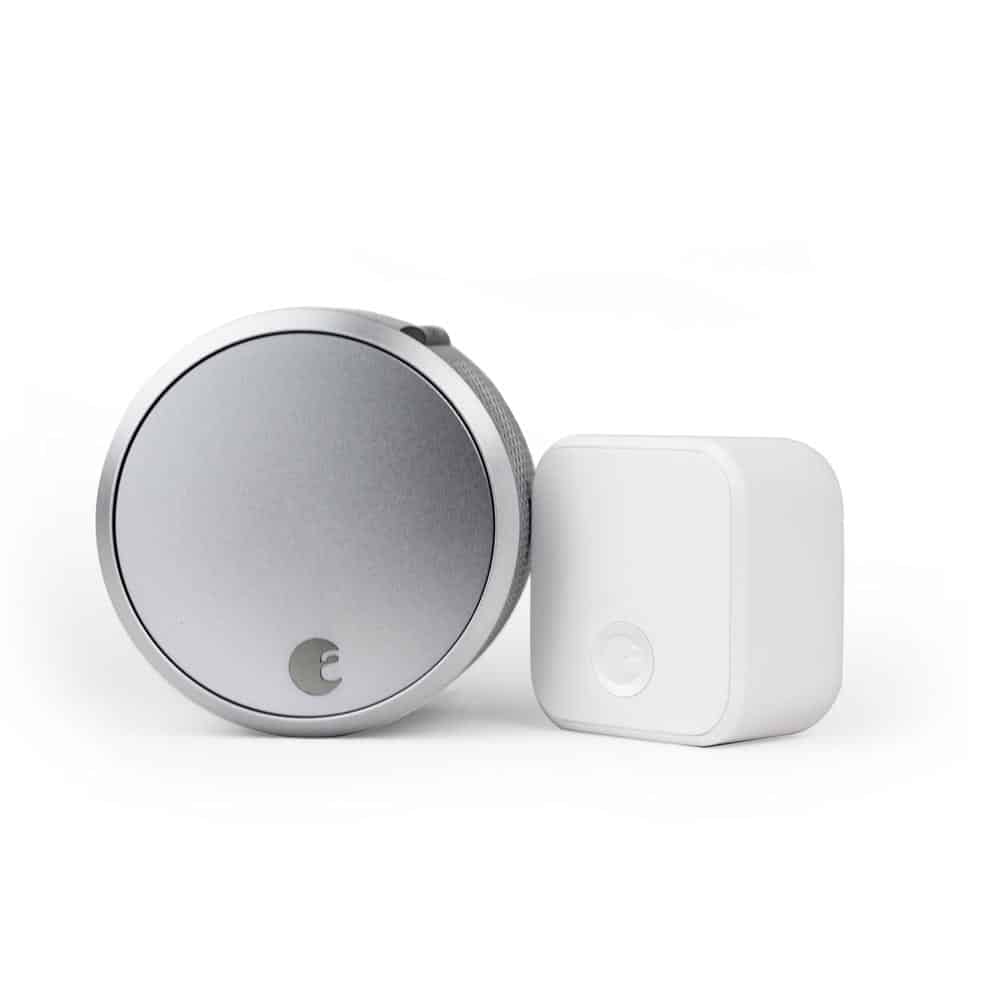
- Voice assistants: You’ll also want to make sure that your smart lock works with either Alexa, Google Assistant, or Siri, depending on the voice assistant you already have set up in your home. This will allow for hands-free commands, which are particularly useful for a smart lock. With the August Wi-Fi Smart Lock, for example, we could ask Alexa to check if our door was locked without getting up. We wish everything in life could be this friendly to couch potatoes like us!
Note: Most smart locks don’t let you unlock them with voice commands for obvious reasons; if they do, you’ll most likely have to say a voice PIN to enter.
Type of Smart Lock
Every year, there are awesome new types of smart locks for us to test out. Here are a few of the most common:
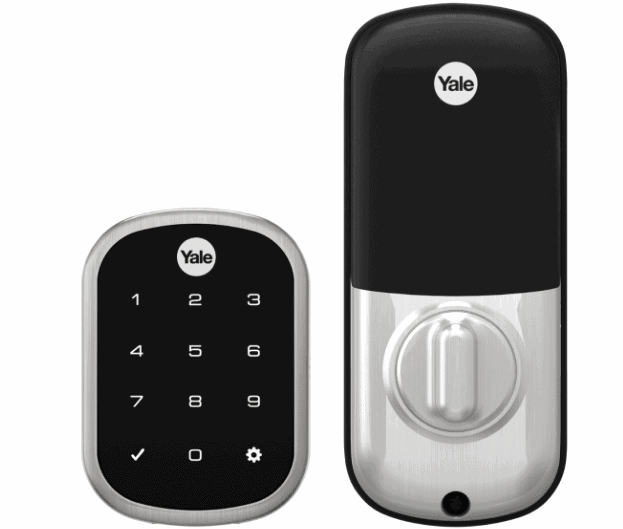
- Deadbolt: Most smart locks, as we’ve said before, will replace your existing deadbolt. Deadbolts can come in different forms; they can either have a keypad with a knob, a keypad with a lever, or a keypad with a handle, depending on your personal preference.
- Lever-style: Locks for with cylindrical levers make for easy entrance as opposed to a regular, spherical door knob.
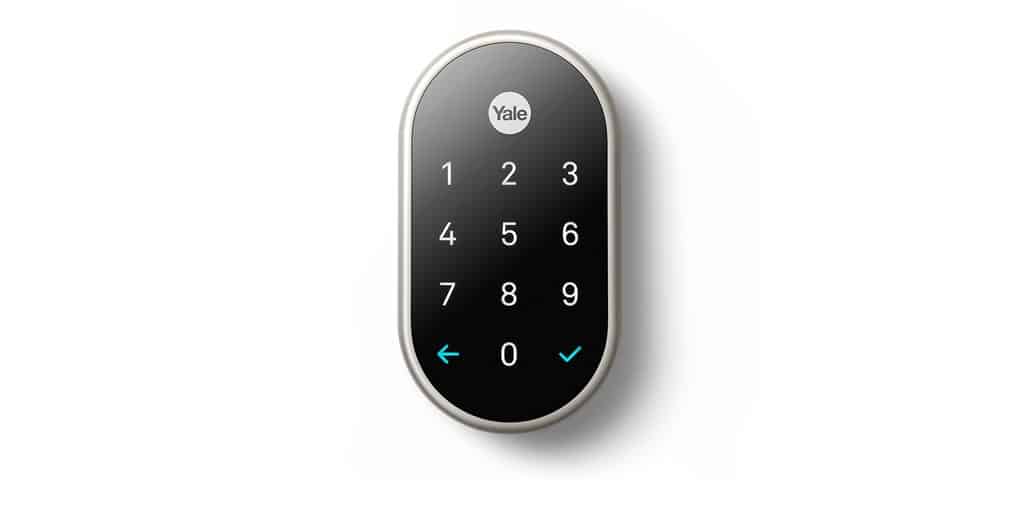
- Keypad and combination: Whether it’s deadbolt or lever-style, a smart lock with a keypad will have you enter a code every time you want to enter your home or give guests access temporarily.
- Fob-enabled: Some people would rather use a key fob or tag with their smart lock. Rather than enter a code, they just need to swipe their fob over the lock; however, this isn’t that much different than using a key, just slightly more convenient.
- Biometric: Smart locks with fingerprint scanners have become increasingly popular, with models like the Eufy Smart Lock C220 offering storage for up to 100 fingerprints. Since everyone has a unique fingerprint, this method is one of the safest around.
Installation
Unless you’re buying it as part of a professionally installed system from a security company like Vivint or ADT, you may have to install your lock yourself. If you’re replacing your deadbolt, this typically takes 30-60 minutes for someone with basic DIY skills, but there are a number of online resources with step-by-step instructions. If that still seems too hard, it might be worth it to hire a third-party installer but again, that’ll cost you up to $250, depending on your location and the complexity of the installation. In general, though, it’s good to have an installation plan in mind before you buy your smart lock.
Features
Now that you’ve determined the basic parameters for your smart lock, the fun can really start, picking out colors, styles, and premium features like geofencing.
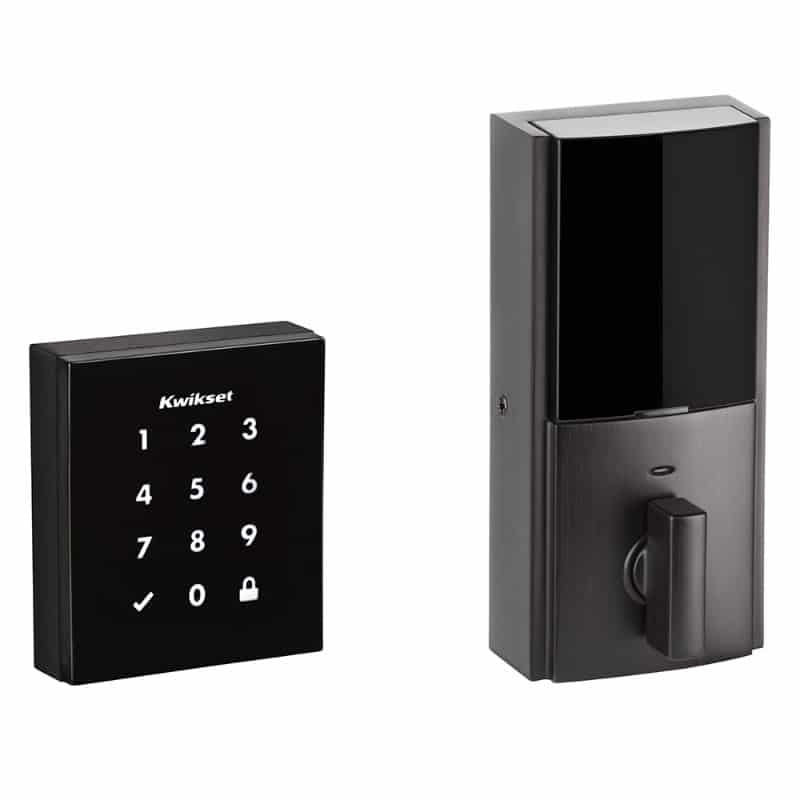
- Color: Smart locks often come in a variety of colors, like matte black, satin nickel, venetian bronze, and polished brass. You’ll probably want one that blends into your front door and isn’t too ostentatious, as you don’t want to call attention to your smart lock. But that doesn’t mean it can’t look pretty!
- Style: Smart locks also come in a variety of styles, from modern to classic and everything in between. Again, we recommend finding something that looks natural with the rest of your home and isn’t too noticeable from the street.
- Temperature range: Unless your smart lock goes on the interior of the deadbolt or your front door is inside, you’ll want a smart lock that can withstand the temperature that your neighborhood reaches throughout the year. Most quality smart locks operate between -22°F to 140°F (-30°C to 60°C), so this shouldn’t be too big of a problem, even if you live in an extreme climate.
- Locking and unlocking mechanism: Do you want to unlock your door with a voice assistant? Keypad? Key fob? Fingerprint? Regular key as backup? App? All of the above? This will determine what kind of lock you get.
- Auto-unlock and lock: Some locks will lock automatically as you exit your house; while this makes your weekday mornings easier, you might want the reassurance that physically locking your home provides.
- Battery life: For wireless smart locks, battery life is a consideration. Look for smart locks that’ll last about six to 12 months on a single set of batteries, with low-battery warnings sent to your phone.
- In-home delivery compatibility: One of the biggest advantages of a smart lock is that they allow for in-home delivery as opposed to leaving your precious packages on the porch. Unfortunately, increased online shopping continues to drive package theft — a problem that affected about 30 million Americans in 2025, according to our package theft survey. As a response, some companies are allowing for in-home delivery. Amazon Key, for example, combines Schlage smart locks with Ring video doorbells so that users can get alerted whenever their packages arrive and let the delivery person into their home, whether that’s through a regular door, a garage, a gate or even a car, if they prefer. To learn more about what you’ll need, check out our review of the Ring video doorbells.
- Power backup: Obviously, we’d feel quite silly unable to access our home because our Internet or power was out; sometimes smart things are pretty dumb. That’s why we recommend using a smart lock with some form of power backup, if you can’t use a physical key. Most smart locks now include a 9V battery terminal for emergency power; just make sure it’s not totally WiFi or home power-dependent.
- Geofencing: Your phone tracks your location all the time, so why not put it to good use? Some locks let us hook up their apps with the GPS from our phones so that they would unlock when we got nearby and lock when we left. This was convenient, but some people may prefer to skip this feature, as it can lead to doors unlocking prematurely, risking your home’s security.
- Access logs: Want to see exactly who came and went to your home like it’s the lobby of a five-star hotel? Many smart lock apps provide users with access logs so they can track the lock’s activity throughout the day. So you’ll know if your kids went straight home to do homework after school, or if they dilly-dallied in the park for an hour.
- Tamper alarms: If someone tries to mess with your alarm, it’s important that you get alerted immediately, so look for smart locks with tamper alarms built in.
- Rekeying: Rather than completely replacing a lock, some people prefer to rekey it, which basically means changing it so the old key won’t work. Some smart locks are rekey-friendly like Kwikset SmartKey. While most people won’t have rekeying as a concern, if you have someone in your life with a key to your house who you no longer want to have access, rekeying is much easier than starting from scratch with a brand new deadbolt.
- Mobile application: Each smart lock comes with its own mobile app that lets you control the lock remotely, receive activity notifications, set up geofencing and smart platform integrations, and more. Before buying, check that the app has at least 4.0 stars and has been updated within the last three months on the Apple or Google Play store.
Costs
Of course, as with any purchase, the smart lock’s cost will also influence your buying decision. In 2026, smart locks typically range from $100 to $350, with most quality options falling between $150 to $250.
| Smart Lock | 2026 Price |
|---|---|
| August Wi-Fi Smart Lock | $199.99 |
| Schlage Encode Plus | $329.99 |
| Kwikset Halo Touch | $199.99 |
| Level Lock+ | $329.00 |
| Yale Assure Lock 2 | $169.99 to $279.99 |
| SimpliSafe Smart Lock | $119.99 |
| Wyze Lock Bolt | $79.98 |
We recommend budgeting between $150 and $300 for a quality smart lock, plus another $100 to $200 if you need professional installation.
How We Test Smart Locks
We test smart locks from our location in Brooklyn, New York City. We install each lock ourselves to evaluate the difficulty of the setup process for DIY enthusiasts. Then we assess how well the lock works with its mobile app, noting user-friendliness, lag time, and connectivity, among other factors.
We also test all premium features like geofencing and voice commands to ensure they function properly. Then, we conduct extensive market research to compare pricing relative to features. In total, we test each smart lock for about two months before featuring it in written reviews or video content on our YouTube channel.
Smart Lock Security and Privacy
We’ll be honest: smart locks sometimes get a bad reputation for digital security issues, and these concerns aren’t entirely unfounded. The reality is that any IoT device can be hacked, which is one advantage traditional locks have over smart locks. Even large businesses like hotels have faced hacking issues. However, the likelihood of your smart lock getting hacked is pretty slim as modern models use advanced encryption to prevent hacking.
Tips For Securing Your Smart Lock
While no security system is completely hack-proof, there are proven steps you can take to significantly reduce the risk and keep your home safe and secure.
- Use trusted brands: When it comes to your smart lock, stick with established, reputable brands like Schlage, Kwikset, Yale, or August. These companies have proven track records for security and regularly update their products to address vulnerabilities.
- Software update: Software updates are essential security tune-ups for your IoT devices. Each update typically includes patches for newly discovered vulnerabilities and enhanced security features. We recommend enabling automatic updates. Otherwise, make sure to install updates promptly when notified.
- Two or multi-factor authentication: The most common way that people hack IoT devices like smart locks is simply by getting their usernames and passwords through phishing, either by mail or over the phone, and then logging in as them. Yep, it’s that easy. But, if you add two or multi-factor authentication to your account, if it’s available, then the would-be hacker can’t get in, even with your correct credentials. Two-factor authentication would require them to enter a passcode sent to your mobile device, while multi-factor authentication involves facial or fingerprint recognition. The result? No more unauthorized access; rather, you’ll be totally in control of your smart lock online account.
- Strong passwords: Create a unique passphrase that’s at least 12 characters long with a mix of uppercase, lowercase, numbers, and symbols. Never reuse passwords across different accounts. Consider using a high-quality password manager, so you don’t need to remember your passwords for every account while still keeping your accounts secure.
- Encryption: Choose smart locks and companion apps that use AES-256 bit encryption — the current industry standard for protecting your data. Additionally, look for devices that support end-to-end encryption for communication between your lock and app.
- Secure router: Finally, if your smart lock is WiFi-dependent, have it connected to a secure router; consider creating a separate network for your IoT devices to isolate them from your main devices.
Summary
Smart locks have evolved significantly since their introduction, and today’s models offer impressive security features, reliable connectivity, and seamless smart home integration. Compared to other IoT devices on the market, smart locks definitely take a bit more planning in terms of research and installation, but once you get them up and running, they make your life super convenient. We love using our app to unlock our door, because it means that even if we leave our keys at the office, we can still come home. Plus, with features like temporary access codes and activity logs, managing home access has never been easier or more secure!