




the security.brief
Learn how to find your RocketReach profile, submit a removal request, and keep your name, email, and phone number off this business contact database.
If you’ve ever gotten a cold sales email or a recruiter message that seemed to know an unusual amount about your job title and work history, there’s a decent chance RocketReach is where that information came from. It’s a business contact database built for sales teams, recruiters, and marketers, and it very likely has a profile on you whether you signed up for it or not.
Unlike a typical people-search site that focuses on your home address or family members, RocketReach is specifically built to make your professional life searchable: your employer, your title, and often a direct email or phone number that most people would rather keep for actual colleagues. Here’s what RocketReach actually collects, how to find and remove your profile, and what to expect once you do.
FYI: There are over 750 data brokers registered across the country.1 RocketReach is just one. To opt out of the others, we recommend using one of the best data removal services to get it done quickly.
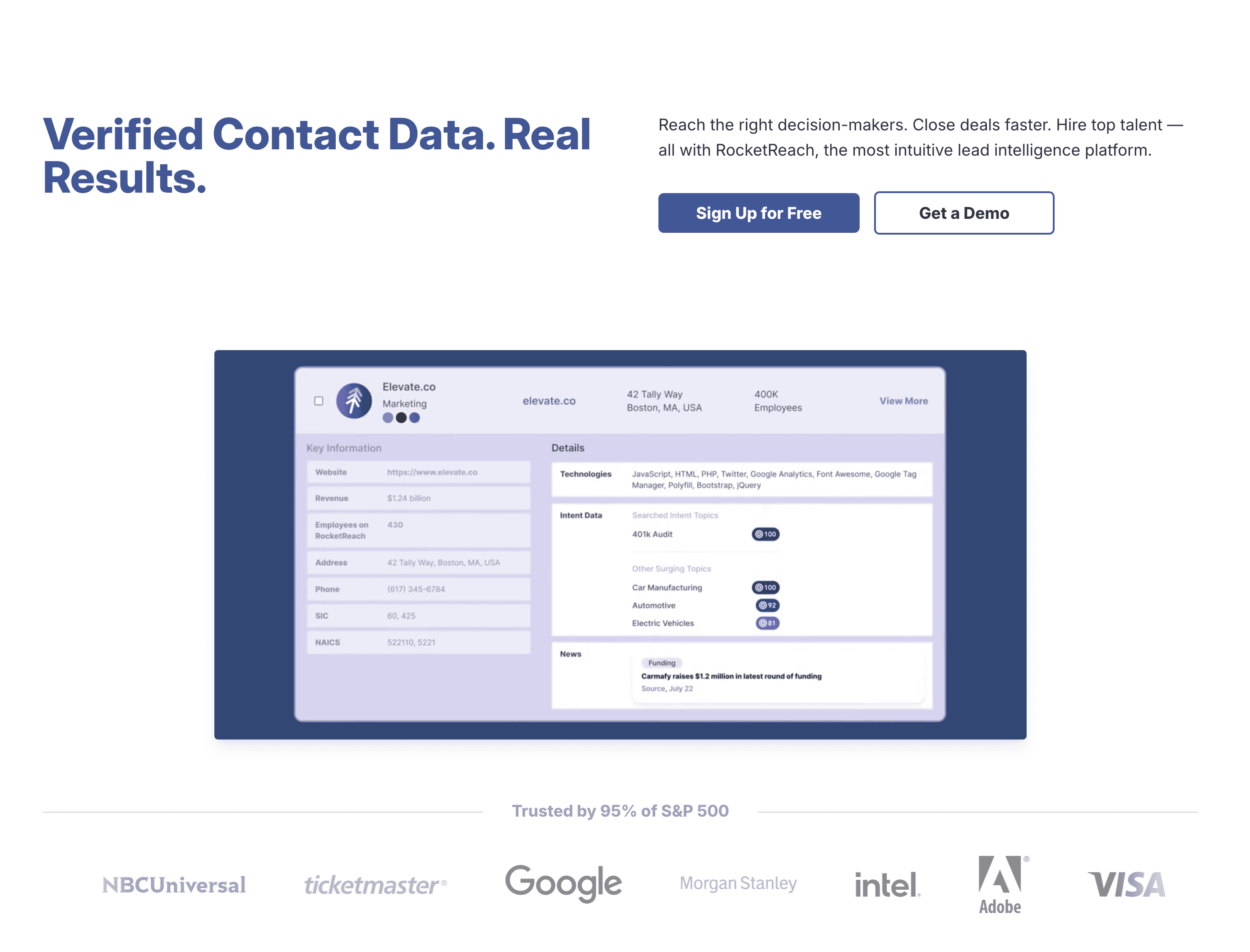
RocketReach is a people-search platform built specifically around professional contact information. Rather than scraping general public records the way many data brokers do, it pulls from sources like LinkedIn, company websites, and social media to build searchable profiles that sales and recruiting teams pay to access. It markets itself as a tool for finding verified business contacts at scale, which means the accuracy that makes it useful for a sales team is the same accuracy that makes an unwanted listing genuinely useful to whoever finds it.
What RocketReach Typically Has On You
- Full name and current job title
- Current and past employers
- Work and sometimes personal email addresses
- Phone numbers
- Social media profile links
- LinkedIn profile data
Because RocketReach’s whole business model is verified contact information for outreach, a listing there often means your work email and direct phone number are available to anyone willing to pay for a search, not just recruiters with good intentions. Sales teams use it to build cold outreach lists, and there’s no vetting process that separates a legitimate sales call from someone with less benign intentions using the same publicly purchasable data.
>> Learn More: How to Remove Your Phone Number From the Internet
How to Remove Your Information From RocketReach
RocketReach doesn’t let you delete a profile outright from a search results page. Instead, it uses a “claim and remove” process that requires you to verify the profile is actually yours before it will take it down. That verification step exists to prevent someone from removing a coworker’s or competitor’s listing out of spite, but it does mean the process takes a few extra minutes compared to a simple opt-out link.
- Find your profile. Search your name on RocketReach directly, or search your name alongside “RocketReach” on Google to locate your listing’s URL.
- Go to RocketReach’s claim profile page. Navigate to RocketReach’s profile claim page and enter the requested details: your full name, current employer, your RocketReach or LinkedIn profile URL, and a valid email address.
- Submit your request. After entering your information, submit the form and check your inbox for a confirmation email from RocketReach.
- Confirm via email. Open the email and click the claim link. This will take you to a page where you can manage the profile RocketReach has on file.
- Select “Remove My Profile.” On the profile management page, choose the option to remove your profile rather than update it.
- Give a reason and confirm. RocketReach typically asks for a brief reason for the removal request before finalizing it. Submit that, and you should see an on-screen confirmation that your profile has been removed.
>> Related Reading: Five Easy Opt-Outs to Protect Your Identity and Privacy
FYI: RocketReach usually removes your information within 7 to 21 days, though its website warns it can take several weeks. That’s fairly typical for data brokers, and better than many. One study found that 64 percent of data brokers are making it harder for people to opt out.2
What Happens After You Opt Out
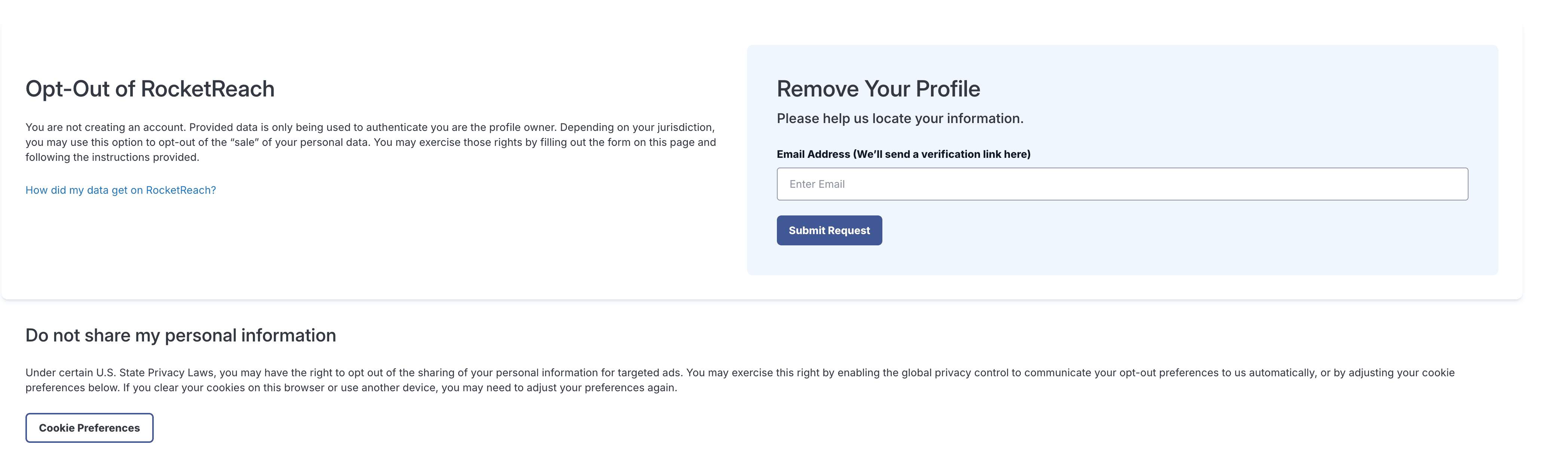
Once RocketReach processes your request, your profile should stop appearing in on-site searches. That doesn’t mean it disappears everywhere immediately. Search engines often keep cached versions of pages for a while after the underlying data is gone, so your listing may still show up in Google results for a few extra weeks even after RocketReach itself has removed it. If you search your own name right after completing the opt-out and still see the old listing, that’s usually a caching issue rather than a sign the removal failed.
It’s also worth checking back periodically rather than assuming the job is done for good. Save the confirmation message or any email RocketReach sends once your removal is processed, since that’s useful proof if the listing does reappear and you need to reference a prior request.
>> Read More: How to Remove Your Information From Google
Why This Removal Isn’t Permanent
RocketReach builds its profiles by continuously scraping LinkedIn, company websites, and other public sources. If your employer updates their team page, or you update your LinkedIn profile, RocketReach’s crawlers can pick that up and regenerate a profile on you, even one you already removed. This is a common pattern across data broker and people-search sites generally. Removal is a snapshot, not a permanent fix, unless something keeps checking on your behalf. It’s a particularly awkward tradeoff for RocketReach specifically, since the same LinkedIn presence that makes you findable for legitimate networking is exactly what feeds the crawler that rebuilds your profile.
That’s a real problem if you’re relying on a single manual opt-out to solve this once. RocketReach is also just one of hundreds of similar sites, so even a successful removal here leaves your information sitting on plenty of others you haven’t checked yet. Going through each one individually, on the same claim-and-verify timeline RocketReach uses, adds up to a lot of recurring effort for anyone trying to stay off these platforms long term.
Incogni monitors data brokers on an ongoing basis and resubmits removal requests automatically if your information gets relisted, instead of leaving you to notice and repeat the process yourself.

The Bottom Line
RocketReach’s opt-out process is more involved than a simple footer link. You have to claim the profile, verify it’s yours, and then request its removal, but it does work. The catch is that a profile you remove today can come back the moment RocketReach’s crawlers find your information somewhere else, which makes this less of a one-time task and more of an ongoing one if you want to stay off the platform for good. Treat the initial removal as the first step rather than the finish line, and build in a periodic check so a reappearing listing doesn’t sit unnoticed for months.
FAQs
-
Is RocketReach a legitimate company?
Yes. RocketReach is a real business intelligence platform used by sales and recruiting teams, not a scam site. That said, being a legitimate business doesn’t change the privacy risk of having your contact information searchable by anyone with a subscription. Legitimate companies can still expose you to unwanted outreach, and the data itself can be scraped or resold by less scrupulous parties further down the line.
-
Do I need to create a RocketReach account to opt out?
Some users have reported needing to interact with an account or profile page as part of the claim process, but you don’t need a paid subscription to submit a removal request. The claim-and-verify flow is free, and you’re not required to browse or use any of RocketReach’s paid search features to complete it.
-
How long does it take for my RocketReach profile to disappear?
Most sources report 7 to 21 days for RocketReach to process the removal itself, though RocketReach’s own messaging says it can take several weeks. Search engines may take additional time to update their cached results.
-
Can my information reappear on RocketReach after I remove it?
Yes. RocketReach continuously scrapes public sources like LinkedIn and company websites, so an updated public profile elsewhere can result in your RocketReach listing being regenerated even after a successful removal.
-
Is there a faster way to handle RocketReach and other data brokers at once?
Manually opting out of RocketReach only addresses that one site. A data removal service can submit and track removal requests across hundreds of data brokers at once, and resubmit automatically if a listing like this one reappears.