


the security.brief
Without a detector, carbon monoxide, which hospitalizes over 16,000 Americans annually, could be in your home. Our experts show you how to stay safe.
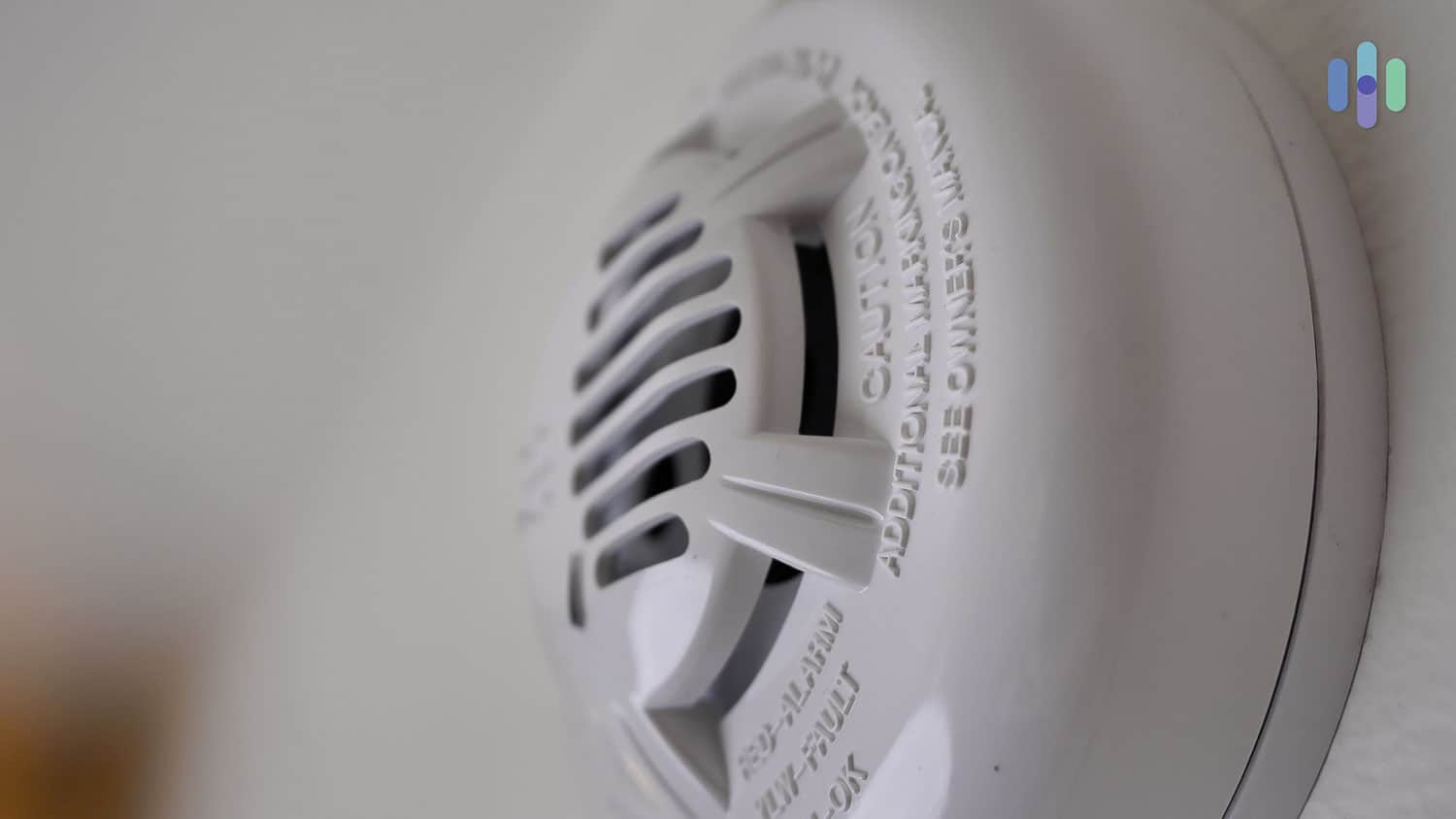
Unintentional carbon monoxide exposure accounts for more than 100,000 emergency department visits, 14,000 hospitalizations, and approximately 400 deaths in the United States each year. Globally, CO poisoning is responsible for more than 28,000 deaths annually. As an invisible and odorless gas, it regularly goes undetected in homes leading to these results.
That said, you can protect your home from the dangers of carbon monoxide with a reliable carbon monoxide detector. These devices notify you if carbon monoxide levels in your home become dangerous. All of the best home security systems offer these devices for a reason. Let’s break down everything you need to know about carbon monoxide detectors and how to pick one for your home.
>> Related Reading: Complete Guide to Home Security Systems
What Is Carbon Monoxide?
Carbon monoxide (CO) is a colorless, odorless, tasteless gas produced when carbon-based fuels burn incompletely. It also does not irritate the skin, eyes, or airways. That all makes it essentially undetectable without a dedicated CO detector, even when exposure reaches dangerous concentrations. This gives CO the nickname “the silent killer.”
When inhaled, CO enters the bloodstream and binds to hemoglobin — the oxygen-carrying protein in red blood cells — replacing the oxygen. After CO binds to hemoglobin, it can no longer carry oxygen to the brain, heart, and other organs. This occurs as CO has a much stronger attraction to hemoglobin than oxygen. At high enough concentrations, this leads to unconsciousness and death, often before a person realizes anything is wrong.1
What Causes Carbon Monoxide in a House?
Carbon monoxide is a byproduct of incomplete combustion. Any fuel-burning appliance or engine in or near your home is a potential source. These systems are typically safe when properly installed, maintained, and ventilated. However, a blocked flue, a malfunctioning appliance, or running engines or heaters in enclosed spaces can cause dangerous buildups.
Common household sources of carbon monoxide include:
- Gas furnaces and boilers: A cracked heat exchanger or blocked flue is one of the leading residential causes of CO buildup. Because furnaces run longest during cold months, winter is the highest-risk season.
- Portable generators: Generators are responsible for more CO deaths than any other single product category in the U.S. Running a generator in a garage, basement, or even near a window or door can send lethal concentrations into a home within minutes.2
- Gas ranges and ovens: Cooking appliances normally vent CO safely, but running an oven for heat or operating a burner in a poorly ventilated kitchen can raise concentrations over time.
- Water heaters: Gas water heaters require proper venting. A blocked or improperly installed flue can cause CO to back up into living spaces.
- Fireplaces and wood stoves: Blocked or dirty chimneys prevent combustion gases from escaping, forcing CO back into the room.
- Portable space heaters: Fuel-burning space heaters — propane, kerosene, or natural gas — require ventilation to prevent CO buildup. They should never be used in sealed rooms.
- Attached garages: A vehicle running in an attached garage, even with the garage door open, can introduce CO into the house through shared walls, ductwork, or door gaps.
- Charcoal grills and camp stoves: These produce large amounts of CO and should never be used indoors, in tents, or in enclosed vehicles. Using them indoors also poses a fire risk, as we discuss in our fire safety guide.
Pro Tip: The Consumer Product Safety Commission recommends having gas appliances, heating systems, and chimneys inspected and serviced annually by a qualified technician. During the visit, the technician checks combustion, venting, and airflow to reduce the risk of CO buildup. It’s one of the best preventive steps to protect your home.
Carbon Monoxide Poisoning Symptoms
One of the most dangerous aspects of CO poisoning is that its early symptoms — headaches, fatigue, or nausea — resemble the flu. As a result, people just assume they’re sick as they stay put and continue to breathe in CO while their condition worsens. Making matters more confusing, the symptoms of CO poisoning also vary based on the concentration of CO in the air and the duration of exposure.
Low to moderate exposure to CO can cause the following symptoms:
- Headache, often described as dull and frontal
- Dizziness and lightheadedness
- Nausea and vomiting
- Fatigue and weakness
- Shortness of breath during mild exertion
- Confusion or difficulty concentrating
High or prolonged exposure to CO makes those symptoms worse and can also cause:
- Chest pain
- Rapid heart rate or irregular heartbeat
- Vision problems
- Loss of muscle control
- Seizures
- Loss of consciousness
- Death
If multiple people in the same household develop similar flu-like symptoms at the same time — especially in winter — CO exposure should be considered immediately. This pattern is a recognized clinical warning sign. Another sign to look out for is flu-like symptoms without a fever, as CO poisoning does not cause a fever.
It’s also worth noting that the telltale “cherry red” skin color historically associated with CO poisoning is typically only visible after death. It should not be relied upon to assess whether someone is suffering symptoms of CO exposure.
Important Note: Because CO impairs neurological function, people often become confused or sleepy before they realize they need to leave. Those who are asleep or intoxicated may never wake up. When we tested Vivint, we used their home automation so that when our CO alarm goes off, our home’s lights turn on as well. This helps reduce the risk of us not noticing an alarm, even when impaired.
What to Do When Your Carbon Monoxide Detector Goes Off
A carbon monoxide alarm going off is a serious emergency. Do not assume the alarm is faulty and do not stay in the building to investigate the source. CO can incapacitate quickly, and the gas gives no sensory warning that it is present. Here are the five steps you should immediately take when your carbon monoxide detector goes off:
Step 1: Get Everyone Out Immediately
Leave the building right away. Bring all people and pets. Do not stop to gather belongings or go back inside until a professional confirms that your building is safe.
Step 2: Get to Fresh Air
Move well away from the building. If anyone is showing symptoms of CO poisoning — headache, dizziness, nausea, confusion — call 911 immediately and tell the dispatcher you suspect carbon monoxide exposure. Anyone who is unconscious needs emergency medical help as quickly as possible.
Step 3: Call for Help
Once outside, call your local fire department or 911, even if nobody shows symptoms of CO poisoning. Trained responders have equipment to measure CO concentrations inside the building and identify the source. As we mentioned, do not re-enter until emergency personnel have confirmed it is safe.
Step 4: Seek Medical Attention
Even if no one feels seriously ill, anyone who was in the building while the alarm was sounding should be evaluated by a doctor. Symptoms can be delayed or worsen after the initial exposure, and some neurological effects may not be immediately apparent. Doctors can accurately assess CO poisoning risks before symptoms show using a blood test measuring carboxyhemoglobin levels.
>> Learn About: Preventing Medical Identity Theft in 2026
Step 5: Do Not Return Until the Source Is Identified and Fixed
Before returning, have a qualified technician identify and repair the source of the leak. That includes an inspection of your fuel-burning appliances and ventilation systems before using them again. If your home does not yet have a professionally monitored home security system that covers CO detection, this is a good time to consider one.
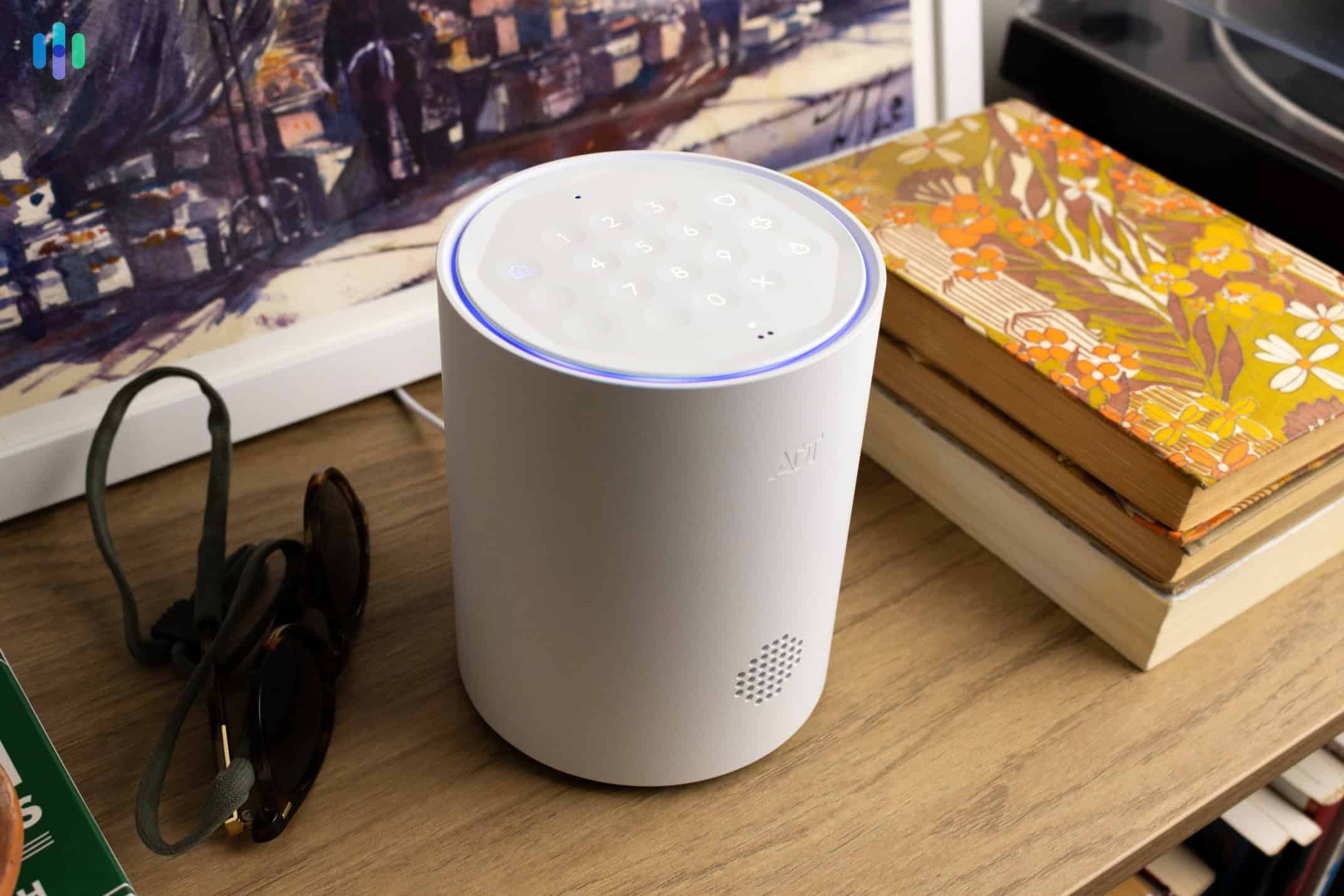
Expert Insight: For extra protection, also consider adding a monitoring home security system with CO detectors. That way, your home’s CO levels will be professionally monitored 24/7, ensuring emergency services will be dispatched if CO levels reach dangerous levels even if no one is awake or home. We discuss this added peace of mind in our ADT review.
What if the Alarm Is Chirping, Not Blaring?
A continuous, loud alarm pattern indicates detected CO. Periodic chirps — typically once every 30 to 60 seconds — usually mean the battery is low. It could also mean the unit has reached the end of its service life as most CO detectors must be replaced every five to seven years. Check the manufacture date on the back of the unit. If the device is past its service life and chirping, replace it rather than just changing the battery. These are the same steps you should take to stop your smoke alarm from chirping as well.
>> Read More: How to Turn Off a Smoke Alarm After It Goes Off
Where to Place Carbon Monoxide Detectors
At a minimum, you should follow the U.S. Environmental Protection Agency’s recommendation of at least one carbon monoxide detector per floor.3 That said, we recommend going a bit further as per the National Fire Protection Association’s recommendation of also adding one outside each sleeping area.4
That said, we understand not everyone can add that many detectors, so here’s how we suggest prioritizing where to place your CO detectors:
- On every level, including the basement: CO can build up on any floor, particularly in basements where furnaces, water heaters, and utility equipment are often located.
- Outside each sleeping area: You are most vulnerable when asleep, and the alarm must be loud enough to wake you. Place a detector within 10 feet of each bedroom door. Depending on the layout of your home, you might be able to cover this with a single CO detector on each floor.
- Near the door to an attached garage: Vehicle exhaust can enter a home through a shared wall, ductwork, or the connecting door. A detector near this entrance provides early warning.
- Inside each bedroom: For homes with multiple sleeping areas, you can consider a detector inside each room as well as outside it.
Where to mount them
A common misconception is that CO detectors should be placed near the floor because CO is heavy. In reality, CO disperses throughout a room rather than settling. Most experts now recommend mounting detectors at or near eye level on a wall or on the ceiling. That said, always follow manufacturer instructions, as it may be designed for a specific placement.
Did You Know: The best smart home security systems offer CO detectors that interconnect with each other and send alerts to your phone when any unit triggers. This ensures you know when CO starts to build up, even when you’re not home, so you can address the issue before it escalates.
Where not to place them
First and foremost, avoid placing detectors directly next to fuel-burning appliances, as this can trigger nuisance alarms. Similarly keep detectors at least 10 to 15 feet away from gas stoves, furnaces, and fireplaces, but on the same floor. Here are a few other key areas to avoid when deciding where to place your CO detectors:
- Directly next to or above a stove or fireplace — proximity to combustion can cause false alarms
- In humid areas like bathrooms, where moisture can affect the sensor
- In garages, where vehicle exhaust concentrations are normally high enough to cause constant triggering
- In corners or behind furniture, where air circulation is poor
- Near windows or exterior doors, where drafts can dilute readings
Maintenance
Really, CO detectors don’t require much maintenance. Once per month, just press the test button to ensure it’s working. You’ll likely need to change its batteries twice a year, but it’ll start chirping when you need to do that, as some offer long-life batteries. Finally, every five to seven years, replace the whole unit even if it appears to be working. The electrochemical sensor degrades over time and may not respond accurately to real CO concentrations past its manufacturer-recommended service life.
>> Check Out: Best Water Leak Detectors of 2026
How Long Does Carbon Monoxide Stay in the Blood?
When you breathe carbon monoxide, it binds to hemoglobin in your red blood cells to form carboxyhemoglobin. The body eliminates this compound slowly. It takes about four to five hours for your body to eliminate half of the CO bound to your blood when you start breathing fresh air. Effectively clearing the carboxyhemoglobin from your body can take over 24 hours. In a medical emergency, medical oxygen can be administered, reducing the time it takes to remove half of the carboxyhemoglobin in your blood down to just 30 minutes or less.5
This is why the speed of treatment matters enormously. The longer a person remains in a contaminated environment or goes without supplemental oxygen, the higher the carboxyhemoglobin concentration rises and the greater the potential for lasting neurological damage.
FYI: Standard pulse oximeters cannot detect carboxyhemoglobin — they will give a falsely normal oxygen saturation reading even in a severely poisoned patient. A blood test using a device called a co-oximeter is required to accurately measure CO levels in the blood.
Treatment for Carbon Monoxide Exposure
Before we go over the treatments of carbon monoxide, we need to point out a crucial first step. Remove the person suffering from CO poisoning from the source and get them outside into fresh air immediately. If they are unresponsive and not breathing, begin CPR if you’re trained and call 911.
Supplemental oxygen
The standard treatment for CO poisoning in an emergency room is pure oxygen delivered through a tight-fitting non-rebreather mask. This reduces the time it takes for your body to eliminate half of the carboxyhemoglobin from several hours to roughly one hour. Treatment continues until blood CO levels return to normal and symptoms resolve.
Hyperbaric oxygen therapy
For severe poisoning — including loss of consciousness, cardiac symptoms, or very high carboxyhemoglobin levels — hyperbaric oxygen therapy (HBOT) may be used. The patient breathes pure oxygen inside a pressurized chamber. This forces more oxygen into the blood and clears CO even quicker than standard oxygen therapy. HBOT is only used when there is a high risk of lasting neurological damage, as the treatment itself carries risks. It’s also only available in specialized facilities.
Long-term effects
Even after CO is cleared from the blood, survivors of moderate to severe poisoning may experience lasting effects. Research estimates that 10 to 40 percent of patients who survive significant CO poisoning develop long-term neuropsychiatric impairment.6 That includes memory loss, difficulty concentrating, chronic anxiety, personality changes, and depression.
These delayed neurological symptoms can appear days to weeks after the initial exposure, sometimes in people who appear to have fully recovered. That’s why anyone who has experienced CO poisoning should follow up with a physician, even if they feel well after initial treatment.
Do not use a pulse oximeter to rule out poisoning
A standard pulse oximeter — the device clipped to a finger in hospitals and sold as a home health device — cannot distinguish carboxyhemoglobin from normal oxyhemoglobin. Even a person severely poisoned with CO will show a normal or near-normal oxygen saturation reading on a pulse oximeter. If CO poisoning is suspected, the only reliable diagnostic test is a blood co-oximetry reading.
Carbon Monoxide vs. Carbon Dioxide
Carbon monoxide (CO) and carbon dioxide (CO₂) are related but distinct gases. They are dangerous in different ways and at very different concentrations. Here’s a comparison of each:
| Compound | Carbon monoxide (CO) | Carbon dioxide (CO₂) |
|---|---|---|
| Molecular makeup | One carbon atom and one oxygen atom | One carbon atom and two oxygen atoms |
| Symptoms begin at | 70 parts per million | 1,000 parts per million |
| Serious symptoms begin at | 400 parts per million | 5,000 parts per million |
| Risk of significant symptoms or death at or above | 1,600 parts per million | 30,000 parts per million |
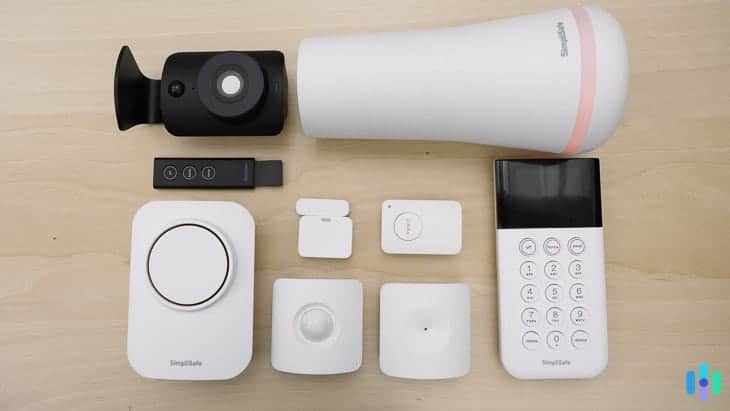
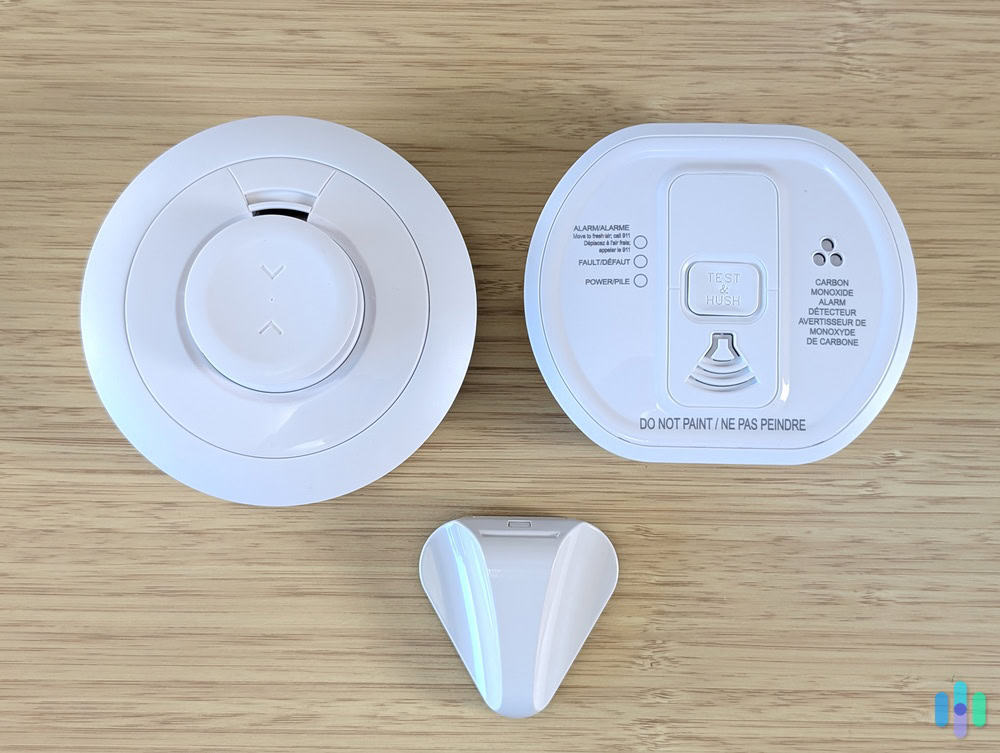
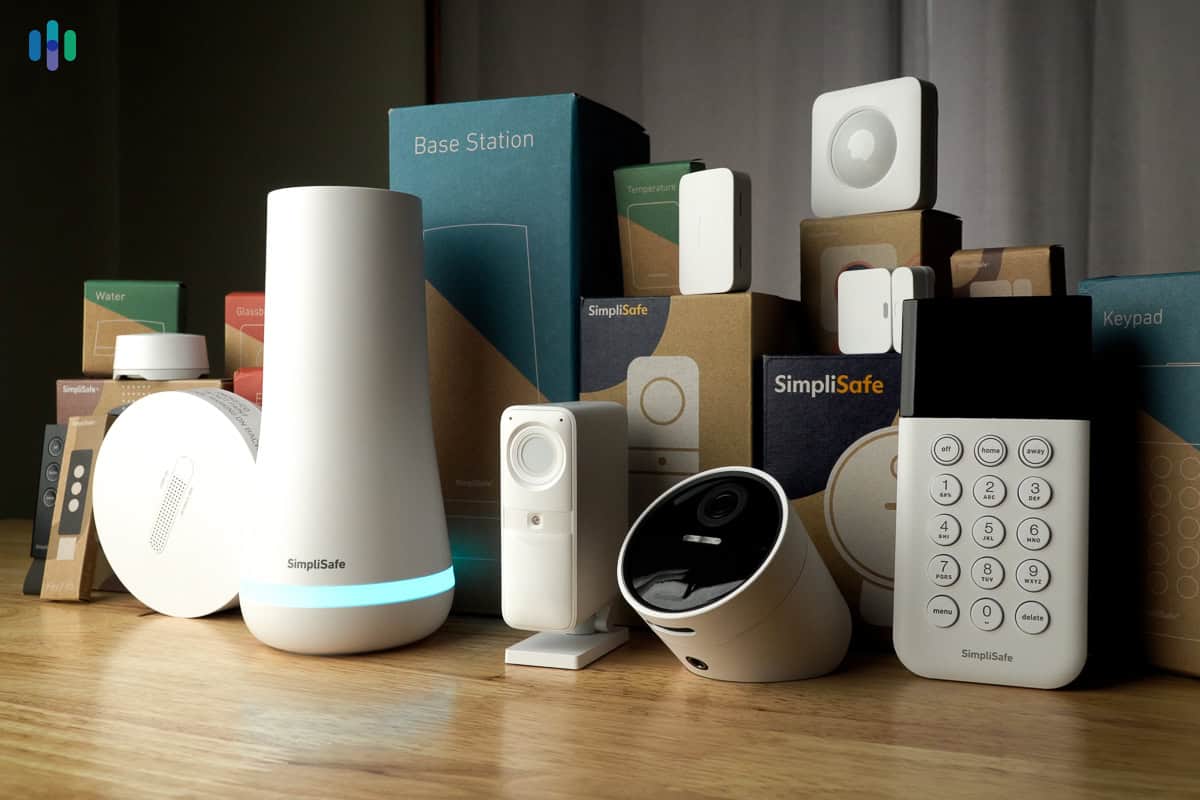
It’s important to note that carbon monoxide detectors do not detect CO₂. Conversely, a CO₂ sensor or air quality monitor will not detect a CO leak. If your concern is specifically carbon monoxide from a fuel-burning appliance or attached garage, you need a device labeled and listed as a carbon monoxide detector. We always recommend looking for one with a UL 2034 certification. You could also opt for a combination unit, like the one we used when we tested SimpliSafe.
Expert Insight: While CO₂ can still pose a risk, CO is generally considered far more dangerous and likely to occur in a regular home. Most people also notice elevated CO₂ levels in a home as stale air. All that to say, we recommend prioritizing CO detectors, and only opt for CO₂ detectors as a nice-to-have.
Final Thoughts: Do You Need Carbon Monoxide Detectors?
Every year, carbon monoxide sends over 100,000 Americans to the emergency room. While the majority make a full recovery, up to 40 percent of those who suffer from carbon monoxide poisoning end up with long-term impairments.
With that serious of risks, everyone should have at least one carbon monoxide detector on each floor of their home. There are no exceptions. We also recommend ensuring every sleeping room has a detector within 10 feet of the room’s entrance.
Frequently Asked Questions
-
What does carbon monoxide smell like?
Carbon monoxide has no smell. It is completely odorless, colorless, and tasteless, which is what makes it so dangerous. The only reliable way to know CO is present in your home is with a functioning carbon monoxide detector. If you smell something unusual, it is not CO itself — it may be an unburned fuel like natural gas or propane, which have an added odorant.
-
What does a carbon monoxide alarm sound like?
Most carbon monoxide alarms sound a loud, repeated beep pattern when CO is detected — typically four beeps, a pause, then four beeps again. It’s designed to be loud enough to wake someone who’s sleeping. This is the NFPA-specified temporal pattern for CO alarms, distinct from the three-beep pattern used for smoke alarms. The specific pattern varies by manufacturer, so check the documentation for your detector. A periodic single chirp, usually once per minute, typically means a low battery or end of service life, not a CO detection event.
-
How do you check for carbon monoxide without a detector?
You cannot reliably check for carbon monoxide without a detector. The gas is entirely undetectable to human senses. There are also no reliable DIY methods to detect CO in your home. A CO detector is the only safe and reliable method of early detection. If you suspect CO is present , leave the building immediately and call the fire department. Do not attempt to investigate yourself. A CO detector is the only safe and reliable method of early detection.
-
Can carbon monoxide detectors detect natural gas?
No. Carbon monoxide detectors are designed specifically for CO and will not detect natural gas or propane leaks. Natural gas and propane are detected by a combustible gas detector or gas leak detector. Some combination detectors on the market include both CO and combustible gas sensing, but a standard CO alarm does not cover both. If you smell gas — natural gas has an added rotten egg-like odorant — leave immediately and call 911 and your gas company from outside.
-
Is carbon monoxide heavier than air?
No, and this is a common misconception that leads to poor detector placement. Carbon monoxide has a molecular weight of 28 grams per mole, nearly identical to that of air, which averages around 29 grams per mole. That means CO does not sink to the floor or rise to the ceiling, it disperses throughout a room. As such, detectors can be mounted at any height, though most manufacturers and standards bodies recommend mounting them at or near head height. Placing a detector near the floor on the theory that CO is heavy is unnecessary and may affect performance depending on the unit’s specific design.
-
How often should you replace a carbon monoxide detector?
Most manufacturers and the CDC recommend replacing CO detectors every five to seven years. The electrochemical sensor inside the unit degrades over time and may stop responding accurately to CO, even if the alarm itself still sounds. Most detectors have the manufacture date printed on the back or stamped inside the battery compartment. When a detector begins emitting periodic chirps and the battery is not low, the unit itself needs to be replaced.