
The Best Carbon Monoxide Detectors of 2026, Tested by Our Team
Our top five CO detectors do the best job of alerting you and professional monitoring centers when there is an issue.
 &
&
 Last Updated on Jun 29, 2026

- Alerts ADT’s monitoring centers the moment CO is detected, dispatching emergency services even if you can’t be reached
- Triggers at 70 ppm, before CO poisoning symptoms begin at 100 ppm
- One-Go-All-Go interconnection sounds every paired detector in the home simultaneously

- Electrochemical CO sensor with professional monitoring dispatched from the SimpliSafe app
- New Smoke & CO Alarm Listener integrates your existing detectors into the SimpliSafe system with no replacement needed
- DIY installation in minutes and a 60-day money-back guarantee

- When CO is detected, Vivint automatically unlocks doors and disarms window sensors so you can evacuate quickly
- Combo Smoke & CO Detector uses both photoelectric and electrochemical sensors for dual-threat protection
- Integrates with Alexa, Google Assistant, and the Vivint Smart Hub for whole-home automation
the security.brief
ADT has the best carbon monoxide detector of 2026. SimpliSafe, Vivint, First Alert, and Kidde also made the list, as chosen by our team of security experts.
Carbon monoxide is responsible for over 40,000 emergency room visits in the United States every year, with two percent leading to death.1 The majority of fatal exposures happen overnight, when everyone in the home is asleep and no one is awake to hear an alarm or call for help. A standalone detector from a hardware store will sound when CO is detected, but it won’t call the fire department, notify a monitoring center, or dispatch an ambulance on your behalf like some of the best home security systems will. That’s why we prefer professionally monitored CO detection, and why our top three picks are system-integrated rather than shelf units.
That said, home security systems are not ideal for every household. Fortunately, anyone unwilling to pay a monthly fee can still get reliable protection from a standalone carbon monoxide detector. First Alert’s SC5 offers app alerts, Google Home integration, and interconnection with other alarms at around $129 and no subscription. The Kidde COPDW is a good choice for someone who wants reliable, Wi-Fi-enabled CO detection for under $45. Those are our top picks, which we evaluated against the same core criteria. Keep reading for our final testing results.
Comparison of the Best Carbon Monoxide Detectors of 2026
| System |
ADT
|
SimpliSafe
|
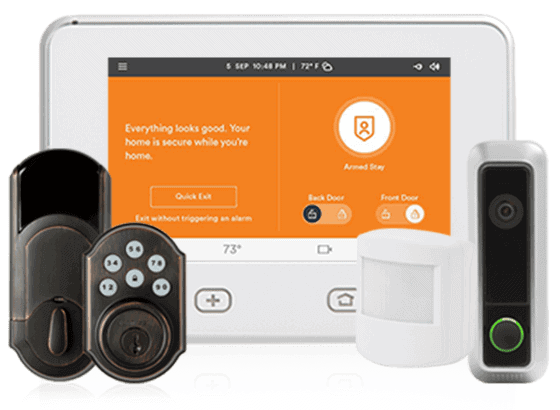
Vivint
|
First Alert SC5


|
Kidde COPDW


|
|---|---|---|---|---|---|
| Ranking | 1st | 2nd | 3rd | 4th | 5th |
| Ratings | 9.8/10 | 9.8/10 | 9.4/10 | 8.4/10 | 7.9/10 |
| Best for | 24/7 professional CO monitoring | DIY setup and flexibility | Smart home integration | No subscription | Budget-friendly |
| Professional monitoring | Yes | Yes | Yes | No | No |
| Monitoring starting price | $29.99/month | $32.99/month | $29.99/month | None | None |
| Equipment starting price | Systems start at $269 | Systems start at $250.96 | Systems start at $199.99 | $129 | $35–45 |
| CO + smoke combo available | Yes | Yes | Yes (combo only) | Yes (combo only) | No (CO only) |
| Standalone CO detector | Yes | Yes | No | No | Yes |
| App alerts | Yes (ADT+) | Yes (SimpliSafe) | Yes (Vivint) | Yes (First Alert / Google Home) | Yes (Kidde) |
| Smart home compatibility | Google Home, Alexa | Alexa, Google Assistant | Alexa, Google Assistant | Google Home | Google Home, Alexa |
| Interconnected alarms | Yes | Yes | Yes | Yes | No |
| Installation | DIY or professional | DIY or professional | Professional only | DIY | DIY |
| UL 2034 certified | Yes | Yes | Yes | Yes | Yes |
| Money-back guarantee | 6 months | 60 days | 3 days | Retailer policy | Retailer policy |
| Read Review | ADT Review | SimpliSafe Review | Vivint Review |
Summary of the Best Carbon Monoxide Detectors
- ADT - Best for 24/7 Professional CO Monitoring
- SimpliSafe - Best DIY
- Vivint - Best Smart Home Integration
- First Alert SC5 - Best Smart Standalone
- Kidde COPDW - Best Budget Standalone
Why Trust Our Picks
Our team spent more than 2,400 hours testing home security systems, installing equipment, staging alarm simulations, measuring monitoring response times, and living with each system across multiple months. ADT, SimpliSafe, and Vivint were all evaluated as complete security systems with CO detection as one component of a broader test. For First Alert and Kidde, we tested the standalone units independently, focusing on setup experience, app reliability, and alarm response.
Detailed List of the Best Carbon Monoxide Detectors
-
1. ADT - Best for 24/7 Professional CO Monitoring

Product Specs
Equipment Costs Starting at $404 Monitoring Options Professional Monthly Monitoring Costs Starting at $24.99 Contract Lengths 36 months and up Installation Options Professional Smart Platform Integration Alexa and Google Home Why ADT?
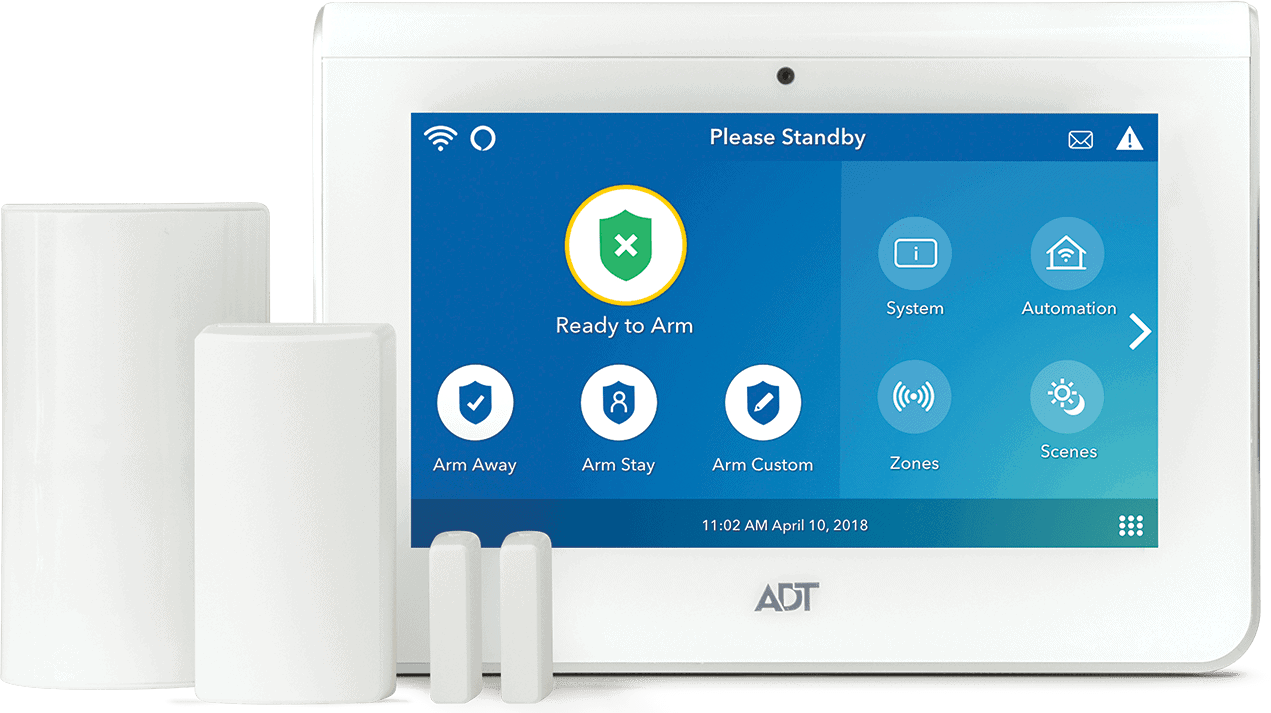
ADT earns the top spot for its industry-leading professional monitoring service. When your CO detector goes off and your whole family is asleep, someone at ADT will notice, call you, and dispatch emergency services whether or not anyone in your home is reachable. They have 12 monitoring centers across the United States, and this redundancy eliminates the risk of outage. They are quick to respond, too. During testing, ADT’s response times never exceeded 30 seconds. That is among the fastest we’ve tested.
The ADT CO detector triggers at 70 parts per million. CO poisoning symptoms typically begin at around 100 ppm. That means ADT’s CO detector will likely alert you and the monitoring center well before anyone starts feeling unwell. We also like that there’s a One-Go-All-Go feature, which simultaneously sounds every paired detector in the home. No floor, bedroom, or corner of the house stays quiet while the alarm is blaring.
FYI: ADT also offers a Smoke & CO Combo Detector for households that want a single device covering both threats. Both the standalone and combo units send alerts to the ADT+ app, so you receive a push notification the moment CO is detected, in addition to the local siren and monitoring center dispatch.
What We Like
- 12 monitoring centers provide redundancy unmatched by any competitor
- 30 second average monitoring response time
- Triggers at 70 ppm, before symptoms begin
- One-Go-All-Go interconnection sounds all paired detectors simultaneously
- Alerts via ADT+, local siren, and monitoring dispatch
- DIY or professional installation available
- 6-month money-back guarantee
What We Don’t Like
- Monitoring plan required
- Contract required for professionally installed systems
- Expensive equipment
- Smart home automation on CO trigger is limited to app notification
Testing and User Experience

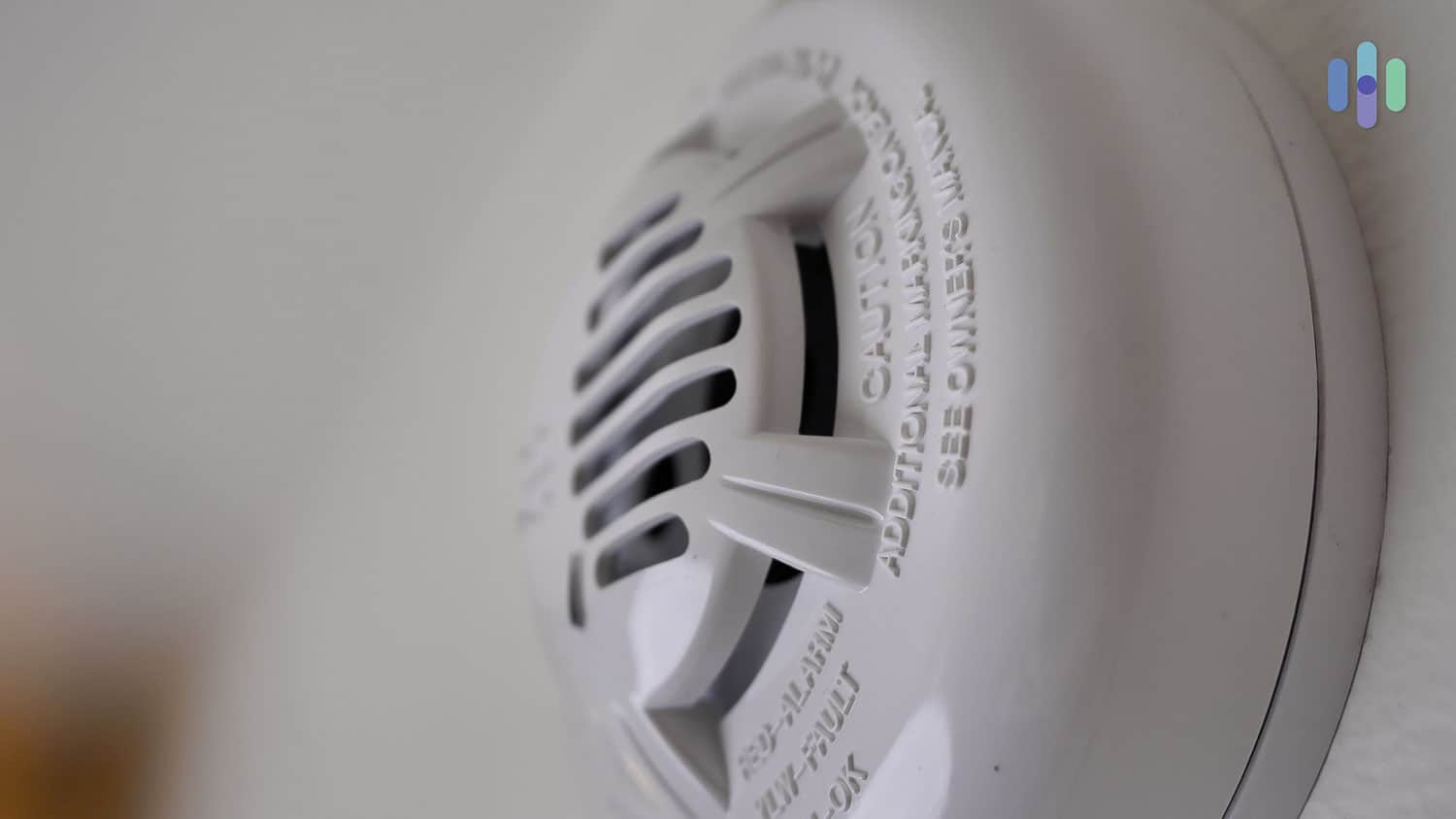
We’ve tested dozens of carbon monoxide detectors in our home, such as this ADT one We tested ADT’s CO detection as part of a full home security system installation in a residential home. We opted for professional installation, starting from $100, and watched the technician mount the CO detector easily to the ceiling with no tools beyond a screwdriver. They even connected the device to the ADT base station automatically within a few minutes. The One-Go-All-Go feature worked exactly as described during the test alarm. Every paired detector in the home sounded within seconds of the initial trigger.
The ADT+ app sent a push notification before we had even moved toward the panel, which is useful if you are in a part of the house away from the detector. We also found the 85 dB siren at 10 feet loud enough to wake most sleeping adults and is consistent with what the NFPA recommends for audibility in sleeping areas.
Pricing
ADT equipment bundle prices start at $269, with the standalone CO detector and the Smoke & CO combo unit available as an add-on. Professional monitoring, which is required for CO monitoring dispatch, starts at $34.99 per month for professionally installed systems. Professionally installed systems also require a contract. ADT Blu systems do not, and they offer cheaper monitoring plans from $24.99. Both options include a six-month money-back guarantee; the longest in the industry.
>> Check Out: ADT Blu Review and Prices
-
2. SimpliSafe - Best DIY

Product Specs
Equipment Costs Packages starting at $250.96 Monitoring Options Professional and DIY Monthly Monitoring Costs Starts at $22.99 Contract Lengths Month-to-month Installation Options DIY or professional Smart Platform Integration Alexa and Google Home Why SimpliSafe?
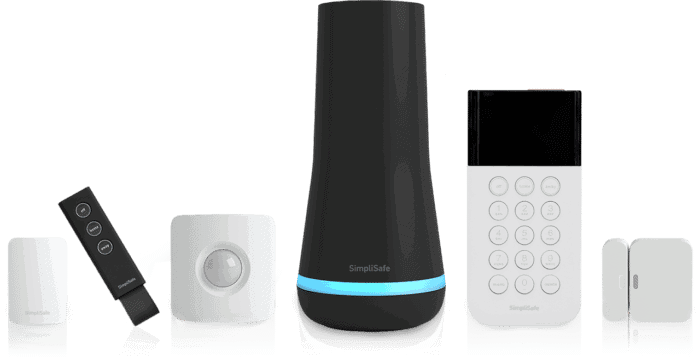
We recommend SimpliSafe for people who want professionally monitored CO detection without a technician install, a long-term contract, or a premium price tag. The system is an easy DIY project. Every component uses adhesive mounting or simple hardware, the app walks you through setup step by step, and most installations take under an hour. We had our CO detector active and connected to the monitoring center in a couple of minutes. The whole system took about 30 minutes to install.
SimpliSafe offers two CO detection options. The standalone CO Detector uses electrochemical sensing to identify dangerous CO concentrations and triggers the base station’s built-in siren while simultaneously alerting the monitoring center. The Smoke & CO Combo Detector adds photoelectric smoke detection and is engineered to distinguish between cooking smoke and genuine fire, reducing false alarms without sacrificing sensitivity.
FYI: SimpliSafe also offers a Smoke & CO Alarm Listener that listens for the distinct sound pattern of any UL-certified CO or smoke alarm in your home. This is useful for renters or homeowners with hard-wired detectors they cannot replace.
What We Like
- DIY installation but professional installation is available if needed
- Three CO detector options
- Smoke & CO Combo distinguishes cooking smoke from real fire
- No contracts and flexible monitoring plans
- 60-day money-back guarantee
What We Don’t Like
- Professional monitoring is required for emergency dispatch
- Monitoring costs are pricier than ADT Self Setup
- Limited smart home integrations
- Listener response times slower than native devices
Testing and User Experience

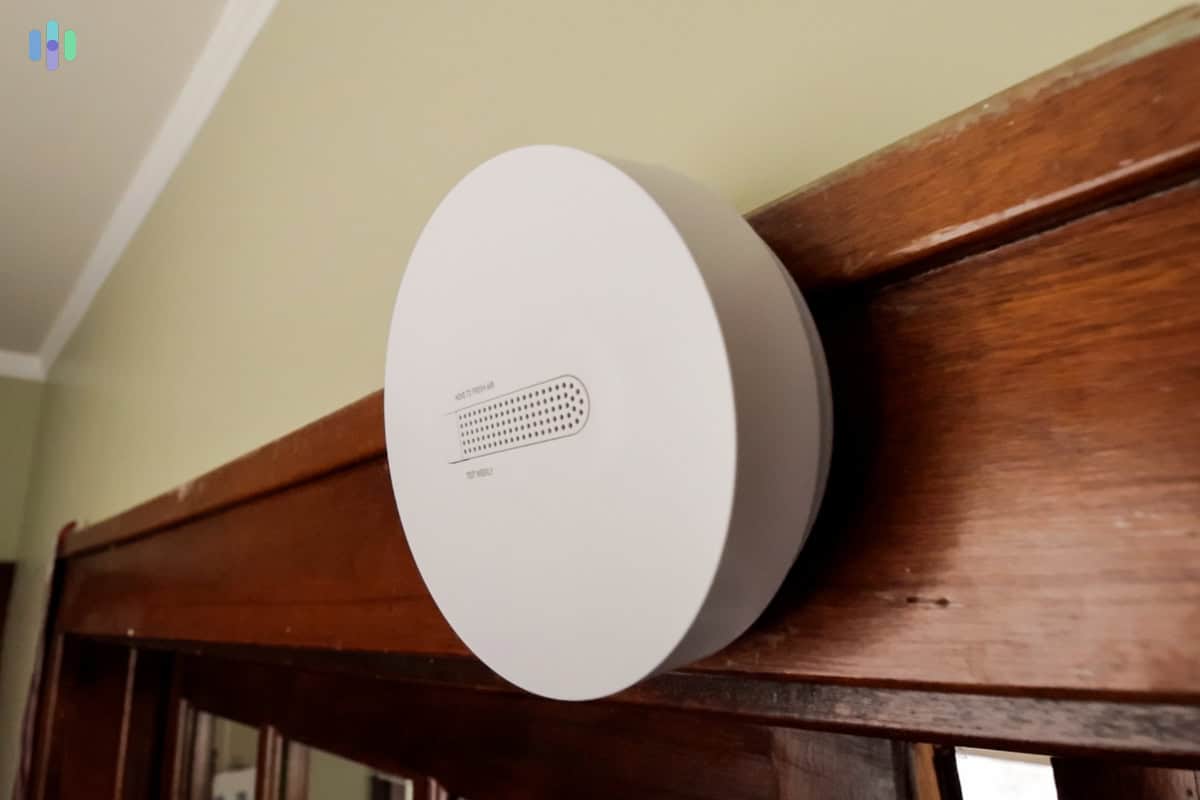
Unlike the ADT device, we installed the SimpliSafe CO2 detector ourselves. The SimpliSafe Smoke & CO Combo Detector paired with the base station automatically once powered. During our alarm test, the base station’s siren activated immediately, and we received an app notification within seconds. We also tested the new Alarm Listener by placing it near a standalone third-party CO detector. When we triggered the standalone unit, the Listener detected the alarm sound pattern and relayed it to the SimpliSafe base station, which then triggered the system and sent an app notification. There was a brief delay of about five seconds between the standalone alarm sounding and the SimpliSafe system activating, which is worth knowing for homes that rely on the Listener rather than a native SimpliSafe detector.
SimpliSafe’s lack of smart home automation on CO detection is a gap compared to ADT and Vivint. When CO is detected, you receive an app alert and the monitoring center is notified, but your doors do not automatically unlock and your HVAC does not respond. For most households, that is fine. For anyone with mobility limitations or who wants the most automated emergency response available, Vivint has the edge.
>> Compare: SimpliSafe vs Vivint
Pricing
The standalone CO detector and the Smoke & CO Combo Detector are available as add-ons. The Smoke & CO Alarm Listener is $44.99. SimpliSafe equipment packages start at $250.96, and professional monitoring starts at $22.99 for basic protection.
SimpliSafe offers self-monitoring plans without monthly fees, but we recommend choosing a professional monitoring option. In our testing, SimpliSafe’s professional monitoring response time averaged 35 seconds across 20 alarm simulations, which is almost on par with ADT’s average. The monitoring center can also dispatch emergency services, which the self-monitoring plans can’t do.
-
3. Vivint - Best Smart Home Integration

Product Specs
Equipment costs Starting at $199 Monitoring options Professional Monthly monitoring costs Starting from $24.99 Contract lengths Starting at 42 months Installation options Professional Smart platform integration Alexa and Google Home Why Vivint?
Vivint is the only pick on this list whose CO detection does more than alert you when CO is detected. When Vivint’s system senses dangerous CO levels, it automatically unlocks your doors and disarms window sensors so you can evacuate without stopping to interact with your security system. For households already invested in Vivint’s broader smart home ecosystem, this level of integration can make a difference in an emergency.
Vivint offers only a Smoke & CO Combo Detector. The combo device uses both photoelectric sensors for early smoke detection and electrochemical sensors for CO, combining the two most reliable detection technologies in a single battery-powered unit. It connects wirelessly to the Vivint Smart Hub control panel and to the Vivint Smart Home app, which provides real-time alerts the moment CO or smoke is detected. The 85 dB built-in siren activates simultaneously with the alert to the Vivint monitoring center.
FYI: Professional installation is required for all Vivint systems, which means your CO detector is placed and configured by a trained technician who can advise on optimal placement and verify it is communicating correctly with the panel before leaving.
What We Like
- Alerts entry sensors when CO is detected
- Professional installation ensures correct placement and system configuration
- Integrates with Alexa, Google Assistant, and the Vivint Smart Hub touchscreen
- App alerts sent to all household members simultaneously
What We Don’t Like
- No standalone CO detector
- Equipment is expensive
- Only a 3-day money-back guarantee
- Contract required
Experience

Unlike ADT and SimpliSafe, Vivint only offers a Smoke and CO Detector. We tested the Vivint Smoke & CO Combo Detector as part of a full Vivint installation. The professional installer placed the combo detector on the ceiling of the main living area and a second unit outside the primary bedroom, running through placement recommendations during installation. Both units connected to the Vivint Smart Hub automatically.
When we triggered a test alarm, the Vivint system responded immediately. The local siren activated, we received a push notification through the Vivint app, and the monitoring center reached out within 30 seconds. The door unlocking and window sensor disarming also worked exactly as configured. In a real emergency, this means a family waking up to a CO alarm in the middle of the night would not need to navigate to the panel or app before exiting the home.
>> Find Out: Where is the Best Place to Install CO Monitors?
Pricing
Vivint’s equipment packages start at $149.99, but the Smoke & CO Combo Detector is $100 per unit and available as an add-on to any Vivint system. It’s one of the more expensive system-integrated devices we’ve tested. Equipment financing is available, though, so you can spread the cost over monthly payments. You’ll also need to budget for professional installation, which typically runs around $200. Monthly monitoring plans start at $29.99 and range up to $49.99 depending on the features and equipment included.
Vivint’s prices are higher than ADT or SimpliSafe at equivalent coverage levels. The three-day money-back window is also extremely short. If you are already invested in the Vivint ecosystem or want the most automated CO emergency response available, those trade-offs are worth considering. If you’re looking for a more budget-friendly security system, we suggest going with SimpliSafe.
-
4. First Alert SC5 - Best Smart Standalone
 View Packages Links to First Alert SC5
Why the First Alert SC5?
The First Alert SC5 is our top pick as a standalone CO detector. The SC5 uses First Alert’s Precision Detection Technology, which the company says meets UL 217 9th Edition standards, the most current requirement for residential smoke and CO alarms. In practice, this means the detector is calibrated to distinguish nuisance sources like cooking steam from real threats, reducing the false alarms that cause people to disable their detectors. You’ve even got the choice of a battery-operated or hardwired version. We recommend the battery model for renters or homes without existing hardwire infrastructure.
The key limitation is the lack of professional monitoring. If CO is detected and you are asleep and don’t hear the local alarm, no one will call the fire department on your behalf. The SC5 will send an app notification, but that requires your phone to be on and notifications enabled. For households with an all-electric home or a low-risk CO profile, that might be an acceptable trade-off. For everyone else, we recommend choosing a security system with professional monitoring.
>> Keep Reading: How Much is a Home Security System?
What We Like
- No subscription required
- Voice alerts announce the hazard type and location
- Interconnects with other First Alert alarms so all units sound together
- Precision Detection Technology reduces false alarms from cooking and steam
- Battery and hardwired versions available
What We Don’t Like
- No professional monitoring option
- More expensive than comparable standalone units that lack smart features
- Google Home compatibility requires a Google account and the Google Home app
- Combo smoke and CO only
Testing and User Experience

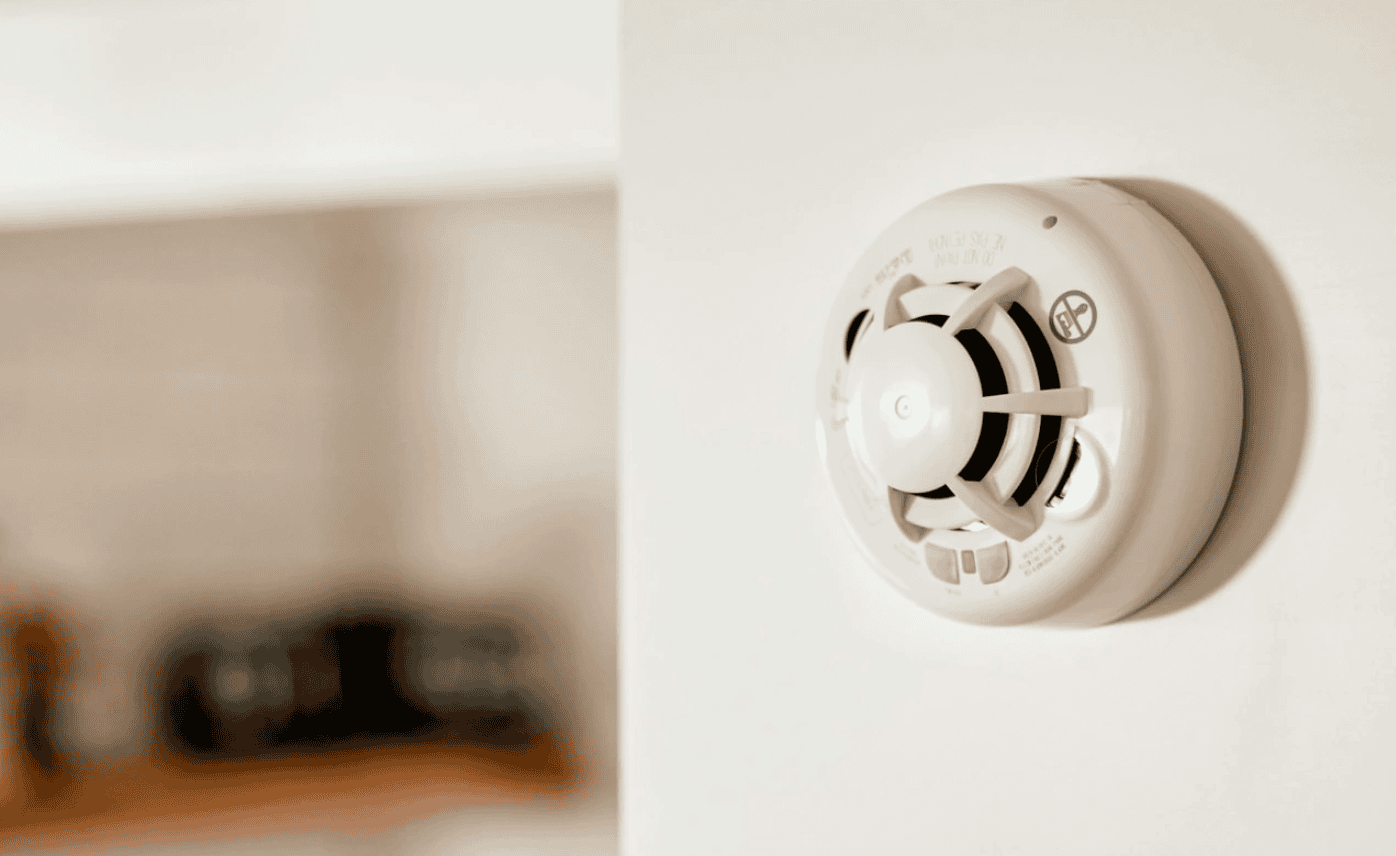
We bought the battery-powered First Alert SC5 option, so we could choose where to install it We installed the battery-operated SC5 on the ceiling of a bedroom, following First Alert’s placement guidance. The unit connected to the First Alert app via Wi-Fi in under two minutes and appeared in the Google Home app automatically once linked. During our testing, the 85 dB siren activated immediately and we received both a First Alert app push notification and a Google Home alert within seconds. The voice announcement clearly stated the hazard type and the room name we had assigned in the app, which is useful for larger homes where you might not immediately know which detector triggered.
We also tested interconnection by triggering the SC5 while a second compatible First Alert unit was installed in another room. Both alarms sounded simultaneously. The Nest integration required the Google Home app’s public preview to be enabled during our testing period, but Google says full compatibility is rolling out to all users eventually.
>> Check Out: The Best Google Home Security Systems of 2026
Pricing
We recommend the SC5 for anyone who wants meaningful smart features without committing to a security system. At $129 it is not cheap for a standalone detector, but it is significantly less expensive than the least costly professional monitoring option over the course of a year.
-
5. Kidde COPDW - Best Budget Standalone
 View Packages Links to Kidde COPDW
Why the Kidde COPDW?
We recommend the Kidde COPDW if you’re on a budget but want Wi-Fi-enabled CO detection with app alerts and no monthly subscription. The device is a plug-in unit with AA battery backup, which means setup takes about two minutes. All we did was plug it into a standard 120V outlet, download the Kidde app, and scan the QR code on the back. It works with both Alexa and Google Home for voice updates and sends real-time CO alerts through the Kidde app whether you’re home or away.
The COPDW uses an electrochemical sensor, the same technology as the professionally monitored systems on this list. It also meets UL 2034 5th Edition standards. The COPDW even carries a 10-year limited warranty, which is consistent with the expected service life of an electrochemical sensor. We liked the backlit digital display that shows current CO levels in real time and updates every 15 seconds. Peak Level Memory also records the highest CO concentration detected since the unit was last reset, which is useful for identifying slow CO buildup that may not trigger the alarm threshold immediately but could signal a developing problem.
FYI: The COPDW detects CO only, has no smoke detection, and does not interconnect with other alarms. For single-room coverage or as a supplement to an existing smoke alarm system, those limitations shouldn’t be a dealbreaker. For whole-home CO coverage, we recommend multiple units.
What We Like
- Affordable unit and no subscription fees
- Plug-in setup
- Real-time app alerts via the Kidde app when CO is detected
- Compatible with Alexa and Google Home for voice status checks
- Digital display shows live CO ppm levels, updating every 15 seconds
- 10-year limited warranty
What We Don’t Like
- No smoke detection
- Does not interconnect with other alarms
- No professional monitoring option
- Wi-Fi limited to 2.4 GHz networks
- App alerts require phone to be on with notifications enabled
Testing and User Experience

The digital display updates every 15, showing CO2 levels in real-time. We plugged the COPDW into a wall outlet and completed app pairing in about 90 seconds. The rotating plug accommodates both vertical and horizontal outlets, a small but useful design detail. he Kidde app shows device status and CO level history, and sends push notifications when CO is detected or when the unit needs attention. During our testing, the 85 dB siren activated and the app notification arrived within a few seconds.
We also checked the Alexa integration by asking for a CO status update, and it returned a current reading. The Google Home integration worked similarly. Neither voice integration can trigger an alarm response, though. Both can confirm the detector is online and report current CO levels, which we think is useful for quick peace-of-mind checks.
The COPDW’s digital display was the standout feature compared to basic battery units at a similar price. Seeing the actual ppm reading rather than just a status LED is more informative, particularly for detecting slow background CO buildup from a malfunctioning appliance before it reaches the alarm threshold.
>> Find Out: How to Stop a Smoke Alarm From Chirping
Pricing
The Kidde COPDW is just $45 and no subscription is required. That’s the cheapest CO device on this list. Kidde even covers the unit with a 10-year limited manufacturer’s warranty.
Methodology: How We Evaluated These CO Detectors
We tailored our approach by product type. For ADT, SimpliSafe, and Vivint, we assessed CO detection as one component of a full security system review covering the detector hardware, monitoring response, smart home behavior, and the practical experience of living with each system. For First Alert and Kidde, we evaluated the standalone units independently, focusing on setup experience, app performance, detection response, and ease of use. Here is what each factor covered:
- CO detection sensitivity and trigger threshold: We verified each unit’s advertised trigger threshold against manufacturer specs and UL 2034 certification standards. Our team also looked at whether each unit uses electrochemical sensing, the gold standard for residential CO detection, or a less reliable alternative.
- Monitoring response time (system-integrated picks only): We conducted 20 alarm simulations per system and measured the time from alarm trigger to monitoring center contact. As part of the assessment, we looked at whether the monitoring center can dispatch emergency services without reaching the homeowner.
- App alert speed and reliability (all picks): We triggered test alarms and measured the time between alarm activation and app notification on a smartphone for primary and secondary account holders.
- Smart home integration and automated response: We tested whether a CO alarm triggered automated actions beyond the siren and app notification.
- Ease of installation and setup: For DIY systems and standalone units, we timed installation from unboxing to active CO monitoring and assessed whether app guidance was clear and the detector confirmed active status. For professionally installed systems, we reviewed the installation experience and whether the technician verified detector placement and system communication before leaving.
- Value and flexibility: For monitored systems, we compared monitoring costs, contract terms, money-back guarantees, and cancellation policies. For standalone units, we assessed the unit price, subscription requirements, feature set, and warranty terms.
What to Look for in a Carbon Monoxide Detector

Not all CO detectors are built the same way, and the features that matter most are not always the ones most prominently marketed. Here is what to prioritize:
Professional Monitoring vs. App-Only vs. Local Alarm Only
A CO detector that only makes noise depends on someone hearing it and responding. A smart standalone with app alerts adds a second layer, though it still requires your phone to be on and notifications enabled. Professional monitoring means a trained agent is notified the moment CO is detected, can call you, and can dispatch emergency services even if everyone in the home is unconscious or unreachable. For carbon monoxide specifically, where exposure can impair judgment and consciousness before a person realizes anything is wrong, we think professional monitoring is worth the monthly cost. If professional monitoring isn’t an option, a smart standalone is meaningfully better than a local-alarm-only unit.
Standalone vs. System-Integrated
Some smart standalone detectors provide local and app-based coverage with no recurring cost. System-integrated detectors connect to a professional monitoring network and can trigger automated smart home responses. The trade-off is cost. Integrated detectors require a security system subscription. For households with gas appliances or attached garages, the monitoring coverage is worth that cost for most buyers.
>> Keep Reading: The Best Security Systems With Apps
Electrochemical Sensor Technology
Electrochemical sensors are the most accurate and reliable technology for residential CO detection. All of our picks use electrochemical sensors for CO. We suggest avoiding detectors that use biomimetic or metal oxide semiconductor sensors. They are less accurate and more prone to false alarms at the concentrations that matter most.
>> Check Out: How to Deal With ADT False Alarms
Interconnected Alarms
When one detector triggers, all connected detectors in the home should sound simultaneously. This ensures that CO buildup in the basement is audible on the second floor. ADT’s One-Go-All-Go, Vivint’s interconnected combo detectors, SimpliSafe’s base station siren, and the First Alert SC5’s wireless interconnection all achieve this. The Kidde COPDW does not interconnect. You’ll need multiple units for multi-floor whole-home coverage.
Co and Smoke Combination Units
Combo detectors cover two life-threatening hazards with a single device. ADT, SimpliSafe, Vivint, and the First Alert SC5 all offer combo units. The Kidde COPDW covers CO only. If you already have smoke detectors installed throughout your home, a CO-only unit will do the job. If you are starting fresh, a combo unit is a better option.
UL 2034 Certification
We recommend looking for CO detectors certified to UL 2034, which is the standard set by Underwriters Laboratories for residential CO detection. All our picks meet this standard. UL 2034 specifies minimum alarm thresholds, false alarm resistance requirements, and battery backup performance. The Kidde COPDW and First Alert SC5 also meet the most current UL 2034 5th Edition requirements.
Recap
Carbon monoxide is undetectable without a sensor, and the most dangerous exposures happen when everyone in the home is asleep. The right CO detector also makes sure someone gets notified and help gets dispatched, regardless of whether anyone is awake to hear the alarm. For households willing to pay for professional monitoring, that’s what our top three picks deliver. For everyone else, picks four and five provide smart, app-enabled coverage without a subscription.
Frequently Asked Questions
-
Do I need a CO detector if I have a smoke detector?
Yes. Smoke detectors detect smoke particles and do not detect carbon monoxide. The two threats require different sensor technologies and separate detection devices, or a combination unit that covers both. Every home with a gas furnace, gas stove, gas water heater, attached garage, or fireplace should have at least one CO detector, regardless of how many smoke detectors are installed.
-
Can a CO detector replace a smoke alarm?
No. A CO detector detects carbon monoxide gas, not smoke or fire. A smoke detector detects smoke particles from combustion. Neither substitutes for the other. A combination unit that detects both covers both threats in a single device, but neither sensor does the other’s job.
-
How long do carbon monoxide detectors last?
The electrochemical sensor inside a CO detector has a reliable service life of about five to seven years. We recommend replacing the unit at that point, even if the alarm still appears to work.
-
Does ADT, SimpliSafe, or Vivint include CO monitoring in their standard plans?
All three require a monitoring subscription for CO emergency dispatch. The CO detector hardware is purchased separately as part of your system equipment, and the monitoring plan provides the 24/7 response and dispatch capability. None of the three offers CO monitoring dispatch without an active plan.
-
What is the difference between the First Alert SC5 and a basic CO detector?
The SC5 adds Wi-Fi connectivity, app alerts, voice announcements that identify the hazard type and room, Google Home integration, and interconnection with compatible alarms. A basic CO detector sounds a local siren when CO is detected and does nothing else.
-
Can I use the Kidde COPDW in a rental?
Yes. The COPDW is a plug-in unit that requires no drilling, no wiring, and no permanent installation. It plugs into any standard 120V outlet, making it ideal for renters.
-
What is UL 2034?
UL 2034 is the residential CO detector standard published by Underwriters Laboratories. It specifies the minimum concentration levels at which an alarm must trigger, how long the alarm must sound, false alarm resistance requirements, and battery backup performance requirements.
-
National Library of Medicine. (2025). Carbon Monoxide Toxicity.
https://www.ncbi.nlm.nih.gov/books/NBK430740/