

LifeLock vs. Experian IdentityWorks
Experian already tracks your credit for free, so we tested whether that's reason enough to skip LifeLock


If you’ve ever pulled your own credit report, you already know the name Experian. That familiarity is exactly why people ask whether its identity protection service is worth paying for over a dedicated provider like LifeLock. Experian’s Basic plan is free forever, which makes it tempting to stop there.
We put that question to the test, and LifeLock still comes out as the stronger overall pick. Experian’s free tier only watches one of the three credit bureaus and leaves out most of the monitoring that actually catches identity theft early. Experian’s paid Premium and Family plans close some of that gap, but they cost more than LifeLock’s comparable tiers while offering less insurance and no device security extras.
Below, we break down where each service earns its price tag, starting with the question most people actually have.
Experian’s Free Plan
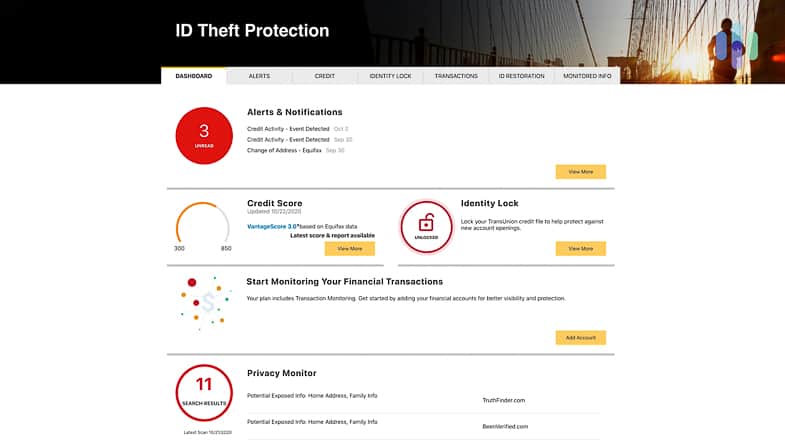
Experian’s Basic plan costs nothing and never expires, which is rare in this industry. It gets you an Experian credit report and FICO score, plus credit monitoring and alerts on that one bureau. Dark web and personal privacy scans are included too, but you have to run them yourself rather than getting an automatic alert.
That last part matters more than it sounds like. Studies have proven that identity theft victims who discover fraud quickly report lower losses. Account takeover fraud incidents are increasing yearly.1 Some reports found that nearly a quarter of new-account fraud victims didn’t find out for six months or more. A plan that requires you to remember to run your own scans works against exactly the kind of fast detection that keeps losses small.
FYI: Experian’s free plan doesn’t monitor TransUnion or Equifax at all, doesn’t watch your Social Security number, and doesn’t alert you to new accounts opened in your name. Those all require a paid Premium or Family plan.
LifeLock vs. Experian IdentityWorks at a Glance
| LifeLock | Experian IdentityWorks | |
|---|---|---|
| Cheapest paid plan | $12.49 per month (Core) | $24.99 per month (Premium) |
| Free option | No | Yes (Basic, single-bureau) |
| Credit monitoring | 2-bureau (Core), 3-bureau (Advanced/Total) | 1-bureau free, 3-bureau paid |
| Identity theft insurance | Up to $3 million (Total plan) | Up to $1 million (Premium/Family) |
| Digital security extras | VPN, antivirus, password manager (Norton 360 add-on) | None |
| Annual billing discount | Yes | No |
| Family coverage | 2 adults + up to 10 kids | 2 adults + up to 10 kids |
Pricing
LifeLock’s pricing starts at $12.49 per month for Core, with Advanced at $19.99 and Total at $34.99, each cheaper when billed annually. Couple and family pricing is available across those tiers too, starting around $35.99 per month for two adults.
Experian’s paid tiers jump straight to $24.99 per month for Premium, nearly double LifeLock’s Core price. Family runs $34.99 per month, covering two adults and up to 10 kids. Experian also doesn’t discount for paying annually the way LifeLock does, so there’s no way to bring that monthly cost down.
Put those numbers side by side, and LifeLock’s cheapest paid plan costs about half of what Experian charges for its cheapest paid plan. Step up to Advanced and you also get three-bureau access.
Identity Theft Insurance
Experian’s Premium and Family plans both include up to $1 million in identity theft insurance under a single policy. It’s straightforward, and it applies the same way no matter what kind of loss you’re dealing with.
LifeLock splits its insurance into categories that scale by tier. Core includes up to $25,000 each for stolen funds and personal expenses, plus $1 million in legal fees on every plan. Total raises stolen funds and personal expenses to $1 million each, for $3 million in combined coverage, triple what Experian offers at any tier.
The tradeoff is complexity. Experian’s flat $1 million is easier to explain in one sentence, while LifeLock rewards you for reading the fine print on what each category actually covers.
Monitoring Features
Experian offers dark web monitoring on its free plan, but you’ll need to remember to hit the scan button.
Once you’re on a paid plan, both services cover a lot of the same ground.
- Dark web monitoring. LifeLock includes this automatically at every tier. Experian’s free plan requires a manual scan; paid plans monitor continuously.
- Social Security number monitoring. Both track your SSN for signs of misuse, but only on Experian’s paid plans.
- Criminal identity theft and court records. LifeLock watches for criminal and synthetic identity theft activity tied to your name. Experian’s paid plans cross-check court records and booking alerts, a similar idea framed differently.
- Address and mail monitoring. LifeLock tracks USPS address changes; Experian’s paid plans send change-of-address alerts through the same underlying idea.
- Unique to Experian. Sex offender registry alerts and non-credit loan alerts, like payday and installment loans, are both Experian paid-plan features LifeLock doesn’t specifically call out.
- Unique to LifeLock. Home title monitoring and investment or 401(k) account tracking, both exclusive to the Total plan.
Neither service leaves an obvious gap once you’re paying for it. The real difference is that LifeLock includes most of this starting at its cheapest tier, while Experian holds almost everything back until you upgrade.
Did You Know: Credit card fraud consumer protections don’t apply to 401(k) account takeovers. It’s why these accounts are becoming a popular target for scammers.2 It’s one of the reasons why we recommend choosing an identity theft protection service that monitors these accounts, like LifeLock.
Credit Monitoring
Here’s the part that catches people off guard. Experian is one of the three major credit bureaus, but its own free plan only monitors itself. To see what’s happening at TransUnion or Equifax, the two bureaus Experian doesn’t own, you have to pay for Premium or Family.
LifeLock doesn’t have that conflict of interest, since it isn’t a credit bureau itself. Even its cheapest Core plan covers two bureaus, and stepping up to Advanced gets you all three for less than what Experian charges for its Premium plan alone.
>> Read More: Which Identity Theft Protection Services Offer the Best Credit Reporting
Digital Security Extras
LifeLock offers an optional Norton 360 bundle on top of its regular plans, adding antivirus software, a VPN, and a password manager for an extra monthly fee. It’s not included standard, but it’s there if you want identity monitoring and device security under one login.
Experian doesn’t offer anything comparable. There’s no antivirus, no VPN, and no password manager at any tier, paid or free. If device security matters to you as much as identity monitoring, that’s a gap only LifeLock’s side of this comparison fills.
Customer Support and Privacy
LifeLock offers phone support and backs its restoration process with a scam support advisor that reimburses up to $10,000 in scam-related losses. Experian’s paid plans include a dedicated fraud resolution specialist and lost wallet assistance. Our testing found its general customer support lacking, though, with no email or live chat option, just a phone line and a knowledge base.
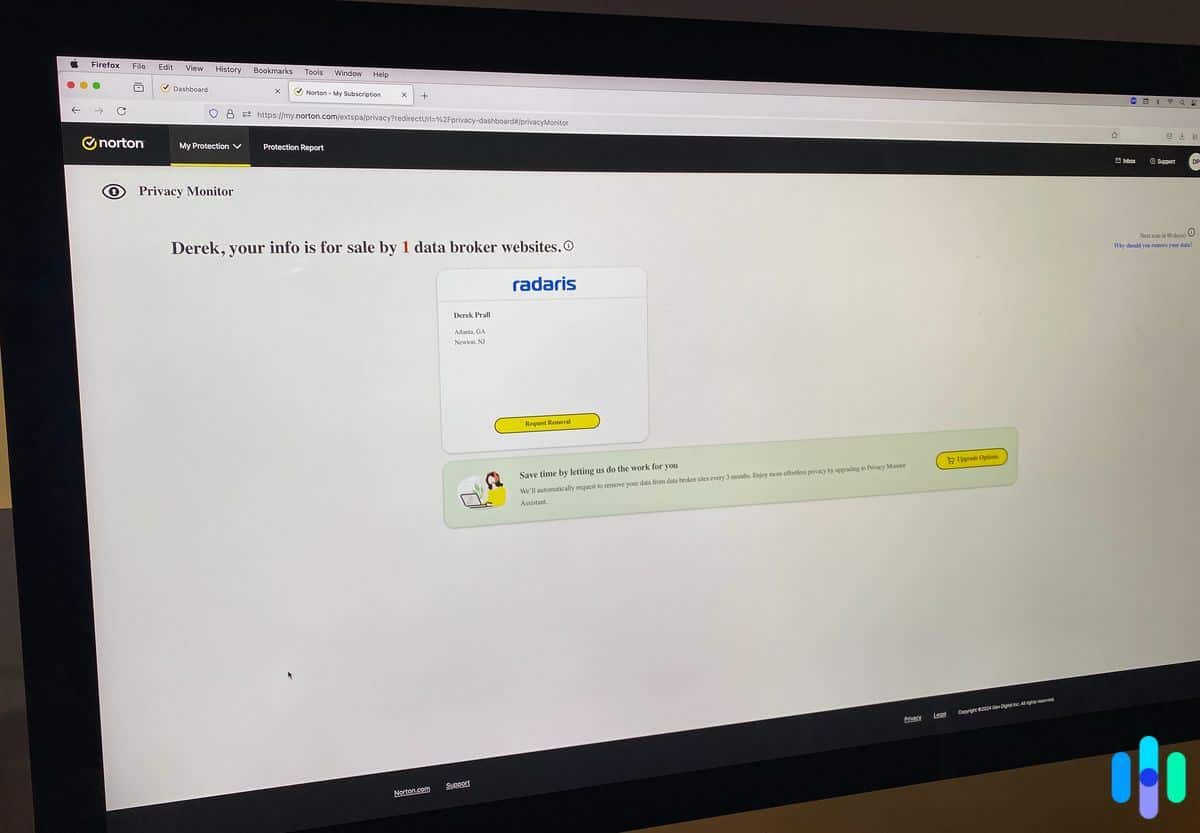
Privacy is worth flagging too. Our review of Experian found it logs details like IP addresses, device types, and wireless carriers, and shares aggregated data with third parties for advertising. That’s a step beyond what most identity protection services disclose, and it’s worth knowing before you hand over the kind of sensitive information these services ask for.
Did You Know: Because Experian is based in the U.S., it can be compelled to share customer data under U.S. surveillance frameworks like Five Eyes, the same legal reality that applies to any American company, LifeLock included.
Our Recommendation
- LifeLock wins on price. Its cheapest paid plan costs roughly half of Experian’s Premium plan, and annual billing brings it down further.
- LifeLock wins on insurance. Three million dollars in combined coverage beats Experian’s flat $1 million by a wide margin.
- LifeLock wins on breadth at the entry level. Two-bureau credit monitoring and dark web alerts come standard on Core, while Experian holds most protections back for paid tiers.
- LifeLock wins on extras. The optional Norton 360 bundle gives you somewhere to go if you want antivirus and a VPN alongside identity monitoring. Experian doesn’t offer that option at all.
- Experian’s edge is narrow. Its free plan really is free forever, and its Premium tier’s flat $1 million insurance is simpler to understand than LifeLock’s tiered categories.
Recap
LifeLock might take longer to set up, but it also means it’s constantly monitoring more of your information to keep your data safe.
LifeLock is the stronger overall pick between the two, with lower-priced paid plans, a higher insurance ceiling, and broader monitoring built into even its cheapest tier. Experian’s Basic plan is the one real exception, since it’s free forever. It gives you a baseline you wouldn’t otherwise have if your credit history is thin and you rarely open new accounts. Once you’re paying either way, though, LifeLock’s Core plan costs less than Experian’s Premium plan while covering two credit bureaus instead of Experian’s one.
Where Experian’s paid tiers close some of that gap, they still fall short of LifeLock on price, insurance, and device security extras. If you’ve had any brush with identity theft before or have kids to protect, LifeLock is the safer bet of the two. The same goes if you just want alerts that come to you instead of scans you have to run yourself.
If you want a closer look at how LifeLock stacks up against other major providers, our LifeLock alternatives guide breaks down a few more options worth considering.
FAQs
-
Is LifeLock better than Experian IdentityWorks?
Yes, for most people. LifeLock offers more insurance, cheaper paid plans, and broader monitoring at its entry-level tier, while Experian’s advantage is mainly a free plan that covers only one credit bureau.
-
Is Experian IdentityWorks' free plan enough for identity protection?
For light needs, it can be a starting point. It only monitors your Experian file and requires you to run your own dark web and privacy scans. That means it won’t catch new accounts opened in your name or activity at the other two bureaus.
-
Which service offers more identity theft insurance, LifeLock or Experian?
LifeLock does. Its Total plan provides up to $3 million in combined coverage, compared to Experian’s flat $1 million on its Premium and Family plans.
-
Does LifeLock or Experian include a VPN or antivirus software?
LifeLock does, through an optional Norton 360 bundle available for an extra fee. Experian doesn’t offer any device security extras at any plan tier.
-
How much does Experian IdentityWorks cost compared to LifeLock?
Experian’s Premium plan costs $24.99 per month, and Family costs $34.99 per month, with no annual discount. LifeLock’s Core plan starts at $12.49 per month, roughly half of Experian’s cheapest paid tier, and drops further with annual billing.
-
The Federal Reserve. (2026). Account takeover fraud: A persistent threat.
https://www.frbservices.org/news/fed360/issues/021726/fraud-mitigation-account-takeover
-
Fox News. (2026). Your 401(k) is the new identity theft target.