
The Top Identity Theft Protection Services with Credit Reporting — 2026 Roundup
We tested the credit monitoring and reporting features of the industry's top identity theft protection services to find which ones actually keep you informed about your credit.
 &
&
 Last Updated on Oct 01, 2026
- Daily credit score updates from one bureau
- Full three-bureau credit monitoring and annual three-bureau credit report
- High insurance policies of up to $3 million per adult

- Three-bureau credit monitoring, plus an instant TransUnion credit lock
- Up to $2 million in identity theft insurance with separate cyber extortion, home title, and online fraud coverage
- Dark web monitoring and financial account alerts active from the moment you subscribe

- All plans provide yearly three-bureau credit reports and three-bureau monitoring
- VPN, antivirus, and password manager included
- Monitors financial transactions as well
the security.brief
We tested LifeLock, Coveron, Aura, and Identity Guard for credit monitoring depth and reporting frequency. See which service keeps you best informed about your credit.
If you want to catch fraud on your credit file before it snowballs, the identity theft protection service you pick needs to do more than send you generic alerts. It needs to pull your credit reports and scores often enough — and from enough bureaus — that you’d actually notice something wrong early.
Based on our testing, LifeLock is the best identity theft protection service for credit reporting, thanks to its Total plan’s three-bureau monitoring and daily credit score updates. Coveron, Aura, and Identity Guard also made our list, each with three-bureau monitoring, regular credit score updates and annual credit reports.
Credit fraud is one of the main reasons people shop for identity theft protection. That’s why we tested all three services hands-on, comparing how often each one delivered a report, how many bureaus it pulled from, and what that coverage actually cost. We break down all four services below, along with a side-by-side comparison table and everything else we found useful in choosing a service built around credit visibility.
Our Top Picks
- LifeLock - Best for Daily Credit Score Tracking
- Coveron - Best for Itemized Insurance Coverage
- Aura - Best for All-In-One Three-Bureau Monitoring
- Identity Guard® - Best for Budget-Friendly Three-Bureau Reporting
Comparing Our Top Picks
| System |
LifeLock
|
Coveron
|
Aura
|
Identity Guard®

|
|---|---|---|---|---|
| Ranking | 1st | 2nd | 3rd | 4th |
| Ratings | 9.8/10 | 9.7/10 | 9.6/10 | 9.4/10 |
| Frequency of Credit Reports | Annual (3-bureau) & Monthly (1-bureau) | Annual (3-bureau) | Annual (3-bureau) | Annual (3-bureau) |
| Frequency of Credit Score Updates | Daily (1-bureau) | Up to Annual (3-bureau) | Monthly (1-bureau) | Monthly (1-bureau) |
| No. of Credit Bureaus Monitored | Up to 3 | Up to 3 | 3 | 3 |
| Recommended Plan Tier | Total | Full Protection | Individual | Ultra |
| Price for One Adult | Starts at $8.33 per month | Starts at $4.99 per month | Starts at $9 per month | Starts at $7.50 per month |
| Read Review | LifeLock Review | Coveron Review | Aura Review | Identity Guard® Review |
Detailed List of the Best ID Protection with Credit Reporting
-
1. LifeLock - Best for Daily Credit Score Tracking

Product Specs
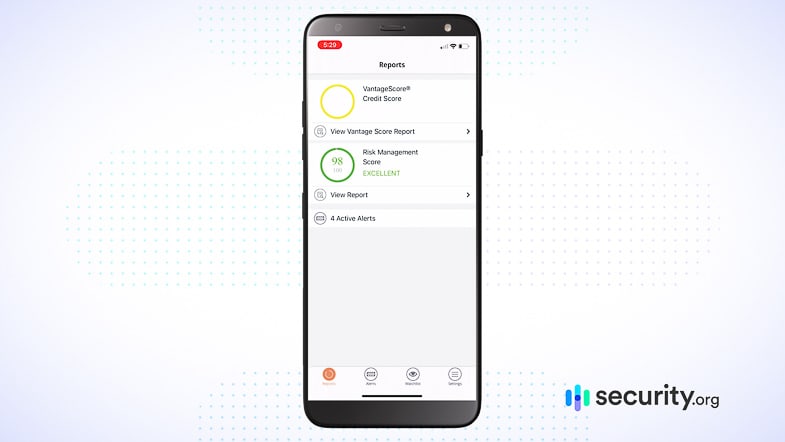
Dark Web Monitoring Yes Credit Reporting Yes Insurance Coverage Up to $3 million Free Trial 30-day Individual Monthly Plans $12.49 and up Family Monthly Plans $47.99 and up LifeLock earns our top spot on this list because its Total plan pairs full three-bureau credit monitoring with the fastest score refresh rate we tested. It combines daily updates on your single-bureau score, a monthly credit report from one bureau, and an annual three-bureau report. In our testing, that combination mattered most for catching a sudden score drop close to the moment it happened, rather than finding out weeks later. We also found LifeLock backs its credit protections with some of the strongest identity theft insurance in the industry, which rounds out the picture for anyone who wants more than just monitoring.
>> Comparison Shopping: LifeLock Identity Theft Protection Alternatives
What We Like
- Daily score updates (fastest of the three)
- Highest insurance ceiling (up to $3M per adult)
- Optional Norton 360 bundle
- Activity alerts for bank accounts and credit cards
What We Don’t Like
- Most expensive plan
- Basic plan only includes one-bureau monitoring
- Credit lock covers TransUnion only
- Most complex plan/tier structure
Credit Reporting and Monitoring Inclusions

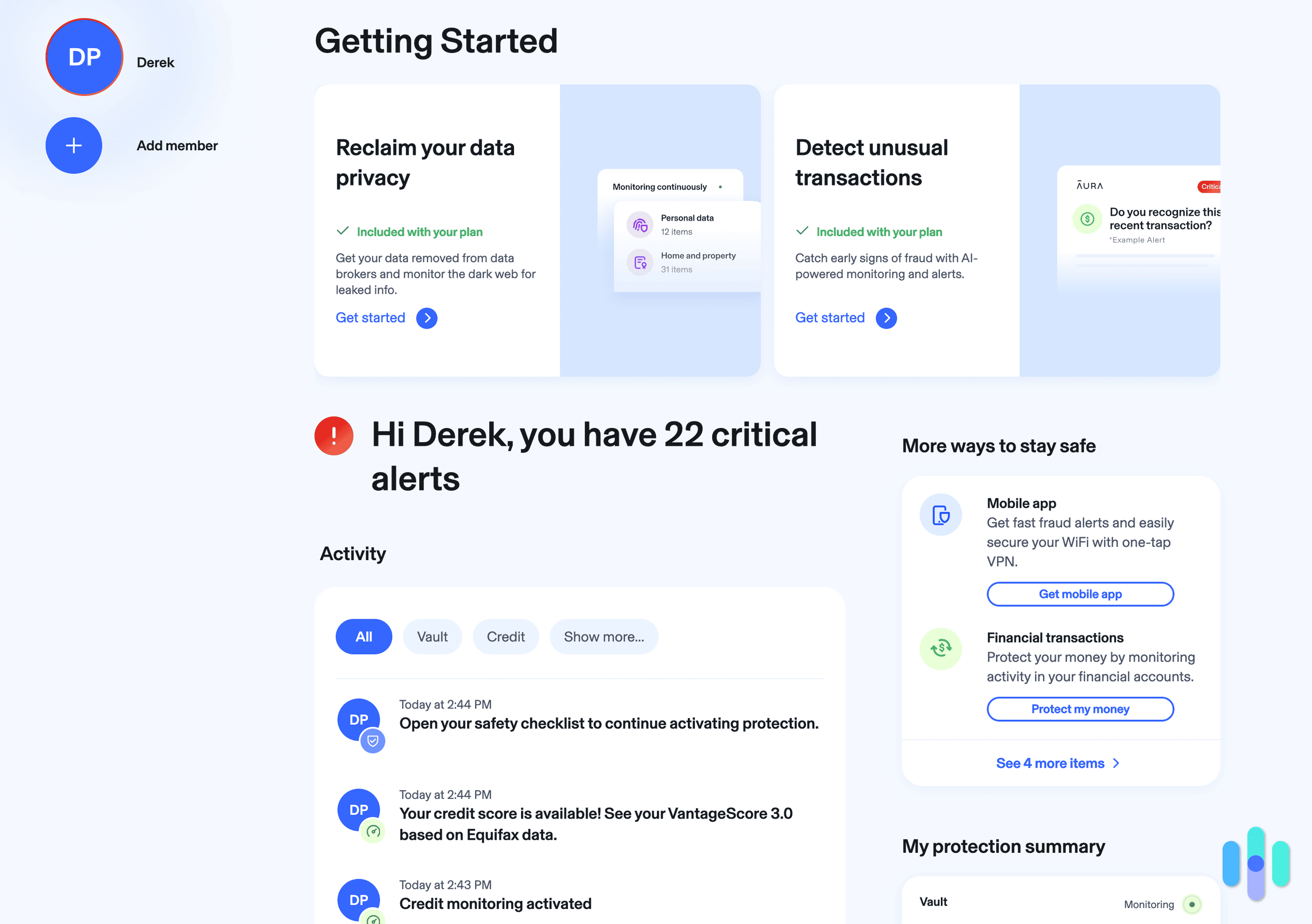
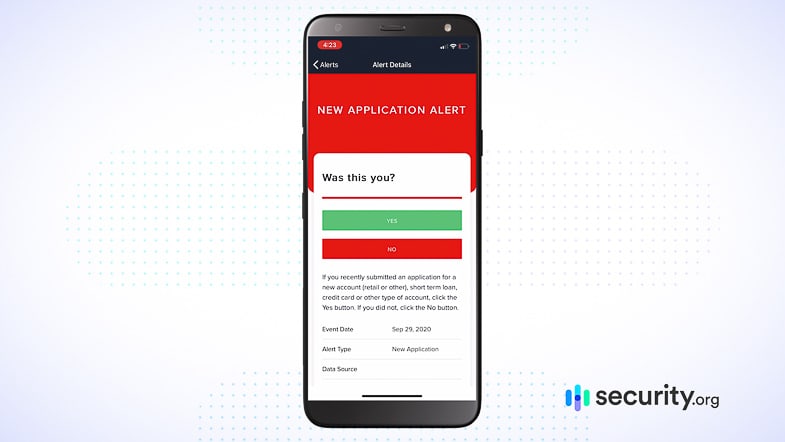
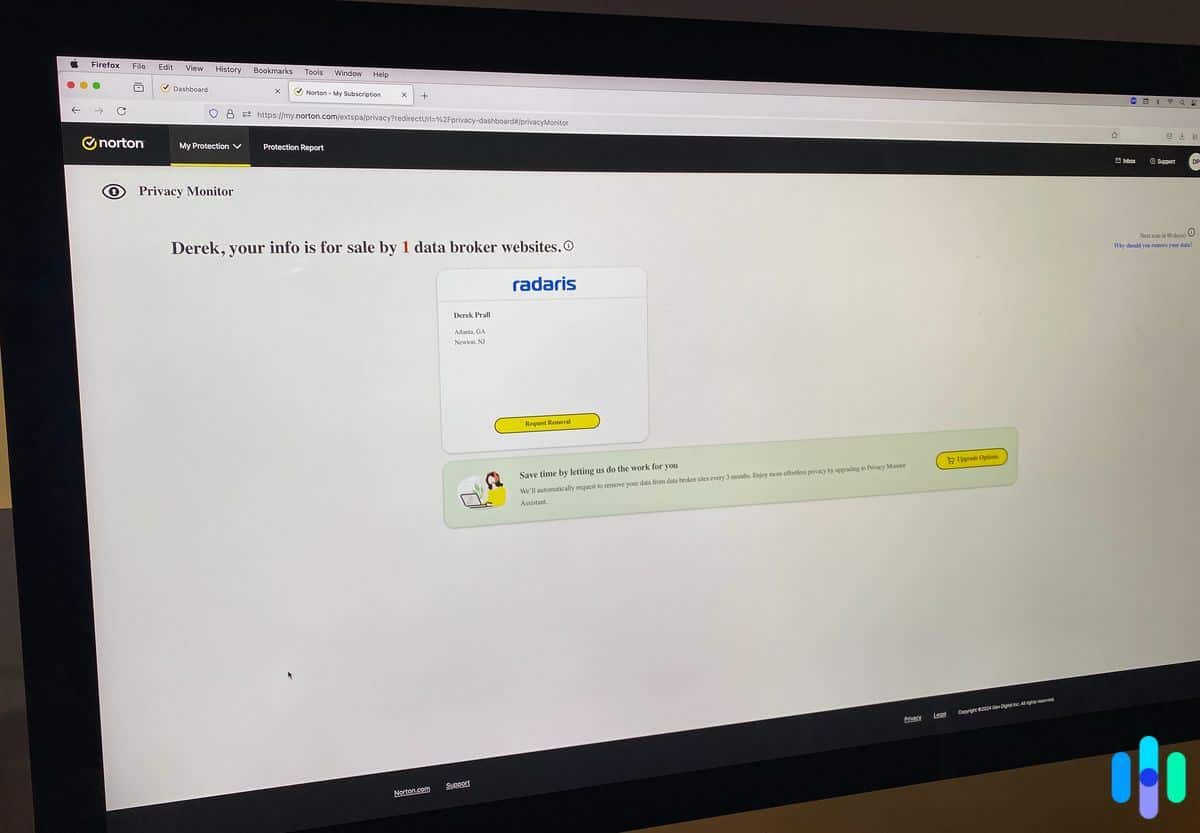
LifeLock found our tester’s information in one data broker site We found LifeLock’s Total plan monitors all three major credit bureaus — Experian, Equifax, and TransUnion — and flags new inquiries, accounts, or changes to your credit file as they happen. It also watches for synthetic identity theft, where someone builds a fake identity using pieces of your real personal information. To mitigate that risk, LifeLock notifies you if it finds any of your information or credentials in a data breach. On top of hands-off monitoring, LifeLock provided us with a full three-bureau credit report once a year and a single-bureau credit score updated daily inside the app while we were subscribed to Total. That’s the most frequent score refresh among the services we compared here.
During testing, we also used LifeLock’s TransUnion credit lock. This let us toggle access to our TransUnion credit file on and off instantly rather than placing and lifting a formal freeze, which can take up to three business days.1 The TransUnion credit lock toggle can be useful in case you need to apply apply for credit on short notice, since your Experian and Equifax files could stay frozen the whole time. For a closer look at how LifeLock stacks up against our second pick, see our LifeLock vs. Aura comparison.
Note: Specific pricing and plan details are subject to change. Check LifeLock’s plans and pricing page for current rates.
LifeLock Pricing
We recommend the Total plan for credit reporting specifically, since it’s the only LifeLock tier that includes a daily score update combined with three-bureau monitoring. It runs $34.99 per month, or $349.99 per year ($29.17 per month). That’s a jump from LifeLock’s entry-level Core plan at $12.49 per month, which only includes two-bureau credit monitoring as well as a credit report and score from one bureau. If Total is outside your budget, the Advanced plan offers a middle ground at $19.99 per month with three-bureau credit monitoring and an annual report from all three bureaus.
FYI: Not all identity theft protection plans include credit reports and scores from all three bureaus. Some limit monitoring or reporting to a single bureau on their cheaper tiers. Keep an eye out for those restrictions when choosing a plan.
-
2. Coveron - Best for Itemized Insurance Coverage
Get Coveron Links to Coveron
Product Specs
Dark Web Monitoring Yes Credit Reporting Yes (Full Protection tier only) Insurance Coverage Up to $2 million Free Trial None — 30-day money-back guarantee Individual Monthly Plans $4.99 and up (2-year plan) Family Monthly Plans $17.99 and up (2-year Couple plan)
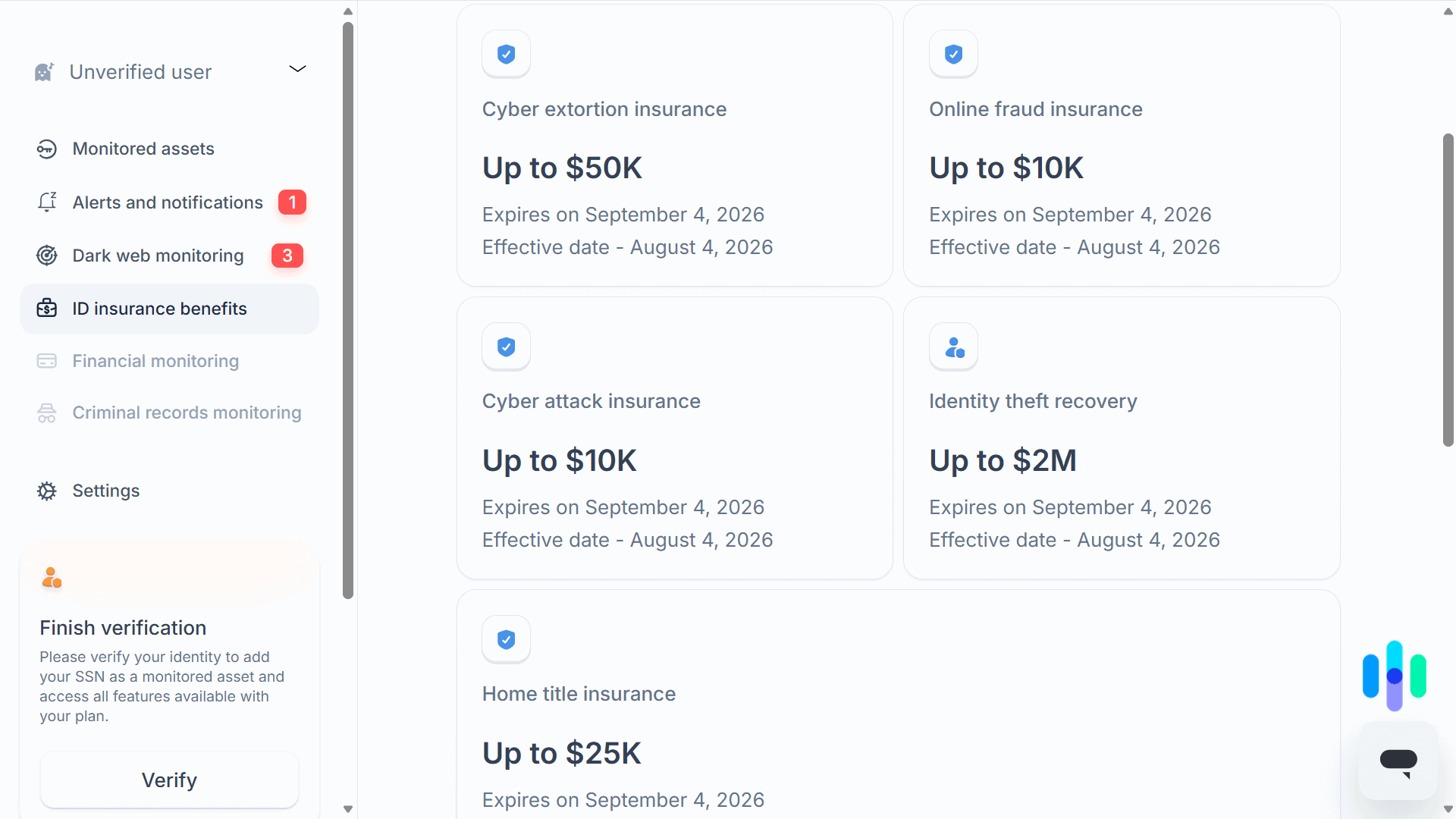
Coveron takes a different approach to credit protection than LifeLock, Aura, and Identity Guard. Instead of leading with report and credit score update frequency, it pairs three-bureau credit monitoring (on its Full Protection tier) with up to $2 million in identity theft insurance. That coverage is itemized rather than blended — cyber extortion ($100,000), home title fraud ($100,000), online fraud ($100,000), and cyberattack ($10,000) are each covered separately and don’t draw down the $2 million identity recovery amount.
In our testing, we found this insurance-first structure means Coveron provides a strong backstop in the event of identity theft rather than delivering the kind of deep, multi-bureau reports that LifeLock, Aura, and Identity Guard provide. This makes it a more hands-off option for those who don’t care to closely monitor their credit, but still want adequate protection.
What We Like
- Up to three-bureau credit score and monitoring
- TransUnion credit lock, toggled instantly from the dashboard
- Up to $2 million in identity theft insurance, on top of cyber extortion, home title, and online fraud coverage
- Short-term loan and financial account monitoring included
What We Don’t Like
- Three-bureau credit reports are only available in the Full Protection plan
- Full credit monitoring requires the top-tier Full Protection plan; the entry Identity Theft Protection tier is 1-bureau only
- Three-bureau credit scores are only updated annually
- Not available to New York residents
Coveron Reporting and Monitoring Inclusions
Coveron’s credit monitoring, available on the Full Protection tier, tracks activity across Experian, Equifax, and TransUnion. It flags new inquiries, accounts, and other changes to your file. It also includes a TransUnion credit lock you can toggle instantly from the dashboard. Where Coveron differs from LifeLock, Aura, and Identity Guard is its credit score updates. Instead of a daily or monthly one-bureau update, it provides a three-bureau credit score updated annually. That works well for anyone who rarely wants to check their credit score, but it’s a definite gap if you want regular insights into your credit health.
Compared to LifeLock, it also lacks more frequent credit reports as Coveron only provides a three-bureau report once a year on the top-tier plan. LifeLock offers a one-bureau report daily on top of an annual three-bureau report.
Coveron Pricing

Coveron provides a full summary of your insurance coverage in their dashboard Coveron’s Full Protection plan — the tier required for three-bureau monitoring — starts at $10.99 per month on a 2-year plan ($30.49/month with no commitment). That’s less than LifeLock’s comparable Total plan ($34.99/month) but without the daily score refresh and daily one-bureau report that LifeLock offers. It’s about the same price as Aura for similar credit monitoring capabilities, but Coveron offers a larger insurance policy.
-
3. Aura - Best for All-In-One Three-Bureau Monitoring

Product Specs
Dark Web Monitoring Yes Credit Reporting Yes Insurance Coverage Up to $1 million Free Trial 14-day Individual Monthly Plans $12 Family Monthly Plans $32 Aura takes our second spot because it strips away the tiered-plan guesswork entirely. Every Aura subscription, whether Individual, Couple, or Family, includes the same three-bureau credit monitoring and identity protection features. You never need to worry about upgrading for better coverage. That simplicity, combined with a lower price than LifeLock’s Advanced and Total plan, makes Aura a strong pick for anyone who wants comprehensive credit monitoring without comparing feature charts first.
What We Like
- Three-bureau monitoring on every tier
- Affordable rates for comprehensive coverage
- VPN, antivirus, and password manager included free
- Support from a U.S.-based fraud remediation expert
What We Don’t Like
- Score updates only monthly
- Credit lock covers Experian only
- Lower insurance ceiling (up to $1M per adult)
- No budget/basic tier option
Credit Reporting and Monitoring Inclusions

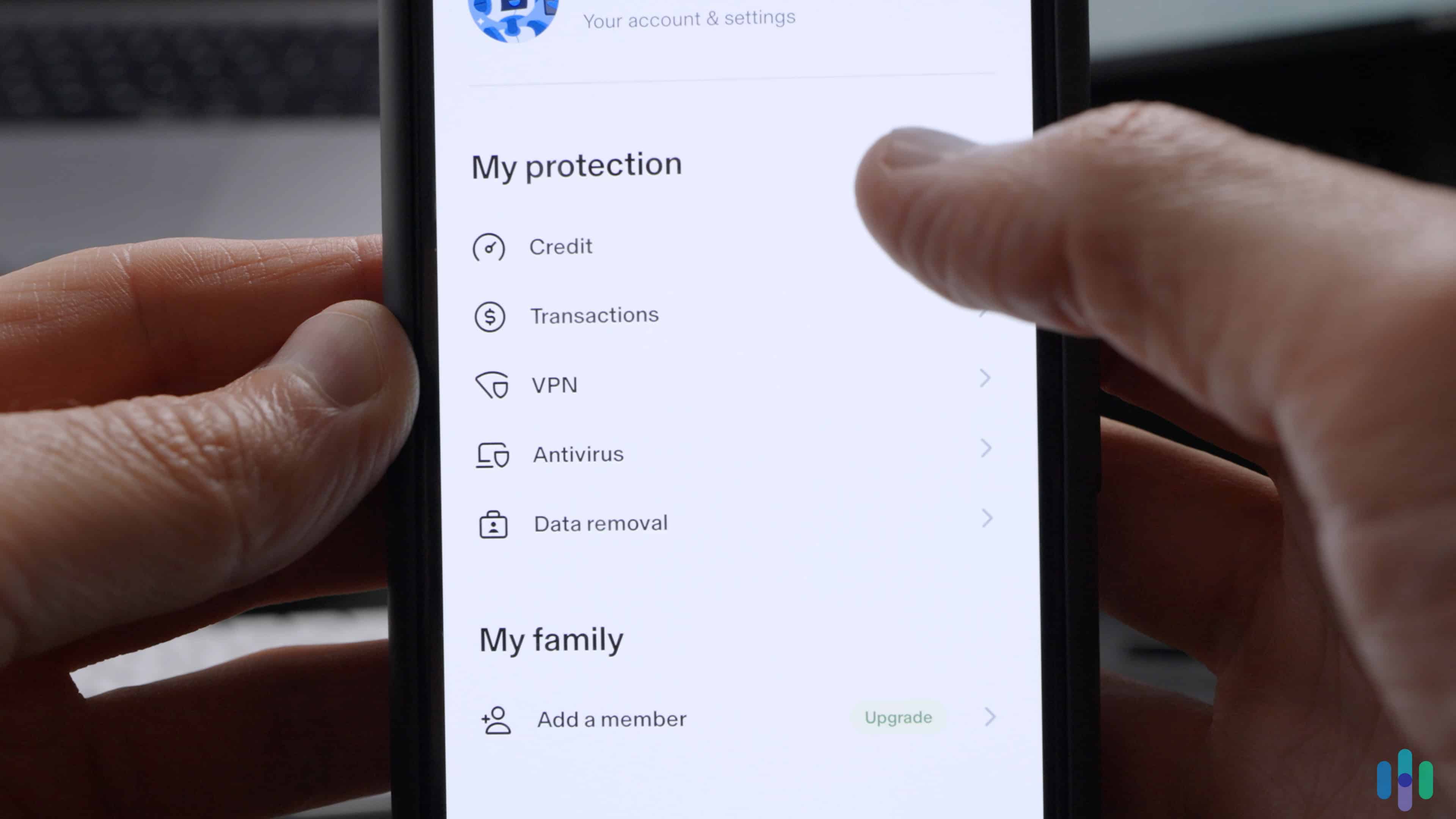
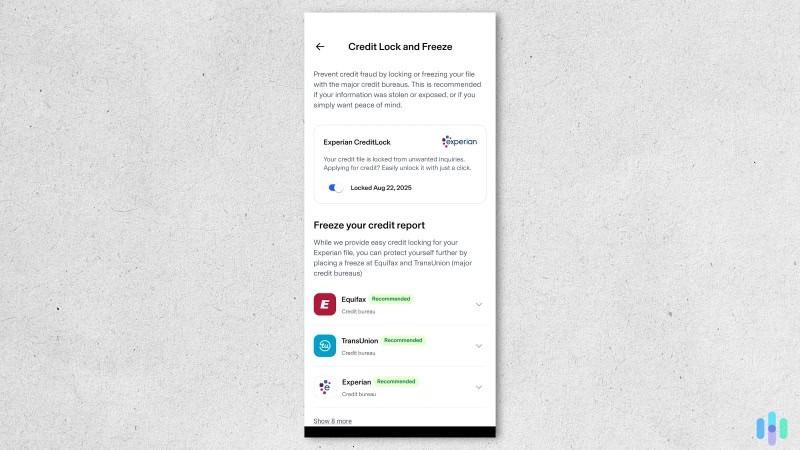
We locked our Experian credit file from Aura’s Android app as soon as we signed up Aura monitors your credit file across Experian, Equifax, and TransUnion, alerting you to new inquiries, opened accounts, and other changes as they’re detected. It also includes standard dark web monitoring for your personal information. During testing, we appreciated the monthly credit score updates and the annual credit report from all three bureaus. These features are included in every plan.
We tested Aura’s credit lock through Experian, which you can toggle on or off instantly in the app. It doesn’t extend that same one-tap lock to TransUnion or Equifax, so we recommend a free credit freeze for those two bureaus directly. That way, you can still easily use your Experian file to apply for small lines of credit without exposing your other profiles. Just note that large credit lines, like a mortgage, typically require access to all three credit files.
Note: Specific pricing and plan details are subject to change. Check Aura’s plans and pricing page for current rates.
Aura Pricing
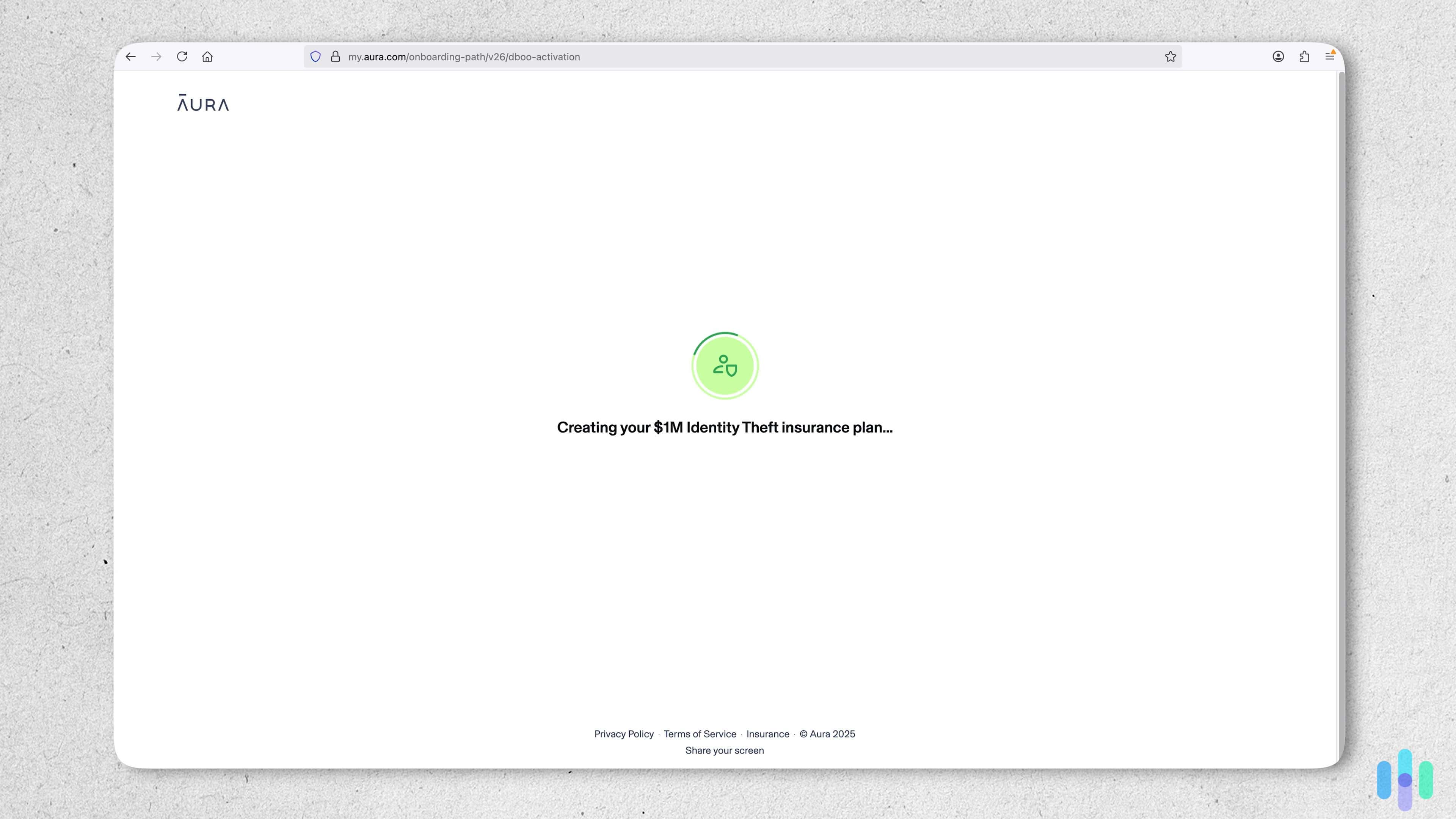
We paid $12 per month for Aura’s Individual plan. However, you can pay for a year upfront to bring that price down to just $9 per month. Unlike LifeLock, Aura does not lock any of its credit reporting capabilities behind higher tiers. That means those low prices include three-bureau monitoring, monthly credit score updates, and an annual credit report. The Couple and Family plans include those features for each covered adult, making it one of the best family identity theft protection services.
>> Learn More: Aura Antivirus 2026 Review
-
4. Identity Guard® - Best for Budget-Friendly Three-Bureau Reporting

Product Specs
Dark Web Monitoring Yes Credit Reporting Yes Insurance Coverage Up to $1 million Free Trial 30-day Individual Monthly Plans $7.50 and up Family Monthly Plans $12.50 and up Identity Guard rounds out our list because its Ultra plan offers three-bureau credit monitoring with an annual three-bureau credit report, at a lower rate than both LifeLock and Aura. That makes it a solid option for anyone who wants broad bureau coverage while keeping prices low. Just note that those other two tend to offer more comprehensive monitoring. For a full side-by-side breakdown of how it stacks up against a premium option, see our Identity Guard vs. LifeLock comparison.
What We Like
- Affordable three-bureau monitoring starts at $7.99 per month
- Experian credit lock included
- Family plans cover up to five adults
- Monthly credit score updates in premium plan
What We Don’t Like
- Cheapest plan has no credit monitoring
- Score updates monthly and single-bureau
- Credit lock covers Experian only
- Rates increase when renewing an annual subscription
Credit Reporting and Monitoring Inclusions

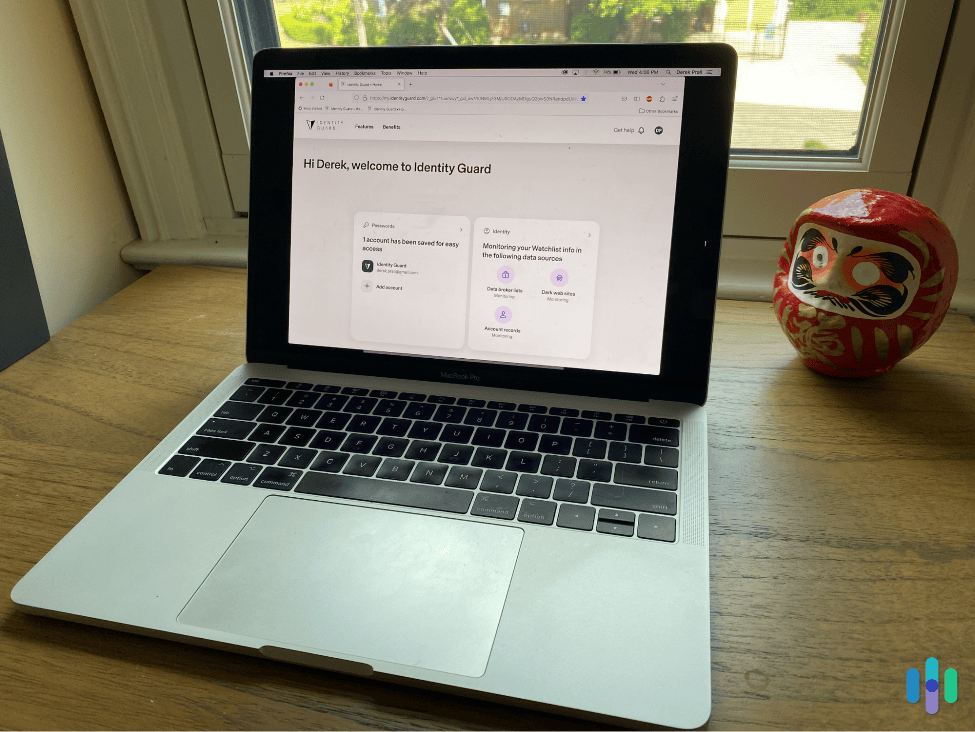
We tested Identity Guard’s full feature set for an entire month During testing, we saw that Identity Guard’s entry-level Value plan skips credit monitoring entirely, so you’ll need to step up to Total or Ultra to get it. The Ultra plan, which we recommend here, includes three-bureau credit monitoring, an annual three-bureau credit report, and a monthly single-bureau credit score update. On top of that, it includes standard dark web and data breach monitoring.
We also tested Identity Guard’s Experian credit lock, which let us toggle that bureau on and off with a single tap, similar to how Aura handles its own Experian lock. As with the other two services here, only one bureau is covered by that one-tap toggle, so you’d need to freeze or lock the other two bureaus manually.
Note: Specific pricing and plan details are subject to change. Check Identity Guard’s plans and pricing page for current rates.
Identity Guard Pricing
We found the Ultra plan starts at $7.99 per month when billed annually with an introductory discount. That’s less than LifeLock and Aura charge for similar three-bureau coverage, though LifeLock still wins on score update frequency with its daily refresh. Aura makes up for the price difference with additional device protections. That said, Identity Guard’s value is hard to beat if your only concern is credit reporting and monitoring.
>> Read About: How to Compare Identity Theft Protection Services in 2026
Why Credit Reports Matter for Catching Identity Theft
Your credit report is often where identity theft shows up first, sometimes before you notice anything else is wrong. In our experience, a new account you didn’t open, a hard inquiry from a lender you’ve never dealt with, or a sudden score drop can all be early signs of identity theft. Reviewing your report regularly, or having a service do it for you, gives you a chance to catch and dispute fraudulent activity before it does lasting damage to your credit history. With the latest identity theft statistics showing that the FTC received over 1.1 million identity theft reports in 2024 alone,2 keeping a close eye on your credit report is a necessary precaution.
How to Get Your Free Credit Reports
You’re entitled to a free credit report from each of the three major bureaus every week through AnnualCreditReport.com, the only site authorized by federal law to provide them at no cost. That’s true whether or not you’re subscribed to an identity theft protection service. The tradeoff is time and effort. You have to remember to request them and review them for anything unusual on a regular basis, whereas a paid service automates that process and adds alerts on top. For a full walkthrough of how to request your reports and spot suspicious activity, see our guide on how to get a free credit report.
If You Think Your Identity Has Already Been Stolen
If your credit report or a monitoring alert turns up something you don’t recognize, acting quickly matters. We recommend placing a fraud alert or credit freeze, disputing the fraudulent item with the bureau involved, and documenting everything for your records. Our guide on what to do if your identity is stolen walks through those steps in order, while our guide to preventing identity theft covers the habits that make it less likely to happen again.
Pro Tip: If you’ve recently applied for a mortgage, auto loan, or other major line of credit, it’s worth checking your report more frequently for a few months afterward. That’s when your file sees the most activity, and any fraudulent inquiries are easiest to catch early.
Methodology: How We Picked the Best Identity Theft Protection Services with Credit Reporting
Methodology: How We Picked the Best Identity Theft Protection Services with Credit Reporting
Our Testing Principles
Identity theft protection services are not all created equal. Our job is to find the ones that are worth your hard-earned money. Our reviewers enroll in and evaluate every service firsthand over a minimum of four weeks. During that time, we checked monitoring and reporting depth across Experian, Equifax, and TransUnion, how quickly compromised personal data is flagged, responsiveness of the restoration team and identity theft insurance amounts. We also evaluated how comprehensively each service tracks personal identifiers, the service’s financial monitoring coverage across credit lines and bank accounts, mobile app performance and notification delivery under real conditions, and included extras like a VPN, antivirus, or password manager. Finally, we weigh monthly and annual costs across individual and family plans, and money-back guarantees to assess its overall value. All of this ensures the services we highlight hold up when your personal information is actually at risk, in line with our Editorial Guidelines.
The Top Criteria We Considered
For this roundup, we focused on the features that most directly affect how well a service keeps you informed about your credit. The main criteria we considered include:
- Credit Bureau Reports: Services that offer annual three-bureau credit reports are currently the gold-standard.
- Credit Score Monitoring: We assess both how frequently credit scores update as well as which credit score the service uses.
- Pricing: Some basic plans do not include any credit reporting or monitoring features, so we only considered the price of plans with credit reporting capabilities for this guide.
We weighed these criteria against each other rather than in isolation, since a service with three-bureau monitoring but infrequent updates doesn’t necessarily beat one with fewer bureaus but faster alerts.
Who We Are
Security.org is made of an independent team of security experts committed to honest, unbiased identity theft protection recommendations. We have over 20 identity protection and cybersecurity experts with over 25,000 hours of combined testing experience across more than 740 security reviews since 2018. Our work has been cited by The New York Times, TechRadar, and CBS News.
Our identity theft protection testing is headed by Cort Honey, a consumer privacy expert and identity theft protection specialist. He has tested hundreds of identity theft protection services, VPNs, and digital privacy tools with a detail-oriented, consumer-first methodology.
The wider team behind our identity protection and privacy coverage includes:
- Brett Cruz: Cybersecurity expert and hands-on product tester of password managers, VPNs, and cybersecurity software
- Ozzie Enriquez: West Point graduate and former Deputy Director of Security at the Missile Defense Agency, U.S. Pentagon, contributing expertise in federal security operations and digital risk assessment as a senior advisor
- Gene Petrino: Former S.W.A.T. commander and law enforcement veteran with 30+ years of law enforcement and security expertise acting as a senior advisor
- Matthew Adkins: Ph.D.-holding researcher with a track record of testing and ranking 100+ security and privacy products
Our editorial recommendations are never shaped by advertiser relationships or affiliate compensation.
Conclusion
If credit reporting is the feature you care about most, all four services on this list clear the bar with three-bureau monitoring. However, based on our hands-on testing, they each offer different perks. We found LifeLock’s Total plan gives you the fastest score refresh of the group with its daily update. It’s also backed by some of the strongest identity theft insurance available, though it carries a high price tag.
Coveron offers the most hands-off approach with its generous insurance policy and focus on credit monitoring instead of reporting. Aura is the simplest path to three-bureau coverage, since every plan tier includes the same monitoring without any feature comparison required, at lower rates than LifeLock. Identity Guard offers even lower rates starting at $7.99 per month for three-bureau monitoring, a monthly score update, and an annual three-bureau report. Just watch out for a price increase at renewal.
Whichever service you choose, the most important step is simply having identity theft protection in place. In our experience, credit-related fraud is far easier to catch and dispute early than after it’s had months to compound.
FAQs
-
Which identity theft protection service has the best credit reporting?
Based on our testing, LifeLock provides the best credit reporting capabilities. Its Total plan offers the most frequent credit score updates of the services we tested, refreshing daily. That said, all four of our picks, LifeLock, Coveron, Aura, and Identity Guard, provide three-bureau credit monitoring and an annual three-bureau credit report.
-
Do I need all three credit bureaus monitored?
Not necessarily, but it helps. Lenders can pull from any of the three bureaus, Experian, Equifax, or TransUnion, so a service that only monitors one could miss fraudulent activity reported to another. Three-bureau monitoring gives you broader coverage of where the first signs of identity theft commonly appear.
-
How often do these services update your credit score?
It varies by provider and plan. LifeLock’s Total plan updates a single-bureau score daily, while Aura and Identity Guard’s Ultra plan both update a single-bureau score monthly. Coveron’s top-tier plan, on the other hand, offers a three-bureau score updated annually.
-
Can I get free credit reports without paying for a service?
Yes. You’re entitled to a free credit report from each of the three major bureaus every week through AnnualCreditReport.com. An identity theft protection service automates that process and adds monitoring and alerts on top, but the underlying reports themselves are available to anyone at no cost.
-
Is LifeLock better than Aura for credit monitoring?
It depends on what you value most. In our testing, LifeLock’s Total plan updated its credit score more frequently and included stronger identity theft insurance, but it costs more. Aura offers the same three-bureau monitoring and reporting across every plan tier at a lower price, without needing to select a specific tier to get it.
-
USA.gov. (2025). How to place or lift a security freeze on your credit report.
https://www.usa.gov/credit-freeze -
Federal Trade Commission. (2025). New FTC Data Show a Big Jump in Reported Losses to Fraud to $12.5 Billion in 2024.
https://www.ftc.gov/news-events/news/press-releases/2025/03/new-ftc-data-show-big-jump-reported-losses-fraud-125-billion-2024