
LifeLock Identity Theft Protection in 2026 – How Much Does It Cost?
LifeLock offers one of the highest insurance coverages in the industry (up to $3 million) with subscription prices starting at $12.49 per month.
- Up to $3 million identity theft insurance per adult
- Proactive scam support virtual advisor with up to $10,000 reimbursement for scam-related losses
- 60-day money-back guarantee with annual plans; cancel anytime


the security.brief
For as low as $12.49, LifeLock protects users from identity theft and provides identity theft insurance up to $3 million.
Identity theft costs Americans $43 billion a year,1 which is why identity theft protection is more than a luxury. Besides detecting identity theft, identity theft protection services cover financial losses resulting from stolen funds and legal fees for anyone recovering from having their identity stolen. When we did a deep-dive review of LifeLock, we found that it’s one of the best in that area — it offers insurance coverage of up to $3 million per individual.
This time, we’re going to look at LifeLock from a price-focused angle. Not all LifeLock users get $3 million coverage, and not all of them enjoy the same protections. So if you’re considering LifeLock for your identity theft protection needs, read this guide to learn how to get the most out of your money.
How Much Do LifeLock Subscriptions Cost?
We’ll get to the point, because unlike LifeLock’s top rival, Aura, LifeLock offers a handful of options for identity protection. Aura’s pricing structure offers the same features regardless of the tier and only the number of individuals covered changes. With LifeLock, not only are there individual, couple, and family plans, but there’s also a tiered structure that scales the level of protection customers get. These tiers are Core, Advanced, and Total.
In addition, there are separate plans available bundled with a Norton 360 cybersecurity suite. All plans are also available for monthly or yearly billing, typically with lower monthly average costs if you commit for one year.
LifeLock for Individuals
Let’s start with pricing for individuals. These subscriptions cover one adult. We recommend these to folks living by themselves, especially young adults. According to the Federal Trade Commission (FTC), Americans in the 20 to 29 age group are the third most targeted individuals for identity theft.2
Here’s an overview of LifeLock’s individual plans, although keep in mind that prices may change, so we suggest checking LifeLock’s website for live prices.
| LifeLock Individual Plans | Core | Advanced | Total |
|---|---|---|---|
| Monthly pricing | $12.49 | $19.99 | $34.99 |
| Annual pricing | $124.99 (~$10.42/mo) | $199.99 (~$16.67/mo) | $349.99 (~$29.17/mo) |
| Identity theft insurance – legal fees | Up to $1 million | Up to $1 million | Up to $1 million |
| Identity theft insurance – stolen funds | Up to $25,000 | Up to $100,000 | Up to $1 million |
| Identity theft insurance – personal expenses | Up to $25,000 | Up to $100,000 | Up to $1 million |
| Additional features | AI threat protection, 2-bureau credit monitoring, automatic data removal, etc. | Everything in Core + $5K scam reimbursement, 3-bureau credit monitoring, etc. | Everything in Advanced + $10K scam reimbursement, financial and investment account monitoring, etc. |
| Best for | Young adults with no extensive financial accounts to protect | Adults (especially older adults) that need higher credit monitoring and scam protection | Adults in their prime earning years that need extensive financial account monitoring |
FYI: LifeLock offers separate plans bundled with Norton 360. They are called LifeLock Select and LifeLock Ultimate Plus, which offer the same features as Core and Total respectively, but with Norton 360 added. They cost $14.99 and $34.99, and we recommend them to individuals with extensive digital exposure.
LifeLock for Couples
For couples, or any two adults living in the same household, LifeLock offers a discounted subscription through its Advanced plan tailored for two users.
One thing worth clearing up. A shared plan doesn’t mean a shared account. Each partner gets their own login, their own monitoring dashboard, their own insurance limits, and their own alerts. The only thing that’s actually combined is the billing. And speaking of billing, here’s how its pricing breaks down.
| LifeLock Couple Plan | Advanced |
|---|---|
| Monthly price | $35.99 |
| Savings vs. 2 individual plans | ~$4/mo |
| Yearly price | $359.99 (~$30/mo) |
| Savings vs. 2 individual plans | ~$40/yr |
Given the modest savings, we only recommend the Advanced Couple plan if both partners have similar risk exposure. For example, you’re both employed with financial and credit accounts worth protecting equally.
Otherwise, we’d recommend signing up individually, so each partner can choose the plan tier that actually matches their own exposure. Let’ say one partner is self-employed with investment accounts and a mortgage, while the other is a student with a single checking account and no credit history to speak of. Putting both people on the same Advanced plan means the higher-risk partner is under-covered relative to what Total would offer, while the lower-risk partner is paying for monitoring and insurance limits they don’t really need. In a case like that, it makes more sense for one partner to sign up for Total individually and the other to stay on Core, rather than splitting the difference on a shared Advanced plan that doesn’t fit either person well.
LifeLock Family Plans
Lastly, LifeLock offers plans for families. These plans cover two adults plus up to 10 children under the age of 18. LifeLock is one of the best identity theft protection services for families because of its features, though it may not be the best fit for larger or extended-family households due to its two-adult limit. If your household includes more than two adults, Aura or Identity Guard are worth considering instead, since both offer family plans covering up to five adults.
LifeLock’s family plan pricing follows the same structure as its couple plan, with only one tier available. It costs $40 per month billed annually ($479.99 total) or $47.99 per month billed monthly. The only real addition over the couple plan is coverage for children, though kids aren’t covered with the same benefits as adults. Instead, LifeLock extends the following protections to children on the plan.
- Credit file detection. Detects the existence of a credit file for minor children, which can be an early sign of identity theft.
- Dark web monitoring. Monitors the dark web for personal information that may have been leaked.
- File-sharing network searches. Actively searches file-sharing networks for leaked personal information.
LifeLock’s family plan is well-structured, in our opinion, but it isn’t the right fit for every household. If you’re a single parent, for example, you don’t need to pay for coverage for a second adult just to get your children protected. In that situation, we recommend the LifeLock Junior add-on instead. It attaches to any individual plan and costs $5.99 per month per child, letting you cover your kids without paying for an adult slot you don’t need.
What You Should Know About LifeLock’s Pricing
LifeLock is in the top three of our 2026 ranking of identity theft protection services. It has our seal of approval, tested by our team of experts. But like any company, LifeLock uses marketing tactics that can feel like “gotchas” if you didn’t know about them beforehand. We’re here to shed a light on those.
At the same time, LifeLock has deals and guarantees you won’t want to miss out on, like their money-back guarantee and free trial. Having tested LifeLock ourselves, we’re here to tell you about those as well.
Introductory vs. Renewal Pricing for Annual Plans
LifeLock’s pricing works like a lot of subscription services these days: the number you see at signup usually isn’t the number you’ll pay forever. First-year plans come discounted, but they also auto-renew, and once that introductory period ends, you’re moved to LifeLock’s standard rate. If you’re not expecting it, that shift can feel like a bait and switch, even though it’s technically spelled out in the terms you agreed to.
We’d love to hand you an exact breakdown of what each plan costs after year one, but LifeLock doesn’t publish specific renewal pricing for Core, Advanced, or Total. That’s worth knowing going in. Before you commit, it’s smart to check your renewal rate directly through your LifeLock account dashboard or by asking support, rather than assuming your first-year price is your forever price.
If you’re set on LifeLock and want to track down the best current rate, our page on LifeLock discounts and deals is the better place to look than the standard pricing page, since promotional offers change often and aren’t always the first thing shown at checkout.
Free Trial
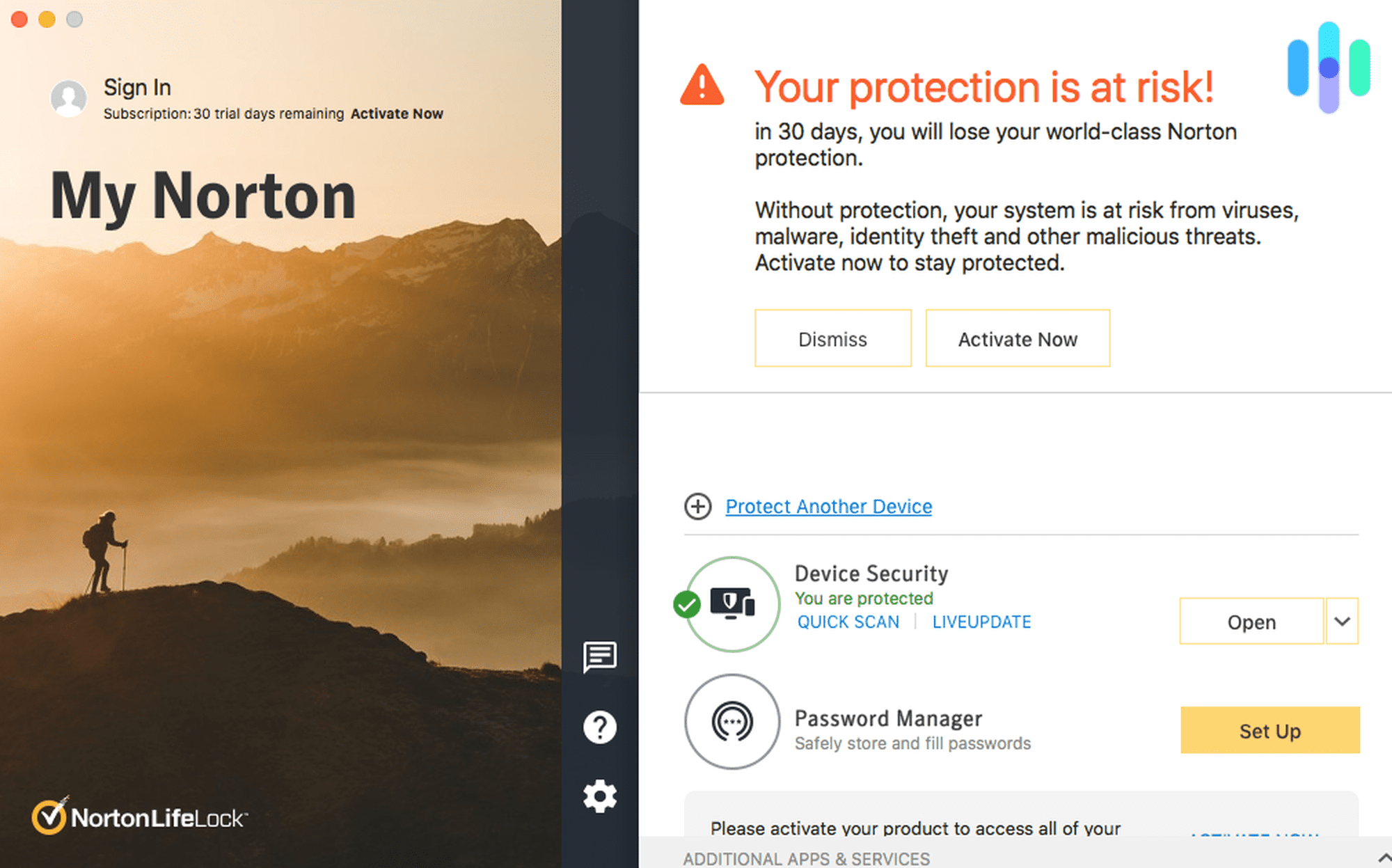
LifeLock is also one of the few identity theft protection services that offers a free trial, and it’s available across all three current plans, Core, Advanced, and Total. We used this option ourselves when we signed up for Total.
The trial runs 30 days, longer than the 14-day trial Aura offers. We like that LifeLock lets you trial any tier, whether you want to test the entry-level Core plan or go straight to Total to see the full feature set. You also don’t lose access to the discounted introductory price by signing up through the trial first. Once your 30 days are up, LifeLock automatically bills you at your plan’s first-year rate.
Cancellation and Refunds
LifeLock also gave us a 60-day grace period to change our minds, starting from the day we paid for our subscription. That’s the standard for all LifeLock annual subscriptions. For monthly subscriptions, LifeLock offers a 14-day money-back guarantee.
We liked that LifeLock gives customers plenty of time to test the service to see how it fits in their lives. In fact, we believe that LifeLock has the best customer policies among our top three picks:
| Policies | Aura | LifeLock | Identity Guard |
|---|---|---|---|
| Money-back guarantee | 60 days for annual plans only | 60 days for annual plans; 14 days for monthly plans | 60 days for annual plans only |
| Free trial | 14 days | 30 days | No free trial |
| Low introductory prices | No | Yes | No |
Tip: To see how LifeLock fares overall against our other top picks, see our comparison guides for Aura vs. LifeLock and Identity Guard vs. LifeLock. Comparing identity theft protection services side by side is a great way to find out which service offers the most value to you, price-wise and feature-wise
LifeLock Features
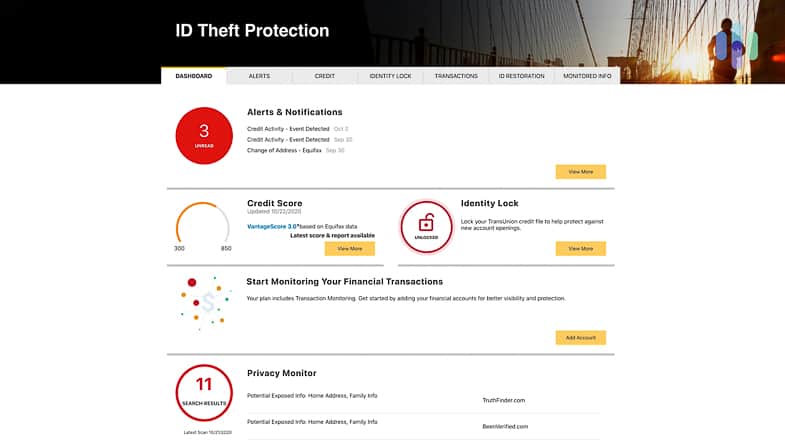
We’ve touched on the insurance coverage of each plan, which helps you if your identity gets stolen. Here, let’s talk about the identity and credit monitoring features that help reduce your risk in the first place.
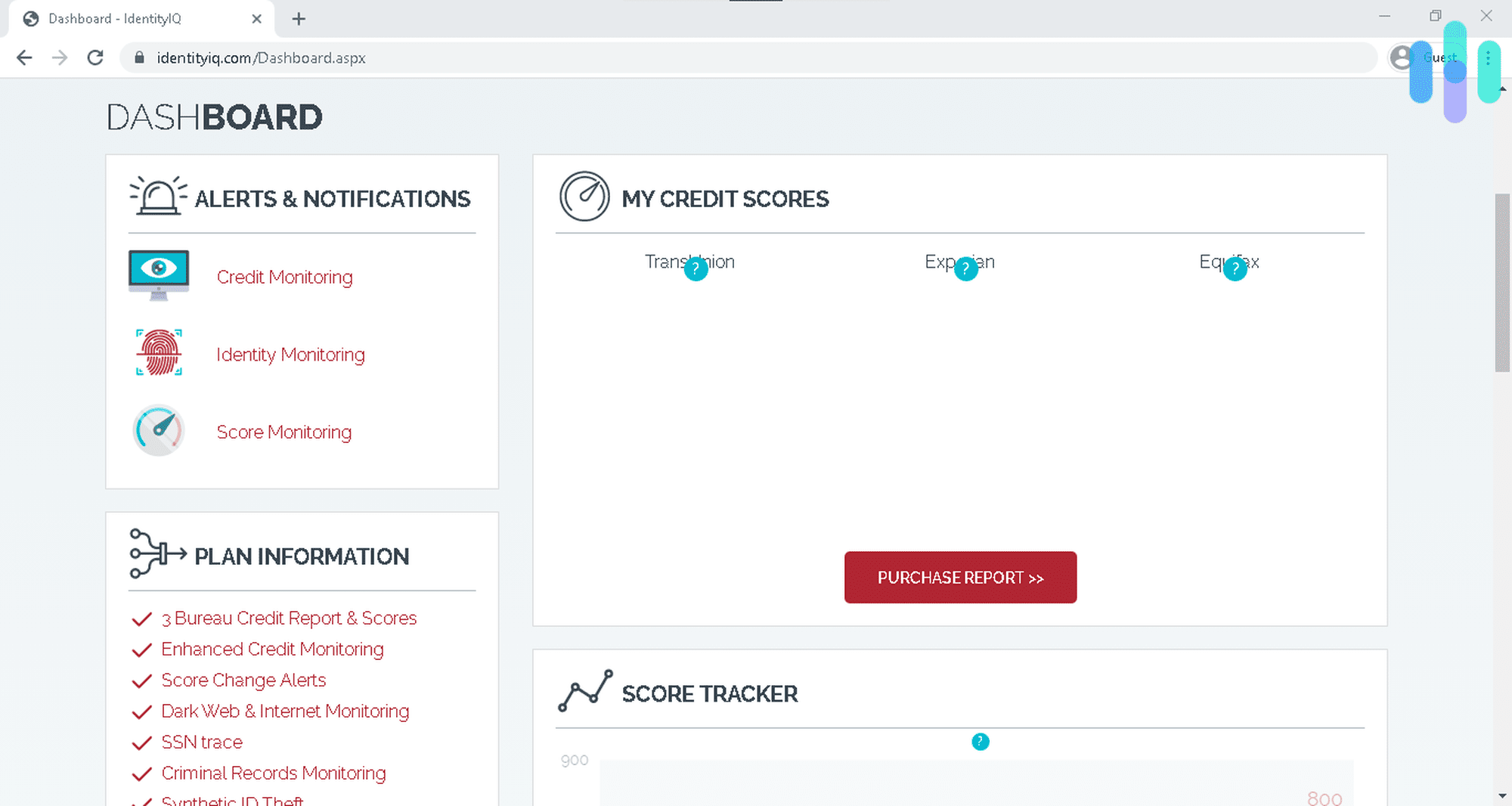
Identity monitoring features aim to catch early signs of identity theft by watching your personally identifiable information. You’ll get an alert if details like your Social Security number, criminal records, or address show up somewhere they shouldn’t, including the dark web.
Credit monitoring features detect identity theft through your credit file at one or all three bureaus, Equifax, Experian, and TransUnion. This can also extend to monitoring bank and credit card transactions, investment accounts, and other personal financial accounts.
LifeLock Identity Monitoring
Identity monitoring is where LifeLock keeps an eye on your personal information across the places identity thieves typically operate, credit applications, the dark web, government records, and your existing accounts, alerting you the moment something looks off. Unlike credit monitoring, which we cover separately below, these features aren’t tied to your credit file. They’re built to catch signs of identity theft that wouldn’t necessarily show up on a credit report at all, like someone using your Social Security number to open a utility account, or your name turning up in a data breach.
Most of these features are shared across all three plans, so you’re not missing out on core protection by choosing Core over Total. Home title monitoring and phone takeover monitoring are the two exceptions, both reserved for the Total plan only.
- Social Security number monitoring
- Stolen wallet protection
- USPS address change verification
- Dark web monitoring
- ID verification monitoring
- Data breach notifications
- Utility account creation monitoring
- Social media monitoring
- Criminal identity theft monitoring
- Synthetic identity theft monitoring
- Home title monitoring (Total plan only)
- Phone takeover monitoring (Total plan only)
LifeLock Credit Monitoring
Credit monitoring is where LifeLock tracks your credit file and financial accounts for signs someone is opening new credit in your name or accessing accounts you already have. This is the piece most directly tied to your credit report, as opposed to the broader identity monitoring covered above.
Bureau coverage is the main dividing line between tiers. Core covers two of the three major credit bureaus, while Advanced and Total both monitor all three (Equifax, Experian, and TransUnion). Total goes a step further by adding financial account protections aimed specifically at bigger-ticket accounts, covering bank account takeovers and 401(k) and investment account activity, protections the other two tiers don’t include.
| Credit monitoring features | Core | Advanced | Total |
|---|---|---|---|
| Credit monitoring | 2-bureau | 3-bureau | 3-bureau |
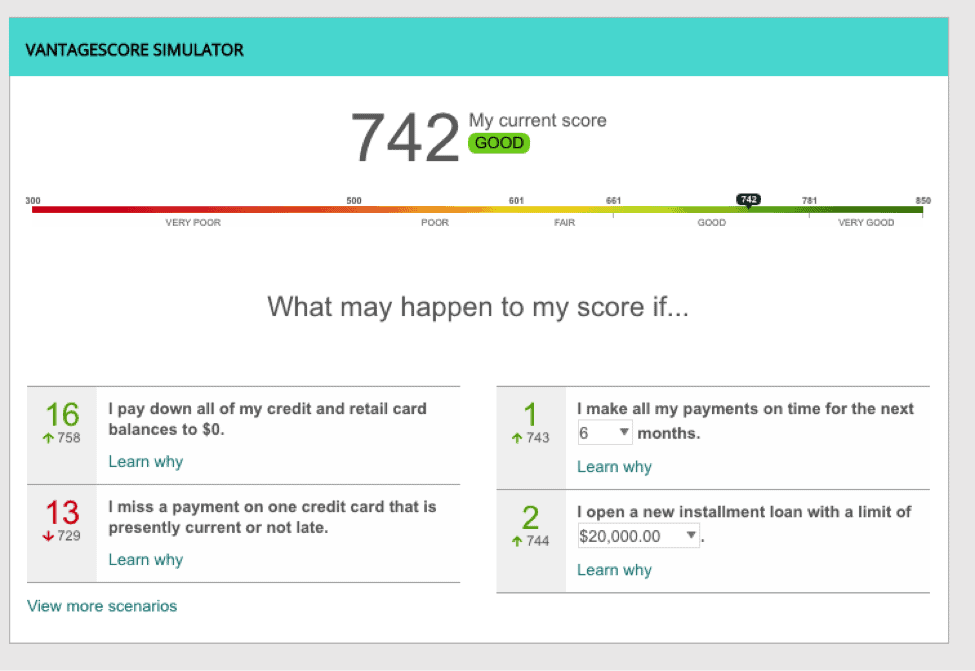
| Credit scores and reports | None | 1-bureau (monthly) | 1-bureau (daily); 3-bureau (yearly) |
| Bank and credit card activity alerts | Yes | Yes | Yes |
| Financial account monitoring | Up to 2 accounts | Up to 5 accounts | Unlimited accounts |
| Credit file lock | No | Yes | Yes |
| Payday loan lock | No | Yes | Yes |
| Bank account takeover alerts | No | No | Yes |
| 401(k) and investment account alerts | No | No | Yes |
Online and Device Protections
Beyond identity and credit monitoring, which are about catching identity theft early, LifeLock can help prevent digital identity theft if you bundle it with Norton 360. This bundle option is only available on individual plans. Norton’s edge over Aura and Identity Guard’s device protections is that it’s one of the best antivirus options in its own right. You’ll find more in our Norton antivirus review.
It’s not all upside, though. We found ourselves switching between the LifeLock app and the Norton 360 app more often than we’d like, since the two aren’t fully integrated. On the cost side, bundling in Norton 360 typically adds just $2 to $3 a month, cheaper than paying for standalone antivirus software, which usually runs about $5 a month on its own.
There are only two Norton 360 bundles available.
- LifeLock Select with Norton 360 (features similar to Core): 5 devices
- LifeLock Ultimate Plus with Norton 360 (features similar to Total): Unlimited devices
Pro Tip: If protecting your kids online from child identity theft is a priority, keep in mind that Norton’s parental control software comes through the Norton 360 bundle, which means it’s only accessible on an individual plan, not through LifeLock’s couples or family plans.
Our Recommendations: Which LifeLock Plans Are the Best?
We’ve reached the end of this LifeLock pricing guide, so now it’s time to review your options and decide which subscription is best for you. Only you can make that call, but here’s our expert advice.
Core vs. Advanced vs. Total
We found that Advanced is the most well-balanced option when it comes to pricing and features. Since identity monitoring is largely the same across all three tiers, Advanced’s real edge over Core comes down to three-bureau credit monitoring instead of two. The one-bureau credit score and report access still bothers us, and it’s only monthly, compared to the unlimited daily access Total provides. But since LifeLock is one of the best identity theft protection services with credit protection, we think Advanced’s coverage is enough to detect credit fraud for most people. And don’t forget the identity theft insurance coverage of up to $1.2 million.
Total is also great for those looking for complete protection, but at $34.99 per month and without Norton 360, it’s not cheap. Aura’s individual plan, by comparison, runs about $12 per month paid yearly for roughly comparable protection. We do like Total’s $3 million insurance coverage and its payday loan lock feature. Aura doesn’t offer the latter, and it caps out at $1 million per user. But do those extras justify the price gap? For most people, we don’t think so, unless the higher insurance ceiling or the financial account protections (bank takeover alerts, investment account monitoring) specifically matter to you.
FYI: There are services that offer identity theft protection and device protection in one app. Aura and Identity Guard both fit that bill. If you’re looking for antivirus software similar to Norton 360, see our McAfee antivirus review. The same app we tested there also offers McAfee’s identity protection suite.
Lastly, if you want a budget-friendly identity protection service, we recommend Core, at least over most entry-level plans from other providers. LifeLock’s Core plan offers two-bureau credit monitoring, while Identity Guard’s Value plan offers no credit protection at all. Considering the two cost roughly the same on annual billing, our pick is LifeLock.
Should You Bundle Norton 360?
As for whether you should add Norton 360 to your LifeLock account, our answer is yes if you don’t already have antivirus software. If you’re already covered and happy with what you have, bundling isn’t necessary, since you’ll still be switching between two separate apps either way. The main reason to bundle is cost savings, since it’s cheaper than paying for antivirus software separately.
Monthly or Yearly?
Lastly, let’s talk about how you’re going to pay. Normally, we recommend trying a monthly plan first, but LifeLock gives users plenty of reasons to go straight to an annual plan.
- Free trial. You have 30 days to try Core, Advanced, or Total on an annual subscription before billing starts.
- Money-back guarantee. After your first bill, you have 60 days to change your mind. Cancel within that window and you’ll get a full refund.
- Low first-year price. The introductory rate is exclusive to new customers signing up for an annual term. If you start on a monthly plan and later upgrade to annual, you’ll pay the regular annual price instead of the promotional one.
Recap
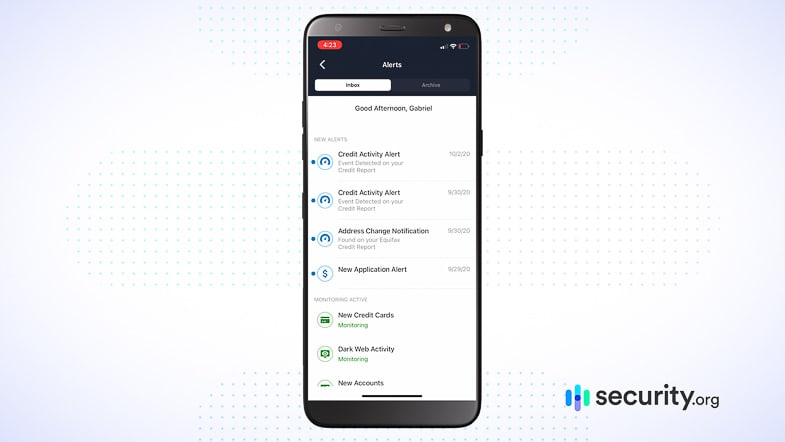
Choosing the best-value identity protection service isn’t just about looking at the price tag. You have to consider what kind of protection is included. Even though LifeLock is on the expensive side, we believe it’s a good pick.
We like the up to $3 million identity theft insurance coverage, which provides a sturdy safety net in case you fall victim to identity theft. No service can guarantee your protection; it’s great to know you have insurance to fall back on.
It also helps that you can bundle LifeLock with Norton 360 for protection against digital identity theft. It’s one of the best antivirus software out there.
Of course, LifeLock isn’t for everybody. For our more budget-focused picks, read our Aura review and Identity Guard review. Together with LifeLock, they round out our top-three identity theft protection picks.
FAQs
Now let’s answer some of the most common questions about LifeLock.
-
Is LifeLock the best identity theft protection service?
LifeLock is one of the best identity protection services, alongside Aura and Identity Guard. It offers comprehensive identity and credit monitoring, digital and online protections, and identity theft insurance coverage better than most options. However, it’s more expensive than both Aura and Identity Guard.
-
Is LifeLock easy to use?
Despite offering a comprehensive feature set, we found LifeLock easy to use. Signing up took only an hour or so, including filling in the required personal information. And once we finished setting it up, we only needed the app to update information or check alerts.
-
Is LifeLock good for families?
LifeLock is good for families because it has family plans that protect up to two adults and 10 minor-aged children. However, for families with more than two adults (e.g., extended family households or families with children over the age of 18), there are better options. Aura, for example, protects up to five adults with its family plans.
-
Is LifeLock affordable?
LifeLock offers affordable entry-level plans. The Core plan includes two-bureau monitoring, which is better than the one-bureau monitoring most entry level plans offer. It also comes with standard $1 million identity theft insurance to cover legal fees, plus additional $25,000 coverage each for stolen funds and personal expenses (lost wage, child/elderly care, documentary stamps, etc). Prices start at $12.49 per month.
-
What does LifeLock’s identity theft insurance cover?
LifeLock’s identity theft insurance covers reimbursement for stolen funds, legal fees, and personal expenses resulting from identity theft and fraud. Each plan has set limits for each type of reimbursement. With the top-tier Total plan, you get $1 million each for stolen funds, legal fees, and personal expenses (e.g., documentary stamps, notary fees, lost wages, etc.), totaling up to $3 million.
-
AARP. (2024). Identity Fraud Cost Americans $43 Billion in 2023 .
https://www.aarp.org/money/scams-fraud/info-2024/identity-fraud-report.html -
Statista. (2024). Number of identity theft complaints lodged with the Federal Trade Commission in the United States in 2022, by age of victims
https://www.statista.com/statistics/587677/identity-theft-complaints-victims-age-in-the-us/