

LifeLock vs. Complete ID
Complete ID is closed to new members, so we compared it to LifeLock to see whether LifeLock is a good pick for what you were actually looking for


| LifeLock (9.8/10) | Complete ID (8.1/10) |
|---|---|
|
|
If you went looking for Complete ID, chances are you liked the idea of low-cost, Costco-backed identity protection with solid credit monitoring built in. The problem is you can’t sign up for it right now. Complete ID isn’t accepting new enrollments, so anyone shopping for that kind of coverage today needs an actual alternative, and LifeLock is one of the strongest options available. It’s open to anyone, its insurance reaches up to $3 million, and it covers most of the same ground Complete ID does, plus quite a bit more.
Below, we break down how LifeLock compares to Complete ID on price, coverage, monitoring, and support. That’ll help you see whether it’s a good substitute for the plan you couldn’t get.
LifeLock vs. Complete ID at a Glance
| LifeLock | Complete ID | |
|---|---|---|
| Availability | Open to anyone | Costco members only, not currently accepting new enrollments |
| Starting price | $10.42 per month (Core, billed annually) | $8.99 per month (Executive members, when open) |
| Identity theft insurance | Up to $3 million (Total plan) | Up to $1 million |
| Credit monitoring | 2-bureau (Core), 3-bureau (Advanced/Total) | 3-bureau (Experian, TransUnion, Equifax) |
| Digital security extras | VPN, antivirus, password manager (paid Norton 360 add-on) | VPN, password manager, safe browser (included) |
| Family coverage | Family plan for 2 adults + up to 10 kids | Separate per-person pricing, no bundled family plan |
| Billing options | Monthly or annual | Monthly only |
Why Complete ID Isn’t an Option Right Now
Before comparing features, it’s worth confirming why you’re even reading this. As of this writing, Complete ID is not accepting new enrollments, and its own sign-up page doesn’t give a timeline for when that might change. If you’re a new shopper, that rules Complete ID out no matter how its features compare, which is exactly why LifeLock is worth a closer look as a substitute.
Complete ID was also always narrower in scope than LifeLock, since it was only ever available to Costco members and its pricing depended on which membership tier you held. LifeLock, by contrast, is open to anyone regardless of where you shop, which removes that barrier entirely.
Did You Know: Costco’s membership base includes more than 79 million Gold Star, Business, and Executive members combined.1 Complete ID’s potential customer pool was limited to that group even before enrollment closed. Now it’s closed to everyone regardless of membership tier.
Pricing Compared
LifeLock’s pricing is straightforward once you know which tier you want. Core starts at $12.49 per month, Advanced runs $19.99 per month, and Total costs $34.99 per month, each with a discount for paying annually. Couple and family pricing is available on top of that, covering two adults or two adults plus up to 10 kids.
Complete ID historically priced its single plan around $8.99 per month for Costco Executive members and $13.99 per month for Gold Star and Business members. The price increased based on how many adults and children were added to the plan. Unlike LifeLock, Complete ID only bills monthly, so there’s no annual discount to plan around.
The bigger reason to pick LifeLock over waiting on Complete ID isn’t necessarily the price tag. Its Core plan actually costs less than Complete ID’s Gold Star and Business pricing anyway. It’s the flexibility. Anyone can buy in at whatever tier fits their budget, without needing a Costco membership you may or may not already have.
LifeLock Takeaway: LifeLock’s Core plan undercuts what Complete ID charged Gold Star and Business members, and it doesn’t require a Costco membership to sign up.
Identity Theft Insurance and Restoration
LifeLock’s insurance scales with your plan. Core includes up to $25,000 each for stolen funds and personal expenses, plus $1 million in legal fee coverage on every tier. Total raises stolen funds and personal expense coverage to $1 million each, bringing combined coverage up to $3 million, among the highest ceilings we’ve seen from any provider.
Complete ID takes a simpler approach, with up to $1 million in identity theft insurance under a single policy rather than LifeLock’s split categories. That’s solid coverage for the price, but it tops out well below what LifeLock’s Total plan offers. It also doesn’t scale up the way LifeLock’s tiered system does if you want more protection.
Restoration support looks similar on paper. Both services assign a dedicated specialist to help you recover from identity theft, and both include support for lost wallet replacement. LifeLock backs its restoration process with a proactive scam support advisor, which reimburses up to $10,000 in scam-related losses on top of its regular insurance coverage. Complete ID’s specialists focus more narrowly on walking you through specific recovery steps. That includes things like contacting the Social Security Administration or placing a fraud alert and credit freeze with the three bureaus.
LifeLock Takeaway: LifeLock’s Total plan triples Complete ID’s insurance ceiling, and its scam support advisor adds another layer of reimbursement Complete ID doesn’t offer.
Monitoring Features
Entering our personal information into LifeLock, so it knows what to monitor.
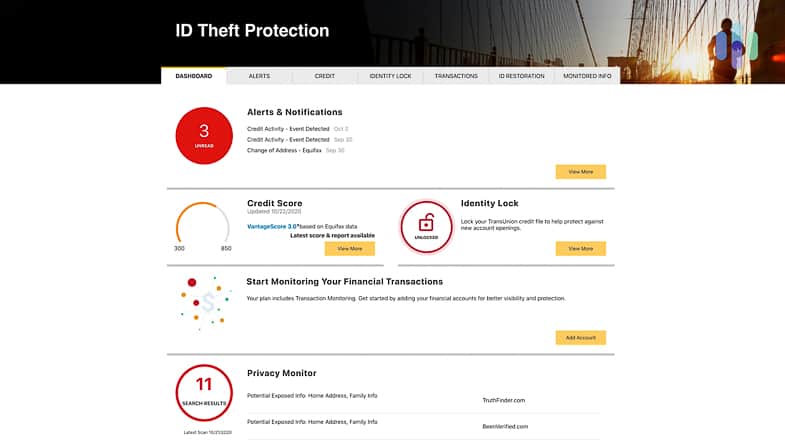
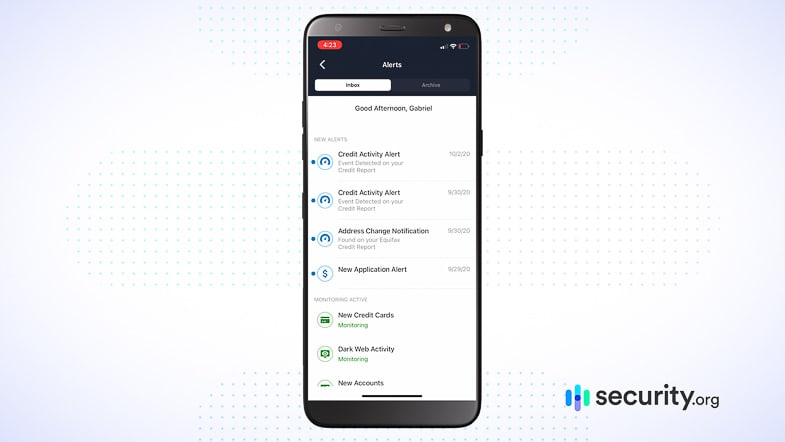
Both services cover the fundamentals well. LifeLock monitors your identity, SSN, dark web exposure, and financial accounts, and adds home title monitoring, phone takeover monitoring, and investment account tracking on its Total plan. It also includes synthetic identity monitoring, which watches for someone stitching together a fake identity using pieces of your real information.
- Dark web monitoring. Both services scan for your personal information circulating on the dark web.
- SSN monitoring. Both track your Social Security number for signs of misuse.
- Criminal and synthetic identity monitoring. LifeLock covers both; Complete ID covers criminal record monitoring but doesn’t specifically call out synthetic identity detection.
- Mail and address monitoring. LifeLock tracks USPS address changes tied to your name; Complete ID sends mail change alerts through the same kind of postal monitoring.
- Unique to Complete ID. Neighborhood Watch monitoring, which checks state sex offender registries near your address, and alternative loan monitoring, which flags payday loans, title loans, and similar lending activity.
- Unique to LifeLock. Home title monitoring and investment or 401(k) account tracking, both exclusive to the Total plan.
Neither service is missing anything essential. LifeLock’s higher tiers reach further into financial account territory, while Complete ID’s Neighborhood Watch feature is a distinct addition we don’t see from most competitors.
LifeLock Takeaway: LifeLock matches Complete ID’s core monitoring and goes further on its Total plan, with home title, investment account, and synthetic identity monitoring Complete ID never offered.
Credit Monitoring
Complete ID monitors all three credit bureaus, Experian, TransUnion, and Equifax, on its one and only plan, along with a monthly VantageScore update and an annual tri-bureau credit report. It also includes Experian CreditLock, though that only controls your Experian file rather than all three bureaus.
LifeLock splits credit monitoring by tier. Core covers two bureaus, while Advanced and Total both include full three-bureau monitoring along with a TransUnion credit lock. That means you’d need to step up from LifeLock’s cheapest plan to match what Complete ID offers on credit monitoring alone. Core doesn’t include three-bureau coverage the way Complete ID’s single plan does.
>> Read More: Which Identity Theft Protection Services Offer the Best Credit Monitoring
LifeLock Takeaway: Stepping up to LifeLock Advanced matches Complete ID’s three-bureau monitoring, and adds a TransUnion credit lock Complete ID never had.
Digital Security Extras
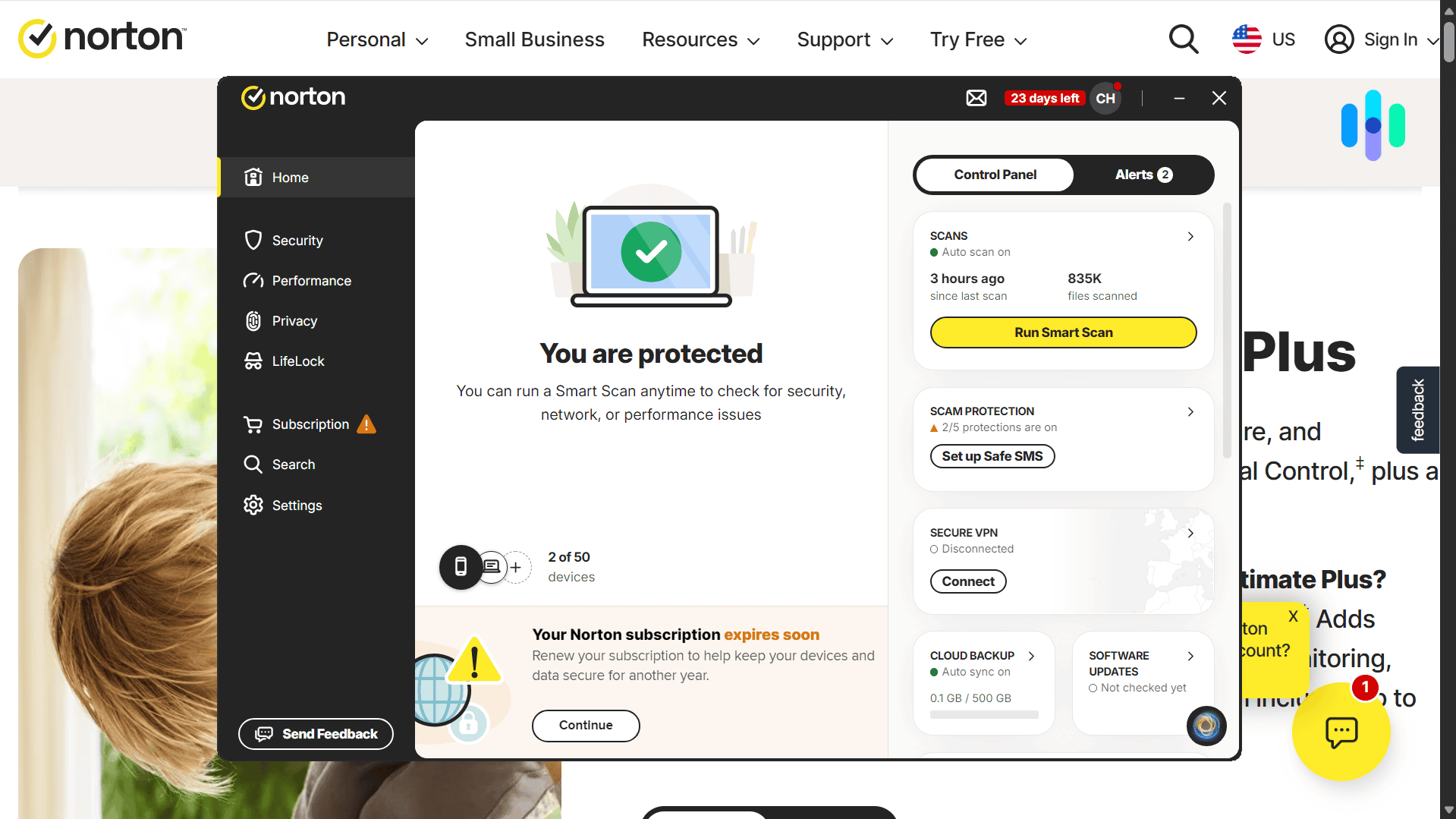
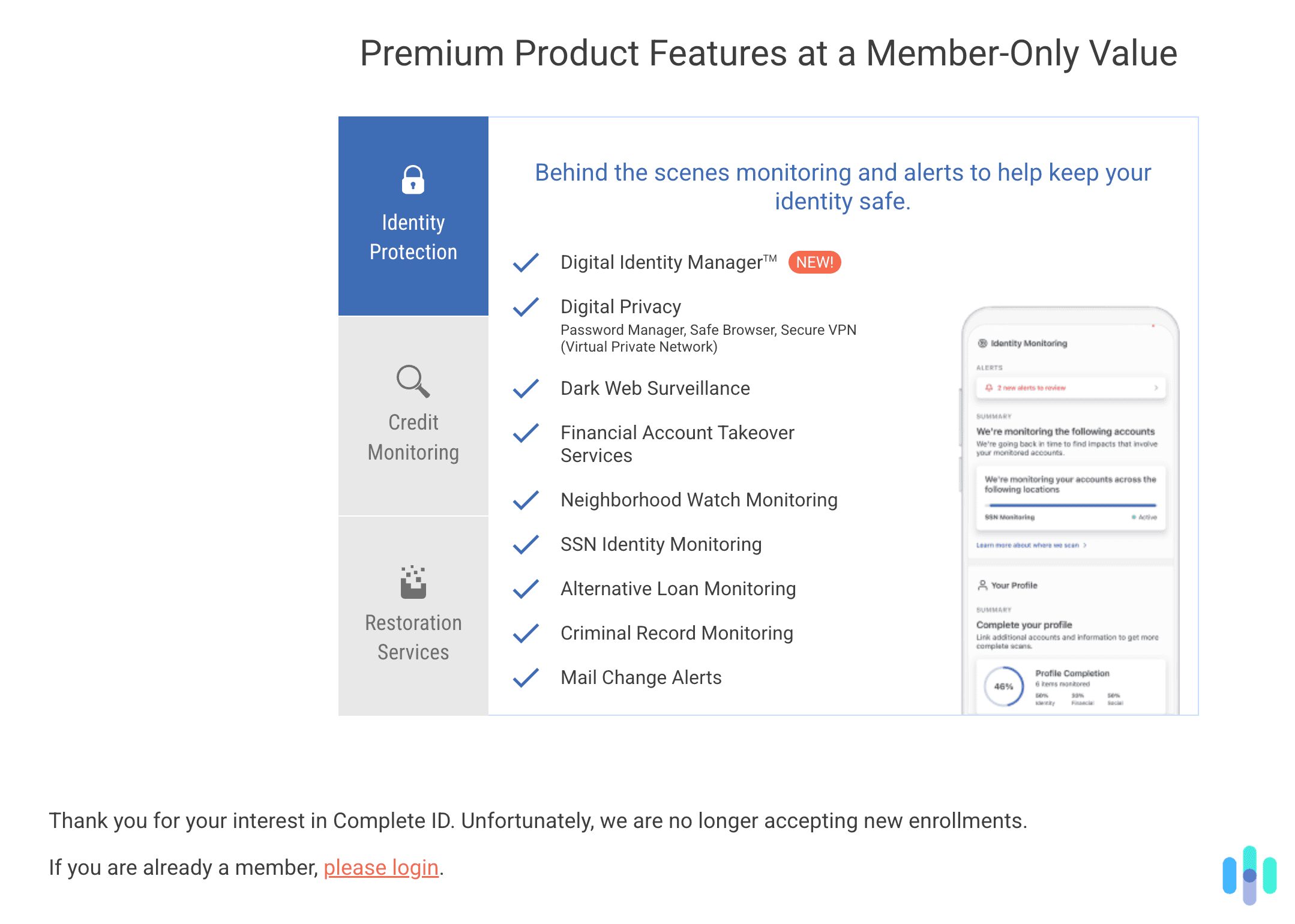
This is worth pausing on if device security was part of what drew you to Complete ID in the first place. Its Digital Privacy suite includes a password manager, a secure browser, and a VPN as standard features on its one plan, no upgrade required.
LifeLock’s equivalent tools come through a separate Norton 360 bundle, priced on top of your LifeLock subscription. You get Norton’s antivirus software alongside a VPN and password manager, but only if you pay for the Select or Ultimate Plus bundle specifically. If device security matters as much to you as identity monitoring, that’s a real cost difference worth factoring in.
LifeLock Takeaway: Pay for the Norton 360 bundle and LifeLock matches Complete ID’s VPN and password manager, while adding full antivirus protection Complete ID doesn’t include.
Customer Support
LifeLock offers phone support and manages everything through its own app and website, plus a separate Norton app if you’ve added a 360 bundle. Complete ID assigns members a named restoration specialist and publishes specific phone support hours covering seven days a week, though outside a narrower daily window than round-the-clock coverage.
Both services lean on U.S.-based support teams for restoration help. That matters more than general customer service if you actually experience identity theft and need someone walking you through the recovery process.
LifeLock Takeaway: LifeLock’s restoration process is backed by a scam support advisor with built-in reimbursement, a layer of support Complete ID’s specialists don’t carry.
Is LifeLock a Good Pick If You Wanted Complete ID?
- LifeLock is a good fit if you wanted Complete ID’s low cost and credit monitoring, since LifeLock’s Core plan actually costs less than Complete ID’s Gold Star and Business pricing did.
- LifeLock is a good fit if you wanted more insurance than Complete ID offered, since LifeLock’s Total plan reaches three times higher.
- LifeLock is a good fit if you have a spouse or kids to cover, since it offers a real family plan instead of per-person pricing.
- LifeLock may fall short if device security extras like a VPN and password manager were part of the appeal, since LifeLock sells those as a separate Norton 360 bundle rather than including them standard.
- If you’re an existing Complete ID member, there’s no urgency to switch. Your current plan still works, and this comparison matters most once you’re ready to shop for something new.
Most of these come down to what you actually valued about Complete ID in the first place. LifeLock covers the core reasons people signed up, while asking you to pay extra for the one feature it doesn’t include standard.
Did You Know: About 2.8 billion credentials were stolen in 2025.2 It’s one of the reasons why we recommend using a password manager. Your login details are protected using military-grade encryption and zero-knowledge architecture, meaning not even the provider can access your information.
The Verdict
For anyone who went looking for Complete ID and came up empty, LifeLock is a good pick. It’s open to anyone regardless of Costco membership, and its insurance ceiling reaches well beyond what Complete ID ever offered. It also covers the same core ground, dark web monitoring, SSN monitoring, and three-bureau credit tracking on its higher tiers. It adds features like home title and investment account monitoring that Complete ID never had. The one tradeoff is device security. If a bundled VPN and password manager were part of why Complete ID appealed to you, that’s worth noting here. LifeLock charges extra for that through its Norton 360 add-on rather than including it standard.
If you want a closer look at how LifeLock stacks up against other major providers, our LifeLock vs. Aura comparison breaks down another popular matchup in detail.
FAQs
-
Is LifeLock a good alternative to Complete ID?
Yes. LifeLock offers higher insurance coverage, three-bureau credit monitoring on its higher tiers, and open enrollment regardless of where you shop. Those are all things that made Complete ID appealing before it stopped accepting new members. The main tradeoff is device security extras, which LifeLock sells as a separate add-on instead of including standard.
-
Can I still sign up for Complete ID?
No. Complete ID is not currently accepting new enrollments, according to its own sign-up page. Existing members can keep their current plan, but new customers can’t join at this time.
-
Which service offers more identity theft insurance?
LifeLock offers more. Its Total plan provides up to $3 million in combined coverage, compared to Complete ID’s single $1 million policy.
-
Do I need a Costco membership for Complete ID?
Yes. Complete ID has always been exclusive to Costco Gold Star, Business, and Executive members, with pricing that varies depending on which membership tier you hold.
-
Is LifeLock more expensive than Complete ID?
It depends on the plan. LifeLock’s entry-level Core plan costs less per month than Complete ID’s Gold Star and Business pricing, though Complete ID’s Executive member rate has historically undercut LifeLock Core. LifeLock’s higher tiers cost more than Complete ID ever charged.
-
CNBC. (2025). Costco's $130 Executive Membership just got a brand-new perk.
https://www.cnbc.com/2025/06/11/costco-announces-new-executive-membership-perk.html -
Forbes. (2026). 2.8 Billion Credentials Stolen As Password Attacks Surge.
https://www.forbes.com/sites/daveywinder/2026/04/30/password-security-286-billion-credential-theft-crimewave-exposed/