
The Best Security System Apps in 2026
The right security system app turns your phone into a command center for your home — we tested dozens to find the ones worth downloading.
 &
&
 Last Updated on Jul 08, 2026

- Great selection of smart devices
- High-quality equipment
- App makes home automation easy

- Top-rated app
- Nest integration
- Excellent overall security system

- Packages start at $250
- Affordable smart lock
- App performs basic functions without a subscription
the security.brief
Monitor your home from anywhere — we tested the best security system and security camera apps of 2026 to find the ones that are actually worth using.
Most home security systems come with a control panel or keypad, but we rarely interact with them. We’re on the couch, at the office, or sometimes three states away, meaning we’re checking in on an app. We’ll review security camera footage, manage real-time alerts, and tweak automations, all from a phone.
Almost every major security provider has an app these days. The hard part is figuring out which ones actually work. We loaded up our phones with apps from every major brand to find out. Vivint came out on top — its intuitive design and advanced automation capabilities make it the best app for anyone with a smart home. ADT, SimpliSafe, Frontpoint, and Ring all earned a spot too. Here’s what sets them apart.
Did You Know: In 1966, Marie Van Brittan Brown filed a patent for the first modern security system. It included a security camera, two-way audio, and radio to contact police.1 No app though.
Best Security System Apps Compared
| System |
Vivint
|
ADT
|
SimpliSafe
|
Frontpoint

|
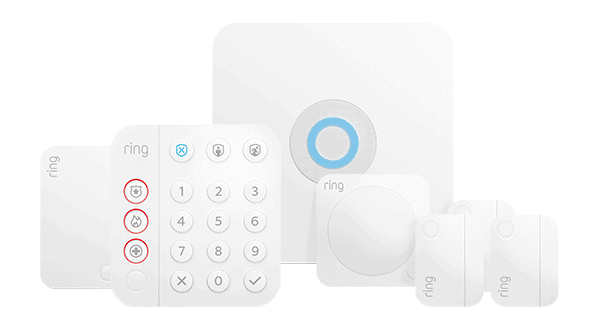
Ring Alarm

|
|---|---|---|---|---|---|
| Ranking | 1st | 2nd | 3rd | 4th | 5th |
| Ratings | 9.4/10 | 9.8/10 | 9.8/10 | 8.9/10 | 7.7/10 |
| App Name | Vivint | ADT+ | SimpliSafe Home Security | Frontpoint | Ring - Always Home |
| App Requires a Subscription? | Yes | No | No | Yes | No |
| Price for Full App Access | $24.99 per month | $9.99 per month | $9.99 per month | $49.99 per month | $4.99 per month |
| Read Review | Vivint Review | ADT Review | SimpliSafe Review | Frontpoint Review | Ring Alarm Review |
Summary of the Best Security Systems With Apps
- Vivint - Best for Smart Homes
- ADT - Best App User Experience
- SimpliSafe - Best Budget Option
- Frontpoint - Best Customer Service
- Ring Alarm - Best Alexa Compatibility
-
1. Vivint - Best for Smart Homes

Product Specs
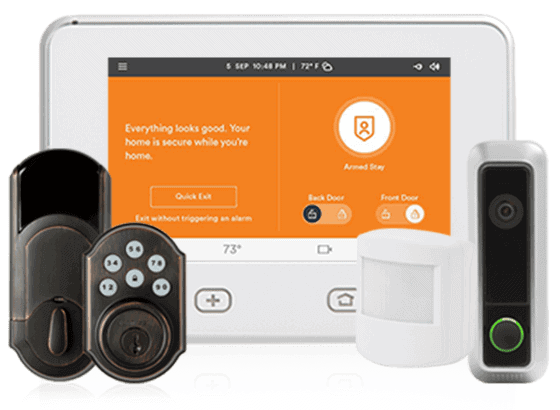
Equipment costs Starting at $199 Monitoring options Professional Monthly monitoring costs Starting from $24.99 Contract lengths Starting at 42 months Installation options Professional Smart platform integration Alexa and Google Home Why We Like Vivint’s App
The Vivint app gives you granular control over how your system behaves. You can schedule recordings to trigger when a window opens, set motion detection to only run during certain hours, or create rules based on your system’s current state. The app walks you through every step, so it’s less complicated than it sounds.
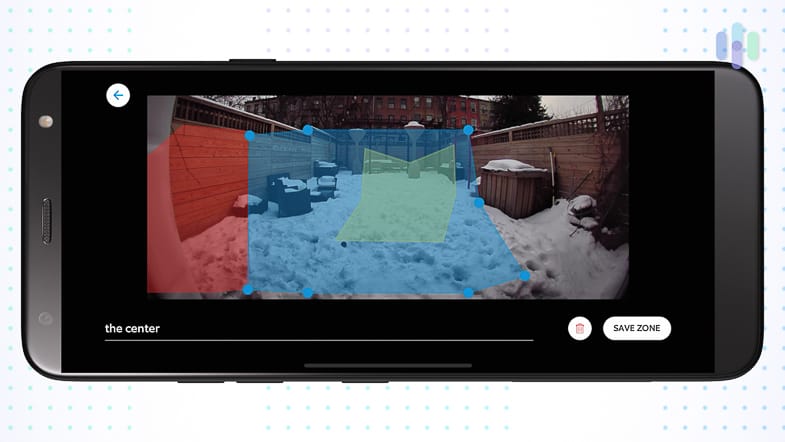
The interface works like a dating app. Swipe left to set the system to “Staying” mode, swipe right to arm it when you’re heading out. Accessing camera livestreams, using two-way audio, and setting up motion zones are all straightforward. We created invisible fences to exclude the sidewalk out front, so we only got alerted when someone actually approached the door.
We saw some mixed reviews online, mostly around camera connectivity and video lag. We didn’t run into those issues, but it’s worth noting if your home internet isn’t reliable.

Accessing the livestreams of all our Vivint security cameras What We Like
- More automation options than other apps on this list
- Motion zones are easy to draw on the camera feed
- Two-way audio works reliably through the app
- Swipe-based interface is intuitive and fast to navigate
- Supports multiple users
What We Don’t Like
- Requires a paid monitoring plan to use the app
- Online reports of camera lag and connectivity issues
- Dashboard customization is limited
- Notifications don’t always take you to the relevant menu
Vivint Equipment
Vivint’s equipment sits firmly in the premium tier — and the quality reflects that price tag. The lineup includes indoor and outdoor cameras, a video doorbell, door and window sensors, motion detectors, smart locks, and a smart thermostat. Everything is designed to work together seamlessly within the Vivint ecosystem, which is a big part of why it earns our top pick for smart homes.
Everything connects through Vivint’s Smart Hub panel and is controllable from the app. Installation is handled by a Vivint technician, who will assess your home’s layout before placing anything. It’s a more involved process than a DIY setup, but the result is a system that’s properly configured from day one.
Vivint Monitoring and Pricing
Vivint doesn’t publish its pricing online — you’ll need to call and speak with a sales consultant to get a quote. Based on our most recent call with Vivint in 2026, most people will pay anywhere from $750 to over $2,000 for equipment. There’s also a monitoring fee that starts at $24.99 per month. We paid nearly $50 per month since we also wanted smart home capabilities and camera support.
Vivint offers financing, which helps spread equipment costs across up to 60 months with the balance added to your monthly bill. If that’s still out of range, our guide to no-fee security systems has more affordable alternatives. For a direct comparison, see how Vivint stacks up against ADT.
-
2. ADT - Best App User Experience

Product Specs
Equipment Costs Starting at $404 Monitoring Options Professional Monthly Monitoring Costs Starting at $24.99 Contract Lengths 36 months and up Installation Options Professional Smart Platform Integration Alexa and Google Home Why We Like ADT’s App

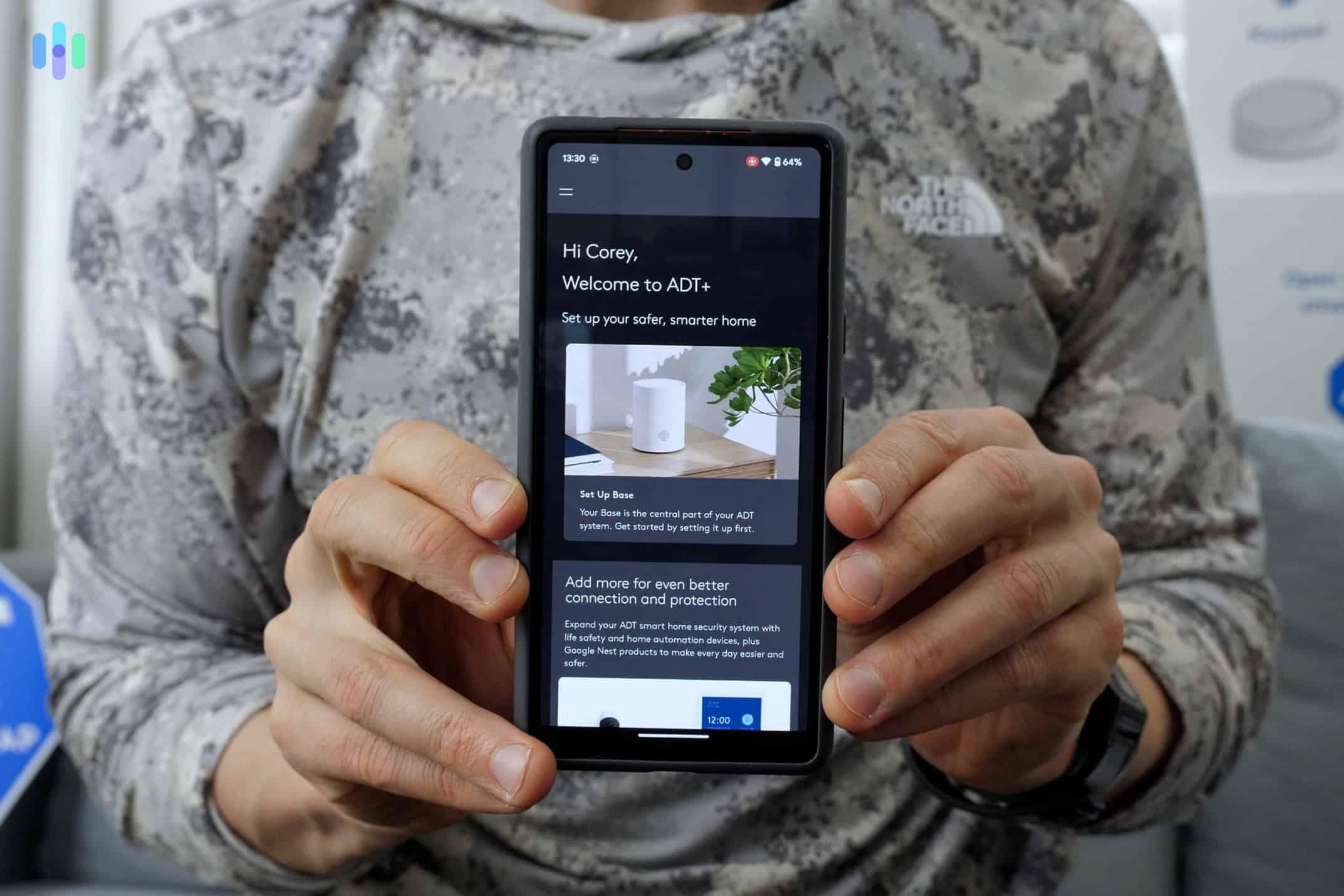
Our first time logging into the ADT+ App. ADT’s Google Nest integration sets it apart from most competitors. We managed Nest Cam footage, controlled a Nest thermostat, and monitored the entire security system from a single app, a level of consolidation most competitors can’t match, since they either require a separate app for third-party devices or skip third-party support altogether.
Beyond Nest, ADT+ extends to smart home brands including Kwikset, LiftMaster, and Sonos. Building out a morning routine took about ten minutes in our testing: every day at 8:30 a.m., the system arms, the thermostat adjusts, and the lights shut off automatically, no manual intervention required.
The standout feature for us was Trusted Neighbor, which uses facial recognition on the Nest Doorbell and Nest Cams to identify familiar faces. After adding a family member to our trusted list, the system disarmed automatically when they approached the door and sent a notification to confirm entry. That kind of polish shows up in the reviews too. ADT+ holds over a 4.5-star rating on both iOS and Android. Users consistently praise its intuitive navigation, reliable alerts, and easy-to-setup automation.
FYI: When you search ADT in the app store, you’ll also see Smart Connect, Interactive Security, and ADT Control. You can ignore them. The only one you need is ADT+.
What We Like
- Manages ADT and Google Nest devices in a single app
- Trusted Neighbor facial recognition is useful
- Automation setup is fast and beginner-friendly
- Reliable push notifications with strong customization
- 4.5+ star rating on iOS and Android
What We Don’t Like
- Multiple legacy ADT apps in the app store create confusion
- Not compatible with some older Nest devices
- No self-monitoring plan that unlocks all app features
ADT Equipment
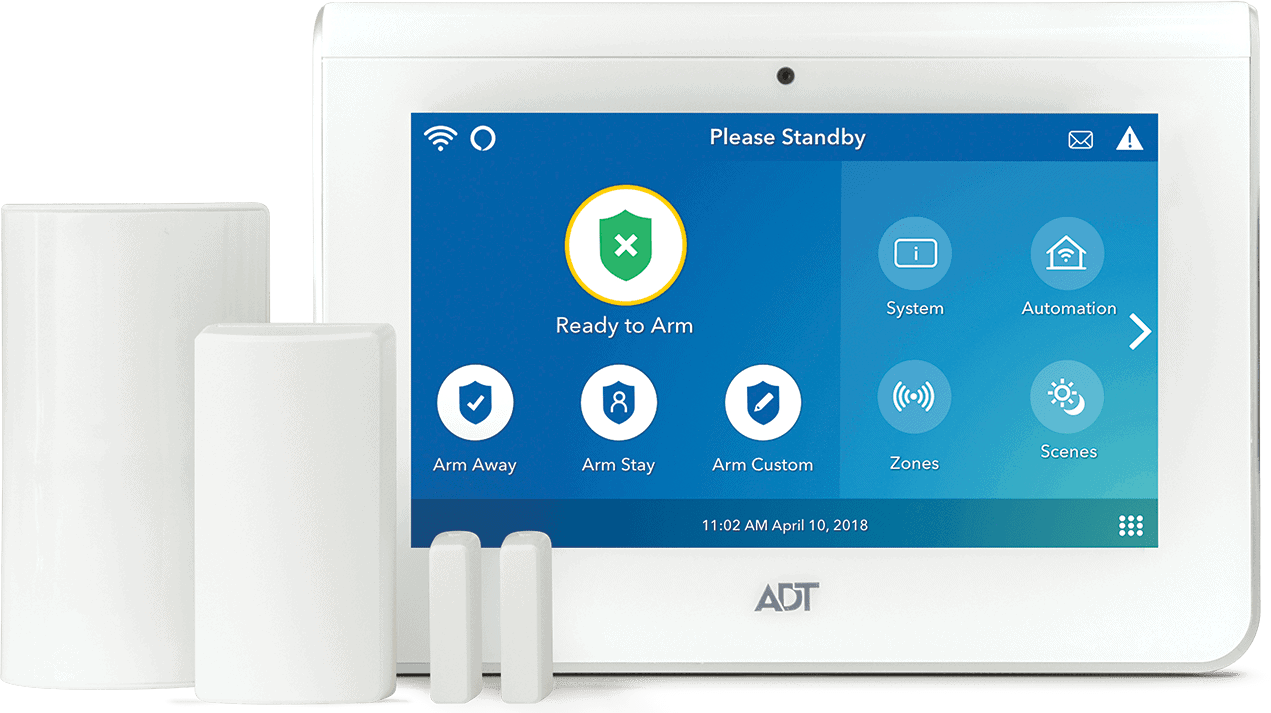
ADT combines its own branded hardware with devices from the Google Nest range, giving it one of the broadest lineups on this list. The equipment catalog includes indoor and outdoor cameras, a video doorbell, door and window sensors, motion detectors, glass break sensors, smart locks, smart lights, and a smart thermostat. You can install the system yourself or have an ADT technician handle it. Keep in mind that professional installation requires a monitoring plan, a setup fee, and a contract.
ADT Monitoring and Pricing
Full systems start at $349 with professional monitoring at $49.99 per month. Plans that include smart home and camera features cost up to $59.99 per month. Most systems also come with a long-term contract starting at 36 months (24 months in California). Before committing, check out our frequently asked questions about ADT page and compare options in our ADT vs. Vivint and ADT vs. Frontpoint guides.
-
3. SimpliSafe - Best Budget Option

Product Specs
Equipment Costs Packages starting at $250.96 Monitoring Options Professional and DIY Monthly Monitoring Costs Starts at $22.99 Contract Lengths Month-to-month Installation Options DIY or professional Smart Platform Integration Alexa and Google Home Why We Like SimpliSafe’s App
After unboxing our SimpliSafe system, we had every sensor and camera connected and confirmed through the app in under 30 minutes. The app walked us through placement, connection, and configuration for each device, with instructions tailored to the specific hardware.
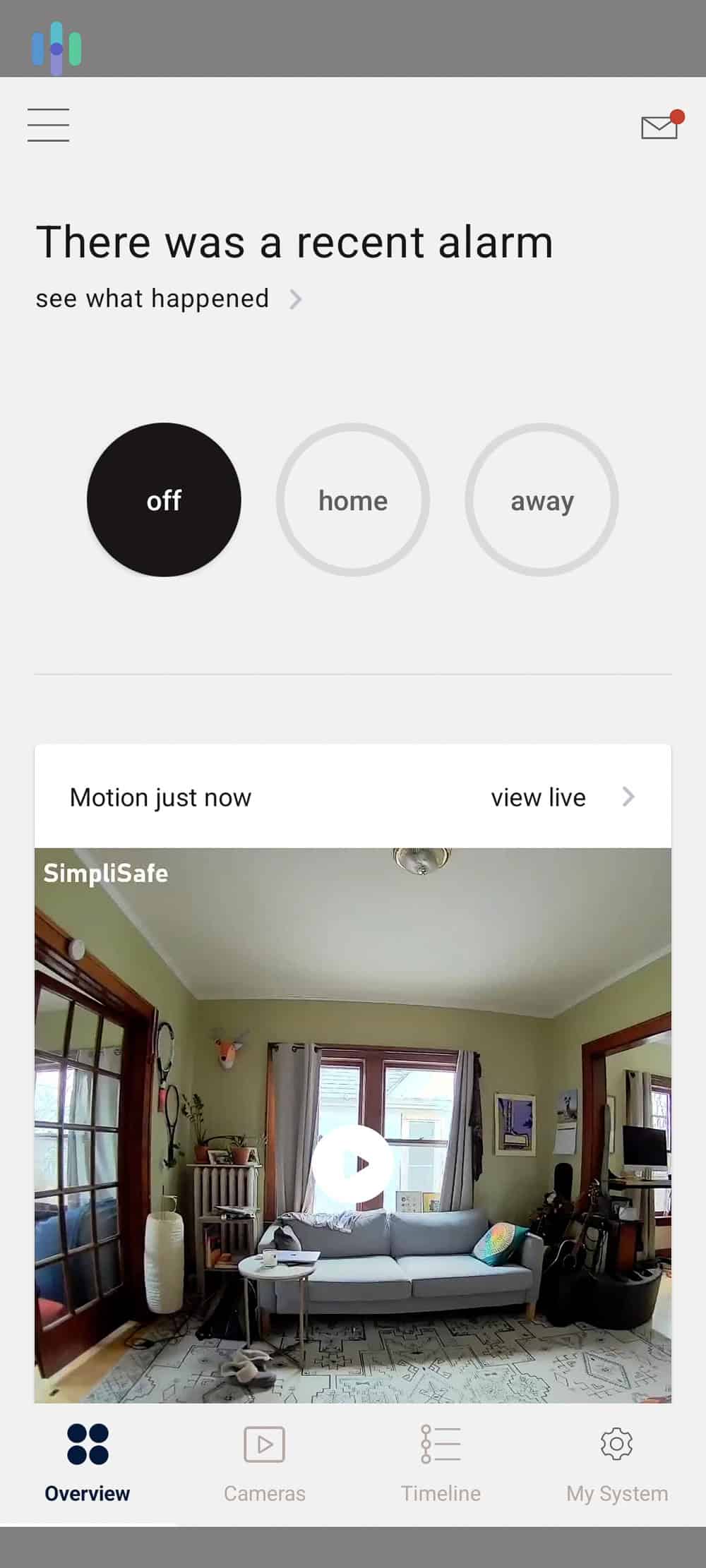
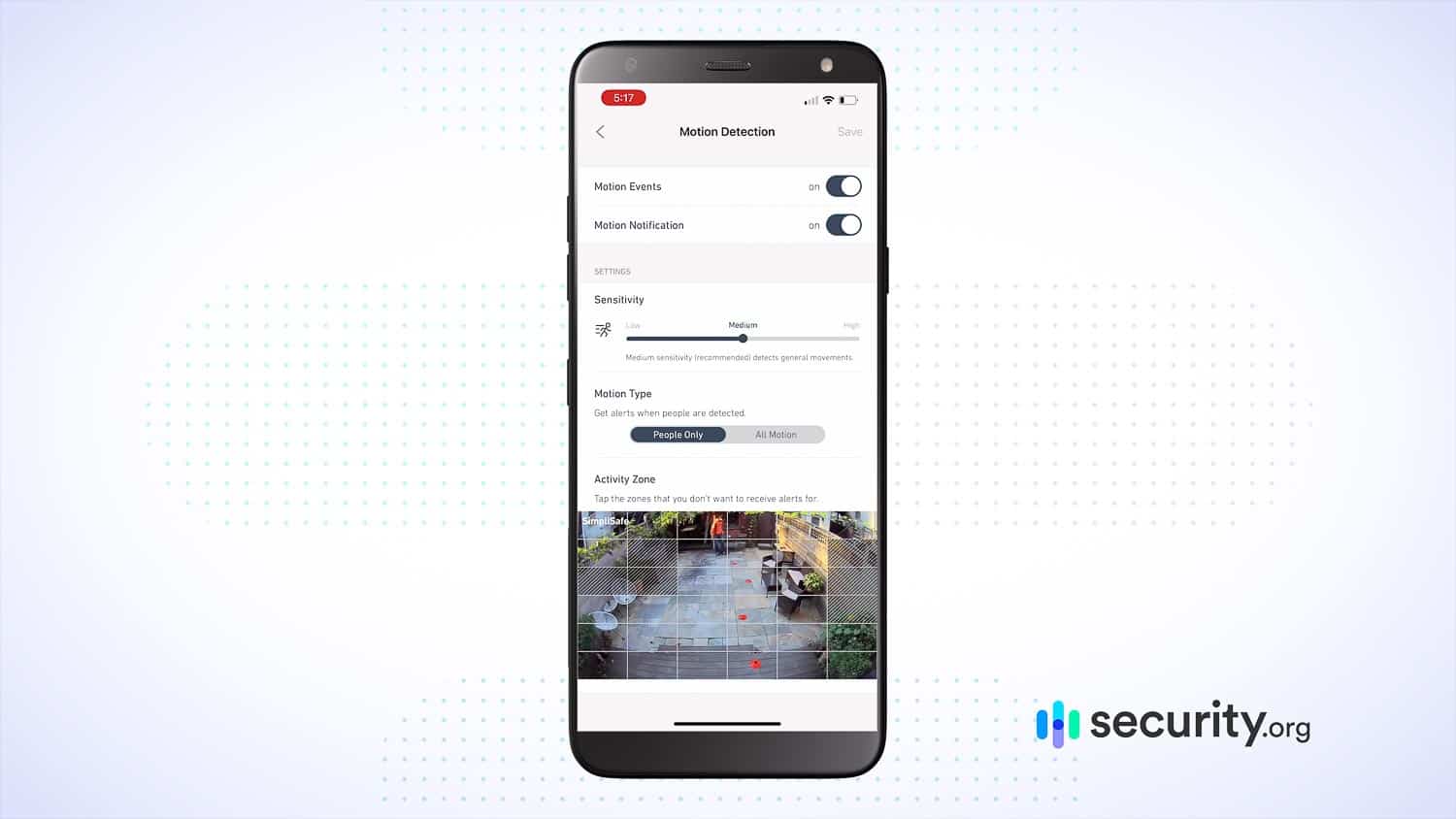
Day-to-day use held up just as well. The overview screen puts system status, recent alerts, and camera access front and center, and adjusting motion sensor sensitivity, something we found ourselves doing often to cut down on false alerts, takes about three taps. For anyone new to home security systems, SimpliSafe is a genuinely good place to start.
Where the app falls short is depth. Compared to Vivint and ADT+, the automation features feel thin. Basic voice commands let you arm the system, but building custom routines requires a paid plan, and even then the options stay fairly limited. If you’re looking for a security app with real room to grow into, SimpliSafe will eventually feel constrained. But for buyers who just want reliable fundamentals at a low monthly cost, it’s a solid choice.

The overview page in the SimpliSafe app. What We Like
- Best in-app setup and onboarding experience we tested
- Clean, well-organized overview screen
- Basic app functions available without a paid subscription
- Easy to adjust device settings
- SimpliSafe actively updates the app based on feedback
What We Don’t Like
- Smart home automation requires a paid plan
- Fewer advanced features than Vivint or ADT+
- System can feel overly dependent on the app
SimpliSafe Equipment
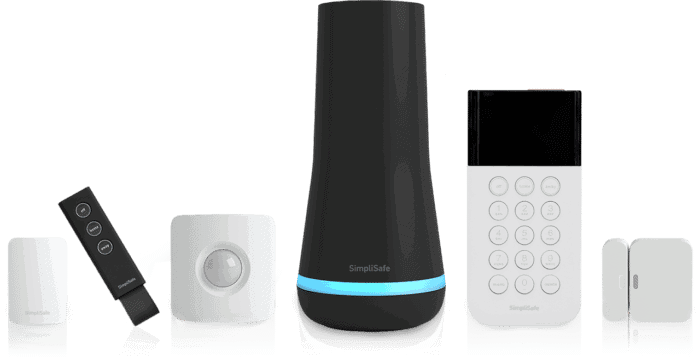
SimpliSafe’s core components include a base station, keypad, door and window sensors, motion sensors, indoor and outdoor cameras, a video doorbell, a smart lock, and environmental sensors for smoke, CO, and water. Everything is easy to install yourself, so you won’t need to call a technician. You can add and configure new devices directly through the app at any time, making it easy to expand your system as needed. SimpliSafe works well as a security system for apartments and scales reasonably for larger homes too.
SimpliSafe Monitoring and Pricing
Equipment packages start at $250.96, but even the largest package stays under $750. For self-monitoring, SimpliSafe offers two tiers: a basic free plan and a $9.99 per month plan that adds 30 days of video storage for up to 10 cameras.
If you want professional monitoring, rates start at $22.99 per month. However, for full app support as well, you need at least the Core plan at $32.99 per month. That tier also includes SimpliSafe’s Intruder Intervention feature — a live agent who can actively warn off intruders in real time through the wireless indoor camera. All plans are month-to-month with no long-term contract required. You can learn more in our SimpliSafe frequently asked questions guide or compare directly with SimpliSafe vs. ADT and SimpliSafe vs. Vivint.
-
4. Frontpoint - Best Customer Service

Product Specs
Equipment Costs Starting at $69 Monitoring Options Professional and DIY Monthly Monitoring Costs Starting at $44.99 Contract Lengths 1-36 months Installation Options DIY Smart Platform Integration Alexa and Google Home Why We Like Frontpoint’s App
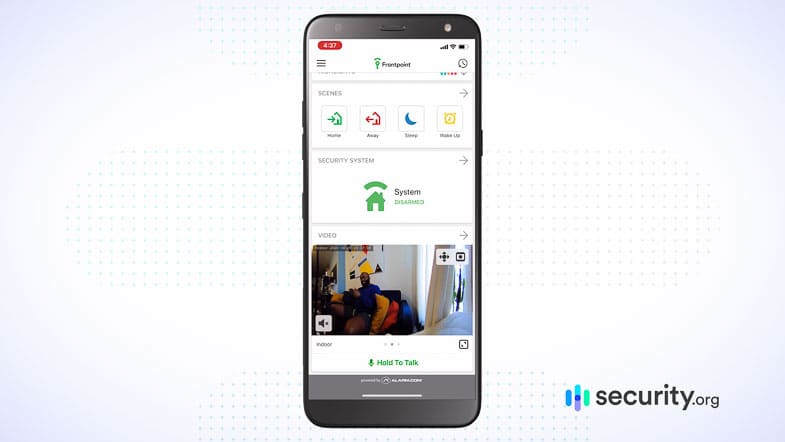
Frontpoint’s app puts every critical control on the home screen, and the notification customization stood out as some of the most granular we tested. We set an alert for a garage door left open more than 10 minutes, and sure enough, it caught us mid-grocery-unpack. That level of specificity is hard to find at this price point.
Scenes is another standout. The feature offers ready-made automation routines that work out of the box, with room to customize further to fit your routine. Our favorite was Nighttime mode, which arms the system while disabling bedroom sensors, so a 2 a.m. trip to the bathroom doesn’t set off the alarm. There’s also a location-based reminder that detects when you’ve left the house and nudges you to arm the system if you forgot.
The tradeoff is complexity. Even with years of testing security systems behind us, some of Frontpoint’s automation setup took real trial and error to work through, and it doesn’t walk you through the process the way Vivint does. The saving grace is that Frontpoint’s customer service team is responsive and well-regarded when you need a hand.
Frontpoint’s Scenes has preprogrammed routines you can customize to match your lifestyle. What We Like
- Customizable notification settings
- Scenes feature makes automation routines easy to activate
- Location-based reminders
- Informative home screen
- Supports two-way audio through the app
What We Don’t Like
- Automation setup might be overwhelming for some
- Requires a paid monitoring plan to use the app
- Some users report camera connectivity issues
- App support response times can be slow
Frontpoint Equipment
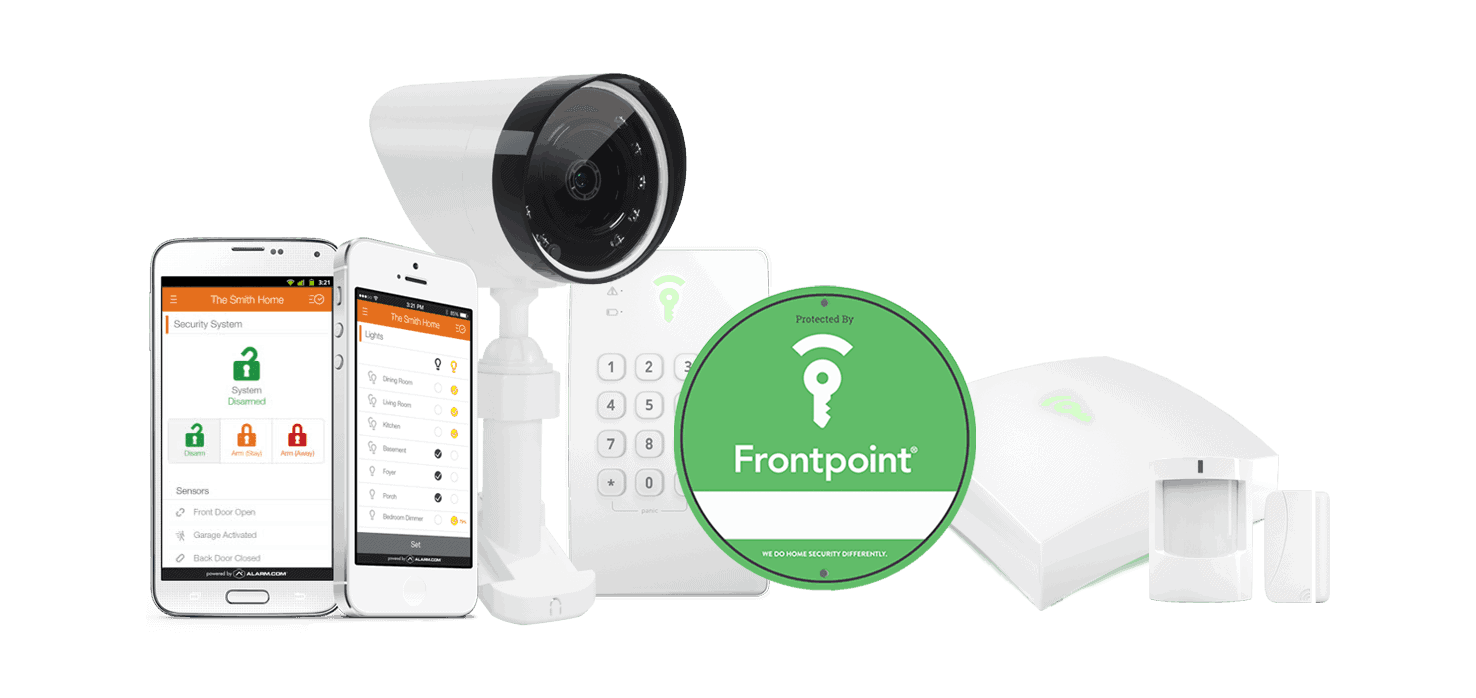
Frontpoint’s equipment arrives preprogrammed straight out of the box, so every device was ready to pair before we even peeled off the adhesive backing. The lineup spans door and window sensors, motion detectors, indoor and outdoor cameras, including a premium floodlight camera, a video doorbell, glass break sensors, and environmental sensors.
Frontpoint Monitoring and Pricing
Frontpoint’s standard online plan is the Ultimate Monitoring package at $49.99 per month — among the higher-priced monitoring plans on the market. More affordable Frontpoint plans start at $4.99 per month, although only the top-tier plan supports the full app. That said, equipment prices remain competitive, with starter packages available at just $69.
-
5. Ring Alarm - Best Alexa Compatibility
 See Pricing Links to Ring.com
Product Specs
Equipment Costs Packages starting at $199.99 Monitoring Options Professional and DIY Monthly Monitoring Costs Starting at $19.99 per month Contract Lengths 1-12 months Installation Options DIY or professional Smart Platform Integration Alexa and Google Home
Why We Like Ring’s App
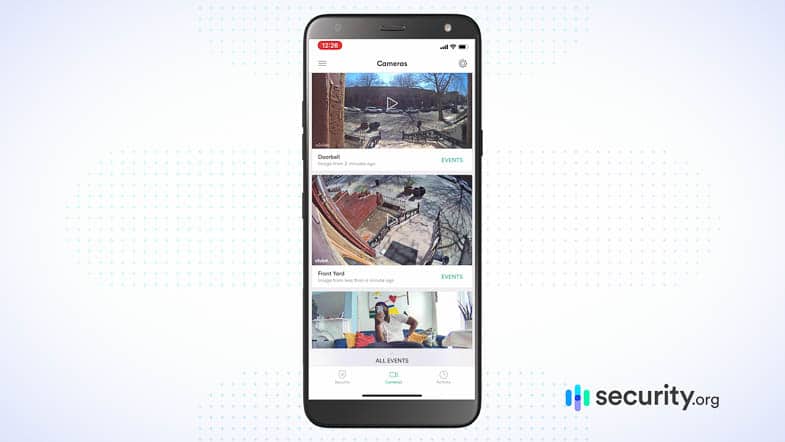
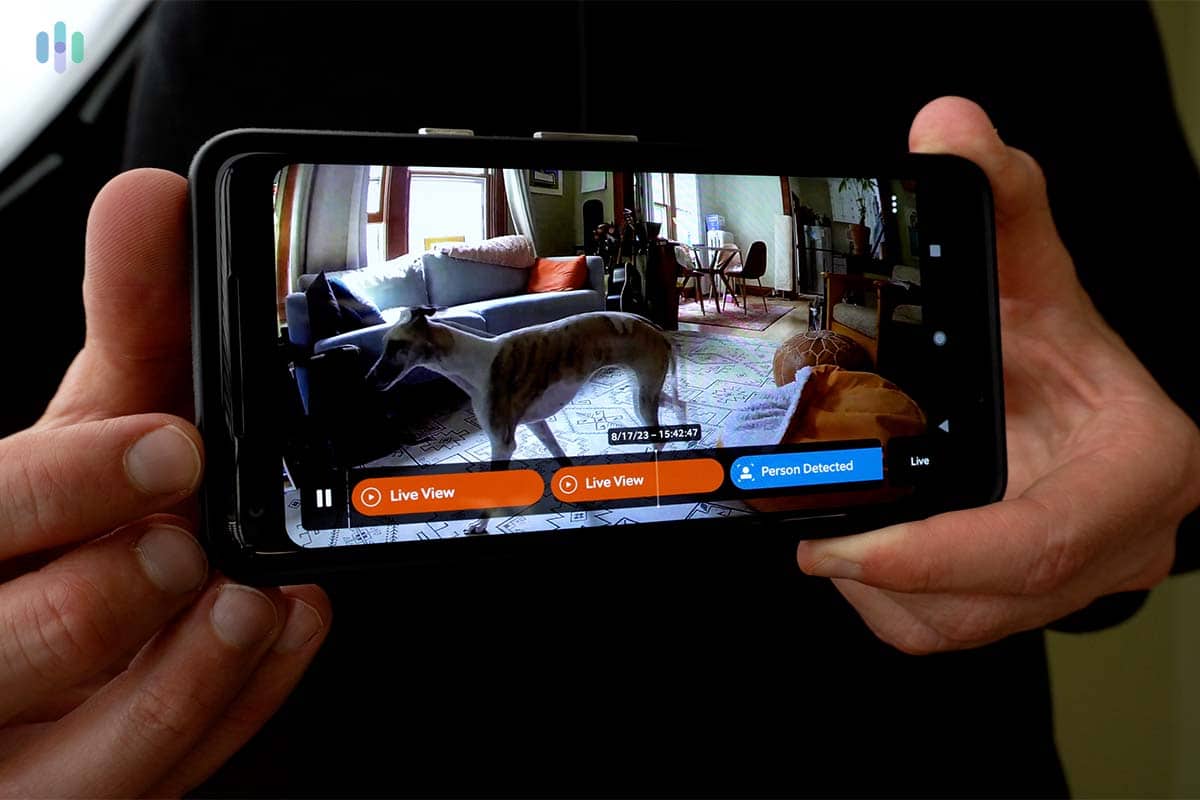
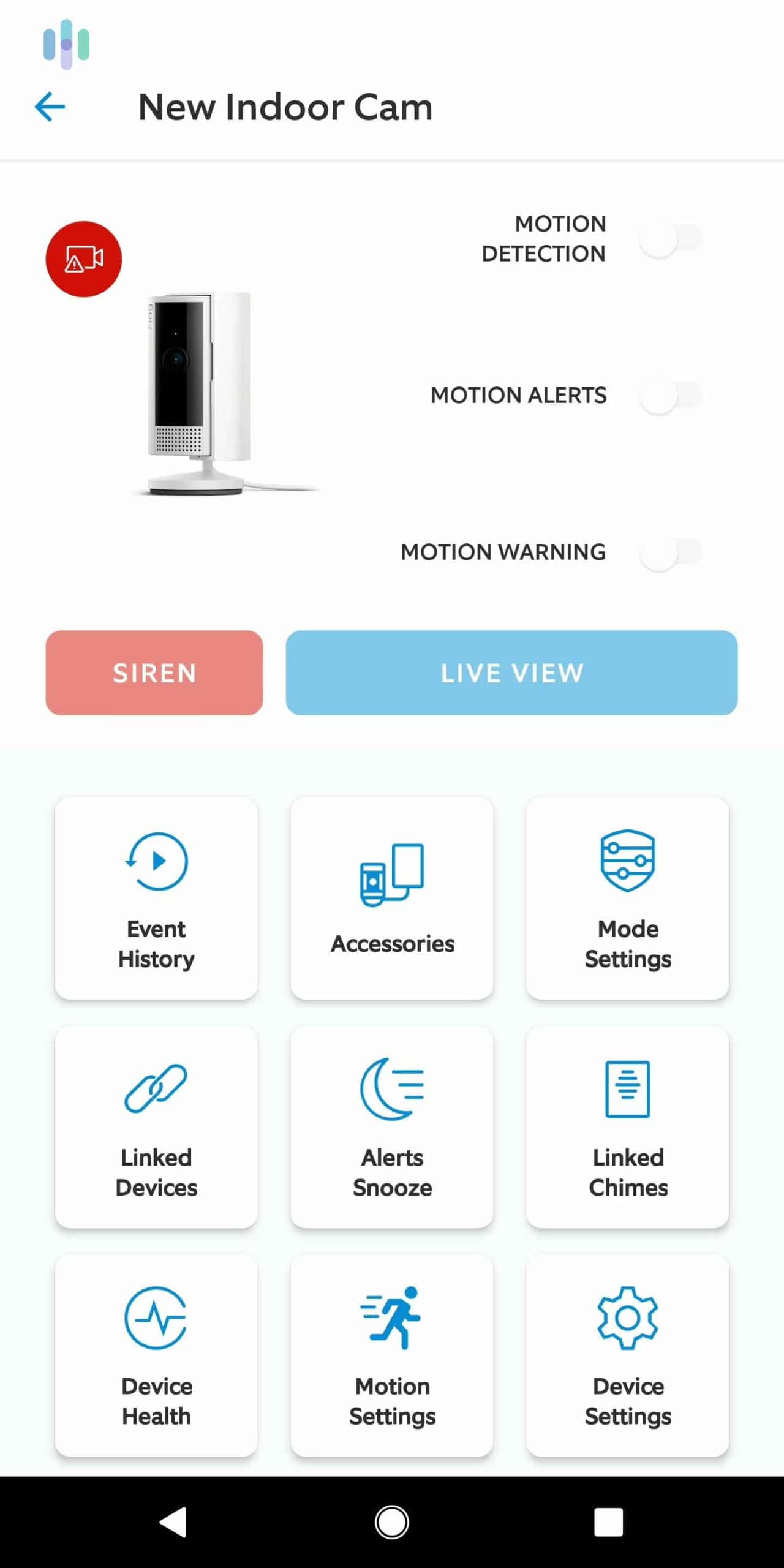
Ring’s app has been around since 2013, and over a decade of refinement shows. The core experience feels genuinely polished. Sounding a siren, jumping into a livestream, or adjusting sensor sensitivity are all fast and intuitive. When we got a new puppy, dialing back motion sensitivity so we weren’t notified of her every move took about 30 seconds.
Ring’s Alexa integration is where it really separates itself, a natural advantage of being part of the Amazon family. We asked Alexa to run our night routine, locking the doors, checking the windows, and arming the Ring Alarm system, all without opening the app. We did hit a few livestream crashes and some notification delays during testing, but neither was a dealbreaker.

Keeping an eye on our new puppy on the Ring app to make sure they’re behaving What We Like
- Alexa integration is deep
- Easy to adjust sensor sensitivity
- Custom motion zones reduce false alerts
- All devices chime through the app when the system is armed
- Flexible self-monitoring options with no contract required
What We Don’t Like
- App sometimes crashes during livestream sessions
- Occasional notification delays
- Advanced features locked behind the highest-tier plan
- Camera features limited compared to Vivint and ADT+
Ring Alarm Equipment
Ring has grown well beyond its doorbell roots. The current lineup includes indoor and outdoor cameras, video doorbells, motion sensors, door and window sensors, a range extender, a panic button, and environmental sensors for smoke and CO.
All equipment is DIY-installed and available through Amazon or Ring’s website. For a head-to-head comparison with another strong budget DIY option, see our Ring Alarm vs. SimpliSafe comparison.
Ring Alarm Pricing
Ring equipment packages start at $199.99. A low price for equipment and monthly fees aren’t required even for Alexa integration. That makes Ring one of the best Alexa-compatible home security systems. If you want video storage, those plans cost $4.99 per month for one camera or $9.99 per month for unlimited cameras. You can also bundle in professional monitoring, AI-powered features, and extended video history for a total of just $19.99 per month.
Methodology: How We Picked The Top Home Security Systems With A Smartphone App
Our Testing Process
Our team’s home security review process is guided by our Editorial Guidelines and is centered on direct hands-on testing. We do not just look at spec sheets or press materials. We physically install, configure, and operate each system we evaluate, timing the full installation, and staging burglary simulations to determine response and app notification times. We also stress-test app stability during live alerts, compatibility with major smart home platforms, and how each system holds up when Wi-Fi drops. Finally, we consider equipment costs, monthly fees, and cancellation policies.
The Factors We Considered Most
Pretty much every security system has an app nowadays. That’s not enough to make it to the top of our list. To be counted as one of the best options, each security system had to meet our strict criteria.
- App Quality: We checked Apple Store and Google Play reviews. If everyday users hate an app, that’s a bad sign.
- Security Camera App Performance: We didn’t just look at whether you can pull up a livestream. We assessed how fast the app loads security camera live feeds, how stable the connection is, how clearly you can make out details, and how well recorded footage is organized and searchable.
- Smart-Home Integration: Arming, disarming, and streaming security camera footage are the basics. What separates a good security system app from a great one is how much further it goes.
- Cost of App: Every security system on this list either allows you to use the app without paying a subscription or is included in the monitoring plan it requires of all customers. What we won’t recommend are systems that charge separately for basic app access.
Using these criteria, we create unbiased scorecards for each security system we test. That allows us to rank them using quantitative metrics instead of first impressions.
About Our Experts
Security.org is made of an independent team of security experts dedicated to making honest, unbiased recommendations. We have over 20 security researchers and hands-on testers. Collectively, our team has clocked over 25,000 research and testing hours and has produced more than 700 security guides since 2018.
Our security system guides are put together by a team lead by Paul Frew, a long-time home security specialist. This team alone has evaluated hundreds of security systems and cameras with a methodical, hands-on approach. Working with Paul are our security and safety experts that include:
- Gene Petrino: Retired S.W.A.T. commander and former law enforcement sergeant, contributing 30+ years of law enforcement and security expertise as a subject matter advisor
- Corey Birnstengel: Editor, videographer, and product reviewer responsible for 200+ in-depth video reviews spanning eight security and tech product categories
- Matthew Adkins: Researcher with a doctorate with a track record of testing and ranking 100+ security systems
- Cort Honey: Engineering graduate with over 1,000 hours of hands-on testing and a knack for making technical concepts easy to understand
Rest assured, our recommendation lists like this one are editorially independent, with ranking results solely based on actual product performance during our tests.
Why You Need a Home Security App
You’ve got sensors on every door and window. A siren loud enough to wake the neighbors. A keypad right by the front door. So why do you need an app? Because most of what makes a security system useful happens when you’re not standing next to the keypad. Here’s what a security system app actually does for you.
- It keeps you in the loop, no matter where you are. Whether you’re at the office, on vacation, or just grabbing groceries, an app sends real-time alerts the moment something triggers your system. The ADT+ app, for example, pushes notifications for everything from motion detection to door sensor activity straight to your phone in real time.
- It gives you eyes on your home at any moment. Every app on this list doubles as a security camera app, letting you pull up a live feed from any connected camera in seconds. Vivint’s app lets you jump between multiple camera feeds without ever leaving the same screen, which is handy when something feels off and you want a quick sweep of your property.
- It turns a basic system into a smart home hub. Arm your system. Lock your doors. Adjust your thermostat. Trigger a lighting routine that makes your house look occupied while you’re away. The app is where passive security equipment becomes an active, automated defense.
- It’s the easiest interface you’ll use. Keypads are fine. Apps are better. You can do more, see more, and configure more from the app than you ever could punching buttons on a panel.
Pro Tip: Can’t hear your alarm from the next room? We recommend ordering a high-decibel siren. Your app notification is the backup. Not the other way around.
What to Look for in a Security Camera App
Most people think of their security system app and their security camera app as two different things. With the systems on this list, they’re the same app.
When your camera feeds, motion alerts, and system controls all live in one place, you get a complete picture of what’s happening at home. When they’re split across multiple apps, things fall through the cracks. Here’s what a good security system app should be able to do:
- Live streaming. This is a baseline. Tap a camera, see what it sees, right now. ADT+ pulls up Nest Cam footage alongside the rest of your system controls without switching apps. Ring’s app makes it easy to jump from a doorbell camera livestream to an indoor cam in just a couple of taps.
- Recorded footage and cloud storage. A live feed is only useful if you’re watching it. Recordings fill in the gaps. Ring’s Protect Plans include up to 180 days of video history for Ring cameras, which remains one of the most generous options on the market.
- Motion zones. A security camera app that alerts you every time a car passes is one you’ll eventually ignore. Motion zones let you define exactly which areas the camera should watch. Both the Vivint and Ring apps let you draw custom zones directly on the camera feed, so you only get alerted when it actually matters.
- Rich notifications. The best security camera apps don’t just tell you motion was detected. They show you a thumbnail or short clip so you can decide whether it’s worth opening the full feed. This is standard on ADT+ and Ring, and it dramatically cuts down on unnecessary check-ins.
- Two-way audio. If a camera has a speaker and microphone, a good security camera app lets you use it. Vivint and Frontpoint both support two-way audio through their apps, which means you can talk to a delivery driver, a pet, or a would-be intruder without touching the door.
If you want to dig deeper into camera-specific options, our guide to the best home security cameras is worth checking out.
>> Read More: How to Make Your Home More Secure
Questions You Should Ask Before You Download a Home Security App
Not every security system app is created equal. Ask yourself these questions before you tap “Download.”
- Are you downloading the right app? This sounds obvious, but it can be an issue. ADT alone has a graveyard of legacy apps in the App Store. The one you want is ADT+. Ring customers need “Ring – Always Home,” not just “Ring.” Start by checking your provider’s website or the setup guide that came with your system.
- Is your phone compatible? ADT+ requires iOS 16.0 or later and Android 9.0 or higher. Always check the minimum requirements before assuming it’ll work on your device.
- Does your subscription actually unlock the features you want? SimpliSafe’s app functions without a subscription, but you’ll lose access to camera recordings, automations, and scheduled alarms. Vivint and Frontpoint require a paid monitoring plan to use the app at all. Before committing to a plan, understand what app features come with it. The gap between the free tier and the full experience can be significant.
- How does the app handle notifications? A security app that buries alerts or delays them by several minutes is a liability, not an asset. In our testing, we noticed Ring has some notification lag, while ADT+ was almost instant. It’s worth checking recent app store reviews specifically for this.
How to Make the Most of Your Home Security App
The best security system app is the one you’ve set up properly. Here’s how to get past the basics.
- Explore the full feature set: Most people download a security app, learn to arm and disarm, and stop there. We suggest spending a good 20 minutes tapping through every menu. You’ll likely find features you didn’t know existed. Frontpoint’s Scenes, for instance, let you create preset routines like “Nighttime” that arm your system while ignoring bedroom sensors so a midnight bathroom run doesn’t trigger the alarm.
- Set up automations: Home automation is an underused feature in security apps. The basic concept is simple: create an “if/then” rule. If it’s 10 p.m., lock the door. If the system detects motion after 11 p.m., turn on the porch light. Vivint’s app walks you through automation setup step by step. ADT+ makes it easy to schedule routines tied to specific times or system states. Start with one automation and build from there.
- Choose motion zones: If your security camera app is triggering on kids walking past your fence line or your dog crossing the living room, you’re going to start ignoring alerts. Ring and Vivint let you draw custom motion zones directly on the camera feed so you only flag activity that matters.
- Whitelist security app notifications: Do Not Disturb is great until it silences an intrusion alert at 2 a.m. On iPhone, go to Settings, Focus, Do Not Disturb and allow notifications from your security ADT+ requires iOS 17.0 or later, and Android 12.0 or higher. While you’re at it, save your security company’s phone number as a contact and whitelist that too. Monitoring centers still call from real numbers.
- Add trusted users. Vivint, Ring, and most other apps let you add family members or trusted contacts as additional users. If someone else needs to be able to arm the system, check the camera, or get alerts, this is the move. It also means the system doesn’t rely solely on you if your phone dies.
Recap
A security system app is where a setup stops being reactive and starts being proactive. The app catches the porch pirate and saves the clip before they’re even off your street. Someone snoops through your trash, and your security app notifies you so you can call the cops. Your vacation home security system detects a burst pipe, and you can send over a plumber before it becomes a disaster. You want to set up a home-automation routine that locks the doors and dims the lights every night at 10? It can be done in under two minutes from your couch.
A good app won’t save a bad security system. But a great app can make a good security system significantly more useful, more responsive, and more worth the monthly cost.
FAQs
-
What does a security system app do?
It depends on the app. Usually, it acts like a keypad, allowing you to arm and disarm your system. Extra features may include viewing security footage, setting home-automation routines, and controlling individual smart devices.
-
Can I arm my security system in the app?
Yep! Arming and disarming your security system is a basic feature you can expect from any provider’s app.
-
Is my security system’s app free?
No security system we’ve reviewed requires you to purchase your app. It should be free to download. You may, however, have to pay a subscription fee to access all the app’s features.
-
Do security system apps work without Wi-Fi?
Your app will need an internet connection for full functionality to access features like remote monitoring and video livestreams. Without Wi-Fi or an internet connection, you might not receive notifications or be able to access sensors or equipment.
-
Do security systems apps work with smart home devices?
There are several security system apps that integrate with smart home devices. However, this may depend on the brand and the monitoring plan you’ve chosen.
-
Massachusetts Institute of Technology. (2026). Marie van Brittan Brown.
https://lemelson.mit.edu/resources/marie-van-brittan-brown -
Ring. (2024). Neighbors by Ring.
ring.com/neighbors