

IPVanish VPN Review 2026: Our Hands-On Testing
IPVanish offers unlimited connections and privacy features at an affordable price, but how does it perform in reality?
 &
&
 Last Updated on Jul 23, 2026
What We Like
- Unlimited simultaneous connections: IPVanish doesn't cap the number of devices you can connect at once, making it useful for larger households.
- Straightforward apps: The Windows and mobile apps are easy to navigate, and core features like the kill switch or protocol selection are simple to find.
- Competitive long-term pricing. The Essential plan's two-year rate is more affordable than those of several bigger-name competitors.
What We Don't Like
- Steep renewal rates. Once your promotional term ends, IPVanish's rate jumps significantly.
- U.S. jurisdiction. IPVanish is headquartered in the United States, a Five Eyes member country.
- Threat Protection Pro is desktop-only: The strongest ad and malware blocking tools are limited to Windows and macOS.
Bottom Line
the security.brief
We tested IPVanish's speed, leak protection, and streaming access firsthand. Here's what held up, what didn't, and whether it's worth the price.
IPVanish is a U.S.-based VPN provider that’s been around since 2012. Today, it’s owned by Ziff Davis, the same parent company behind several other well-known tech and security brands. It’s not the cheapest VPN available, nor is it the most feature-loaded. Instead, IPVanish is a service that leans on unlimited device connections and broad platform support to stand out from the pack.
To see how well it works as a privacy-forward VPN, we installed IPVanish across desktop and mobile platforms. We used the VPN in our day-to-day browsing, streaming, and downloading over several weeks. We ran it through our standard range of tests, including leak checks and streaming access attempts. We also assessed the apps themselves to see how they compare to others we’ve tested. We didn’t just want to confirm IPVanish’s own claims. We wanted to see how the service performs under the kind of conditions you would actually deal with. Let’s start!
What We Tested
We spent three weeks living with IPVanish across a Windows 11 laptop, a MacBook Air, an iPhone 15, and a Samsung Galaxy S26 Ultra, treating it the way a typical VPN user would rather than running it through a lab checklist. We already knew that IPVanish was fast from our VPN speed tests. What we really wanted to know, though, was whether the features held up under daily use, and if the service actually protects the privacy it promises. Here’s how we did that:
- Speed tests. Download and upload speeds, plus latency, on nearby, mid-distance, and far-away servers.
- Feature testing. Kill switch reliability, simultaneous connection limits, and Double Hop.
- Privacy audit. Encryption standards, VPN protocol options, and how the no-logs policy performed in third-party audits.
- Leak tests. IP address, DNS, and WebRTC leak checks to confirm nothing slips outside the encrypted tunnel.
- Streaming and app checks. Day-to-day use across the Windows and mobile apps to see how the experience holds up outside a lab setting.
Speed and Performance
In a word: IPVanish is fast. We ran speed tests on a nearby U.S. server, a mid-distance European server, and a distant server in Australia. The drop-off from our baseline stayed modest even at the farthest distance. That lines up with our dedicated VPN speed comparison, where IPVanish ranked as one of the fastest VPNs overall.
| Server Distance | Download Speed | Upload Speed | Latency |
|---|---|---|---|
| Baseline (no VPN) | 94.6 Mbps | 94.7 Mbps | 3 ms |
| Nearby (U.S.) | 93.1 Mbps | 92.4 Mbps | 14 ms |
| Mid-distance (Europe) | 91.5 Mbps | 91.0 Mbps | 45 ms |
| Distant (Australia) | 90.78 Mbps | 89.93 Mbps | 78 ms |
IPVanish was fast enough that we streamed a 4K Netflix movie on the distant Australian server without a single buffering wheel. Video calls were clear and glitch-free on the mid-distance server, and a round of mobile gaming over the nearby U.S. server showed no noticeable lag. Even a 5 GB game update we ran as a test finished close to the time we’d expect with no VPN running at all.
That said, it’s worth pointing out that latency typically increases as the server you’re connected to moves farther away. That’s normal for any VPN, but in case you’re here looking for a gaming VPN, there are a few better options out there. Our top picks are NordVPN for mobile gaming and Surfshark for desktop and console gaming.
Privacy and Security
IPVanish backs up its speed with a privacy setup that covers all the basics. We looked at the protocols and encryption on offer, then put the service through leak testing to see how it holds up.
Encryption and VPN Protocols
IPVanish gives you a choice of three VPN protocols: WireGuard, OpenVPN, and IKEv2/IPSec.
WireGuard is the default, offering fast speeds with balanced security. It uses ChaCha20 encryption, which is built for fast, efficient performance on phones and other low-power devices. In contrast, OpenVPN and IKEv2/IPSec rely on AES-256 encryption. This is the same standard used by banks and governments, and is best if you prioritize privacy over speed. IPVanish also offers LAN blocking, which stops other devices on a shared network from communicating with yours while you’re connected to the VPN.
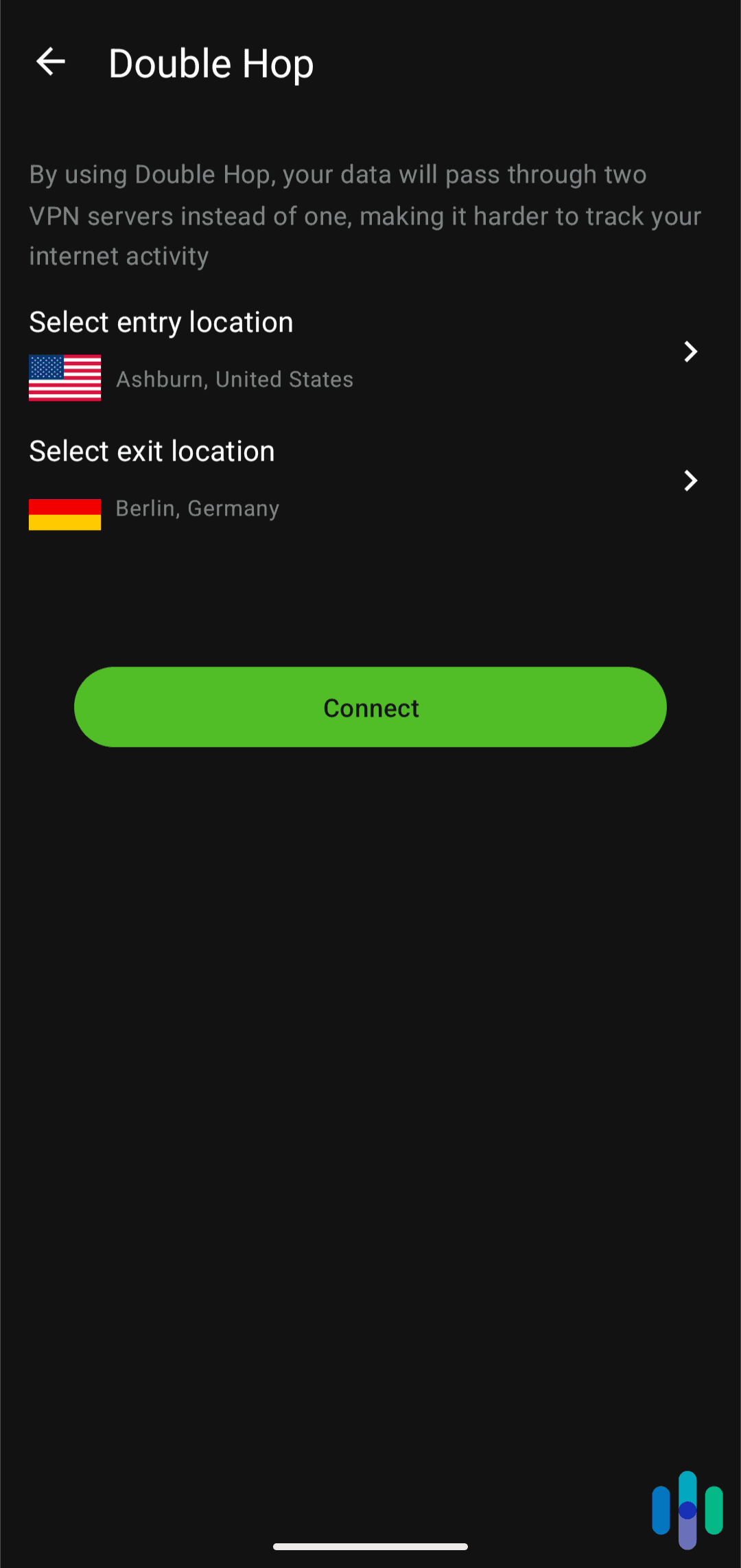
For added anonymity, IPVanish’s Double Hop feature routes your traffic through two separate servers instead of one, doubling the encryption along the way. This is also known as VPN multi-hop, and is a common feature among the most secure VPNs. Like Surfshark, IPVanish lets you pick your own entry and exit points from its 150+ server locations. That’s worth noting. Most VPNs we tested that offer a multi-hop feature have pre-set server pairs. You can’t change your multi-hopped IP address to any particular location — only the select exit locations supported.
Leak Tests
We ran IP address, DNS, and WebRTC leak tests on five servers spread across three continents (the U.S., the U.K., and Australia). Our team even checked each server three times over the course of a week. That’s 45 individual tests in total. And the result? No leaks. IPVanish passed each test, so no real IP address, DNS request, or browser-level leak made it outside the encrypted tunnel during our testing.
Features
IPVanish doesn’t try to be everything to everyone — something we’re seeing more from other top VPNs. NordVPN, for instance, now offers a “next-gen antivirus” as part of its VPN suite, alongside other features like identity protection and identity theft insurance. IPVanish chose a more straightforward approach. It offers a VPN that works, with few but useful features that help up well during testing. Unlimited simultaneous connections is the standout to us. We ran the VPN on six devices at once without hitting a cap or noticing any drop in performance. Here are other features worth noting.
- Threat Protection Pro. Powered by VIPRE’s threat intelligence, this always-on feature blocks malicious websites, downloads, ads, and trackers. In our testing, it blocked 14 of 15 known malicious test URLs from a sample list we ran against it. We even noticed that it kept working after we manually disconnected the VPN, which means it’s an always-on protection.
- Secure Browser. For when a private browser is not enough, IPVanish offers a secure browsing environment available on the Advanced plan. It’s designed to isolate online threats so nothing reaches the local device. We used it to visit a deliberately sketchy torrent site, and no cookies or local files were left behind after closing the session.
- Cloud Backup. It’s more of a miscellaneous feature, but IPVanish also includes an encrypted cloud storage powered by Livedrive, bundled into the Advanced plan. It’s not meant to store all your backup files. Instead, we recommend using it to store important files (e.g. soft copies of important documents) as protection in case your local device is hit by malware.
- Kill switch. This is a necessary VPN feature that keeps you anonymous even if the VPN suddenly drops by force-stopping your online activities. However, we found that not all VPN kill switches work the same way. We forced five manual disconnects to test IPVanish’s kill switch, and it cut our connection within a second every time.
- Split tunneling. While not as necessary an the kill switch, split tunneling is useful. It lets you pick which traffic routes through the VPN (and is thus encrypted) and which ones route outside the tunnel. IPVanish’s split tunneling let us route select apps outside the VPN tunnel without issue.
Between the base Threat Protection included with Essential and the fuller Threat Protection Pro suite on higher tiers, IPVanish offers more than a typical VPN-only service but less than cybersecurity leaders like NordVPN and Surfshark do. Thankfully, even with its richer-than-most feature set, IPVanish doesn’t turn the app into a cluttered mess of upsells. That brings us to our next topic — living with IPVanish day-to-day.
User Experience
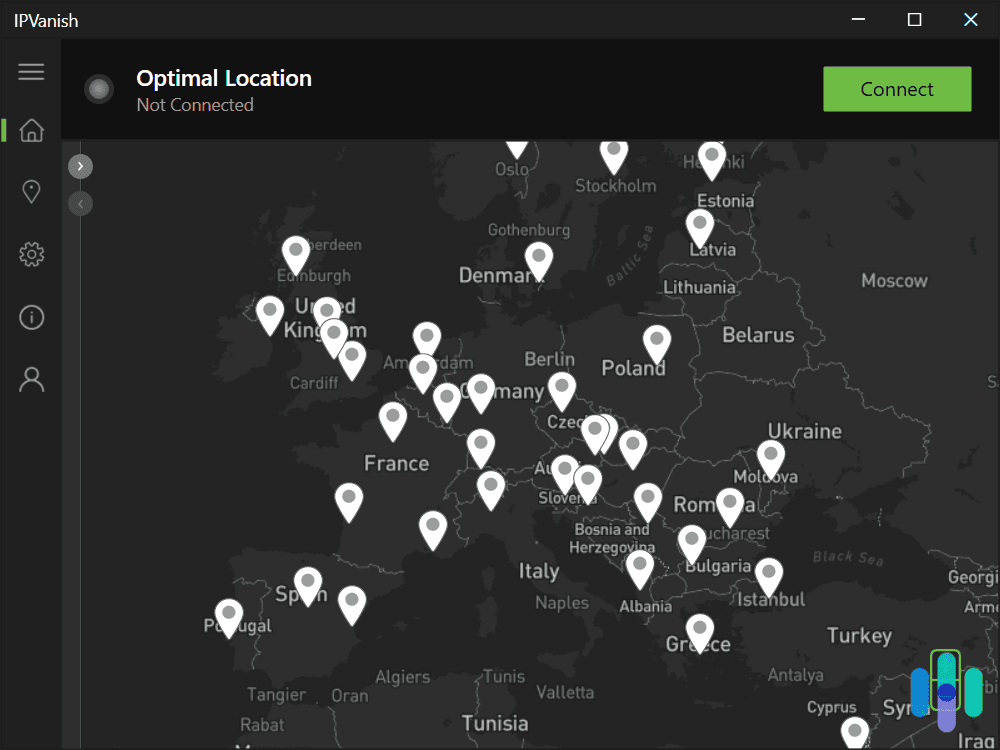
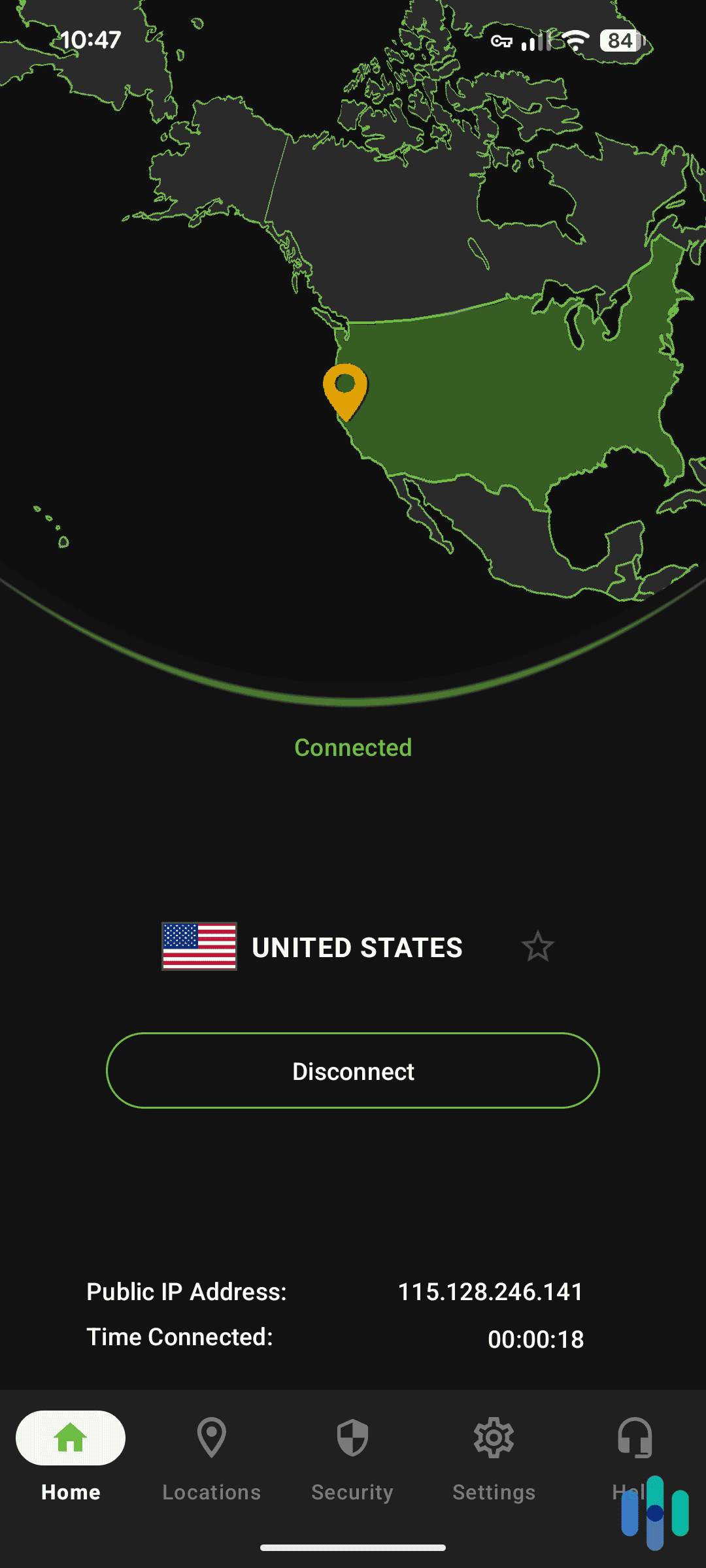
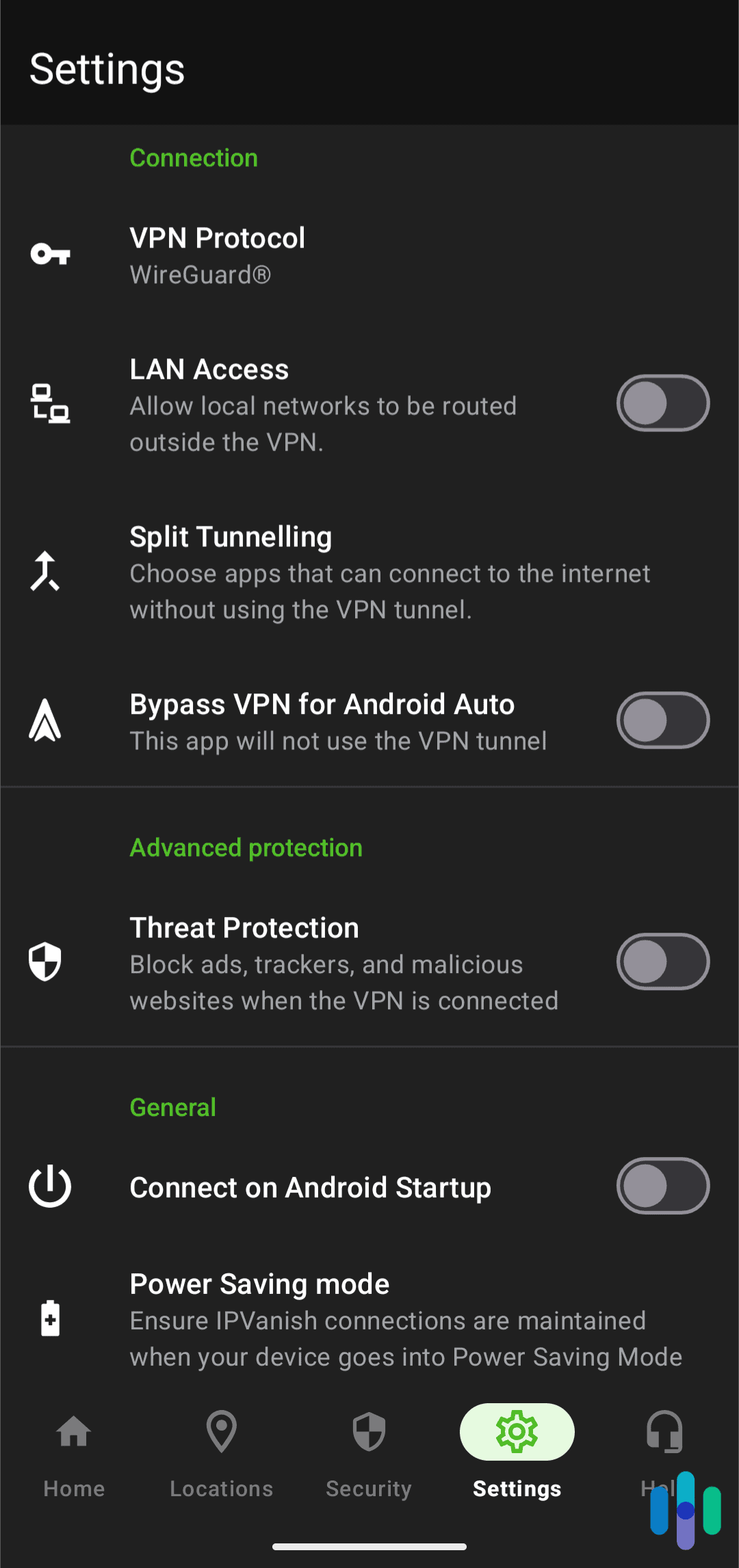
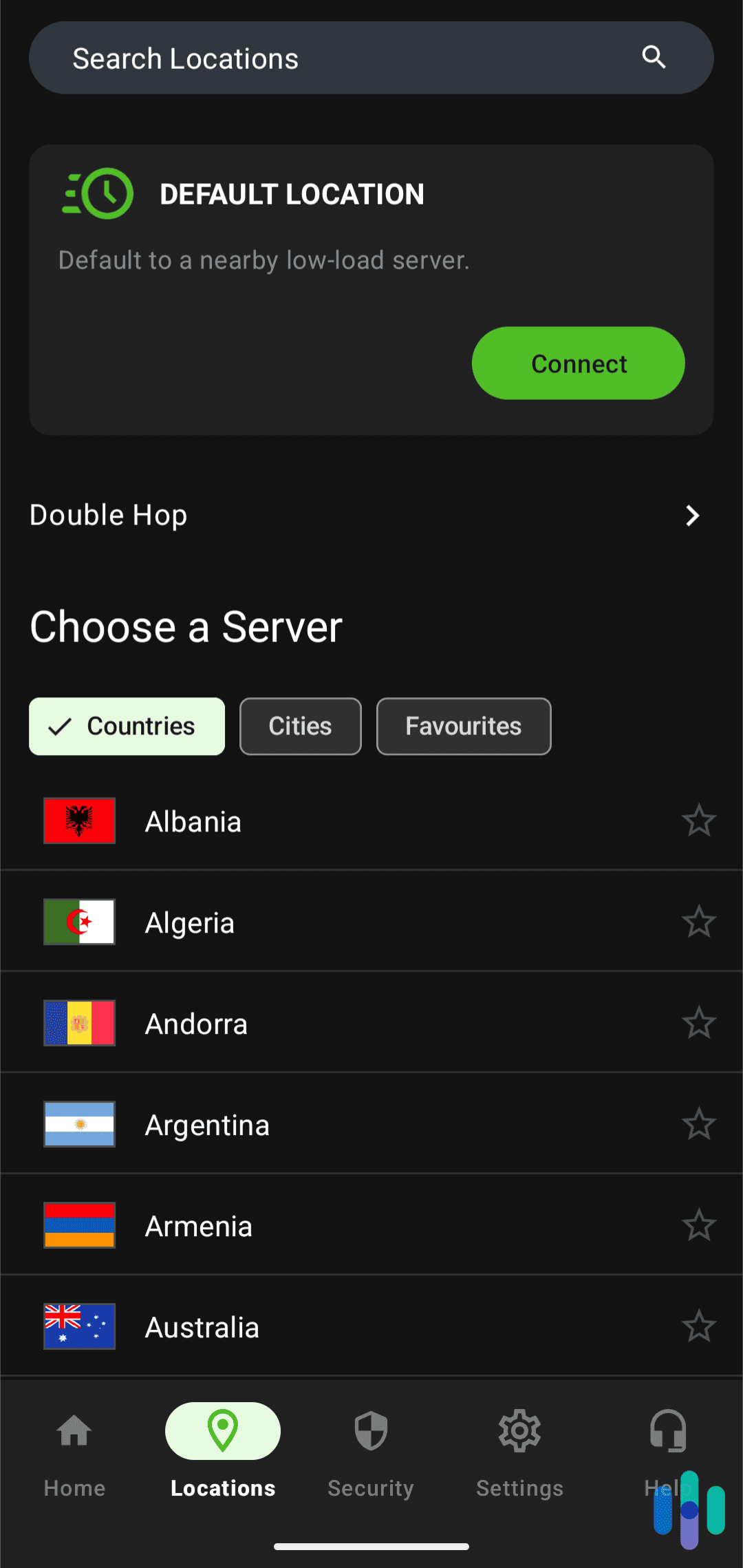
IPVanish’s apps have a dashboard-style layout. We were presented with a map view that let us tap a country to connect rather than scrolling through a list. On desktop, protocol switching, the kill switch toggle, and Double Hop are all accessible from the main settings screen. That’s a plus. Everyday VPN users can still customize their connection without digging through endless menus. The layout’s simplicity and customizability reminded us of when we tested Private Internet Access.
IPVanish’s mobile apps mirror the desktop layout, which we appreciated since we didn’t have to relearn the interface. Setup on both platforms was quick: download, log in, and connect, with no manual configuration needed if you just want the VPN running in the background. If you want to fine-tune protocols or set up Double Hop routes, those options are easy to find. If you’d rather not touch any of that, the defaults work fine on their own.
Pricing
IPVanish offers two plans: Essential and Advanced. Both are available on monthly, one-year, and two-year terms. Long-term plans bring the price down substantially, but like most VPNs we’ve tested, renewal rates jump significantly after the first term. That’s why we suggest picking the two-year plan. You get the lowest rates and enjoy the discounted first-term price longer.
| Plan | 1 Month | 1 Year | 2 Years |
|---|---|---|---|
| IPVanish Essential | $12.99/mo | $3.33/mo, billed $39.99 (renews at $89.99/yr) | $2.19/mo, billed $52.56 (renews at $89.99/yr) |
| IPVanish Advanced | $14.99/mo | $4.49/mo, billed $53.88 (renews at $109.99/yr) | $3.29/mo, billed $78.96 (renews at $109.99/yr) |
If you’re worried about buyer’s remorse, both plans include a 30-day money-back guarantee on the one-year and two-year terms, so you can test the service risk-free before committing long-term. The Essential plan covers the core VPN, while Advanced adds the Secure Browser, cloud backup, and phone support on top. If you’re only after a VPN and don’t need the extras, Essential’s two-year rate is the one we recommend.
How IPVanish Compares to NordVPN and Surfshark
NordVPN and Surfshark currently sit atop our list of the best VPNs, but where does IPVanish rank? Device limits and pricing structure are where these three VPNs diverge the most. IPVanish and Surfshark both allow unlimited simultaneous connections. NordVPN caps it at 10 devices. That might not be enough to cover a full household of phones, laptops, tablets, and streaming devices on one account.
On price, Surfshark’s cheapest long-term plan is in the same ballpark as IPVanish. NordVPN’s pricing is closer to IPVanish’s renewal jump.
Where NordVPN pulls ahead is scale and jurisdiction. NordVPN operates thousands more servers across a wider footprint. The headquarters are also based in Panama, outside the surveillance-sharing alliances that cover both the U.S. (IPVanish’s HQ) and the Netherlands (Surfshark’s HQ). We might be nitpicking here, but those details are worth knowing if you’re particularly privacy-conscious.
IPVanish has a leaner but still substantial network. It also includes features like Double Hop and Threat Protection Pro that most budget options don’t offer. Surfshark splits the difference: a Netherlands base, a smaller server count than NordVPN, but a price point that’s hard for either competitor to touch. For a closer look at how these and other providers stack up side by side, see our VPN comparison guide.
| VPN | Starting Price (2-yr) | Servers | Device Limit | Jurisdiction |
|---|---|---|---|---|
| IPVanish | $2.19/month | 3,400+ servers | Unlimited | United States |
| NordVPN | $3.49/month | 9,300+ servers | 10 devices | Panama |
| Surfshark | $2.49/month | 4,500+ servers | Unlimited | Netherlands |
If you prioritize device coverage without blowing out the budget, IPVanish and Surfshark both work well for you. If you favor privacy and server scale more heavily, you’ll likely lean toward NordVPN despite the higher starting price.
Who It’s For
Unlimited simultaneous connections combined with a competitively priced two-year plan makes IPVanish a solid fit if you’re sharing one account across a household full of phones, laptops, tablets, and streaming boxes.
It’s also a reasonable pick if you torrent regularly, thanks to consistent speeds and a reliable kill switch. The same goes for general streaming use, including unblocking services like Netflix.
If server network size or jurisdiction outside the U.S. is your top priority, IPVanish might fall short. If you specifically want a no-log VPN headquartered outside a Five Eyes country, or you want the largest possible server footprint, you’re better off looking elsewhere.
In any case, we recommend weighing IPVanish against the rest of the field before committing. Our full VPN buying guide breaks down how to find the perfect VPN for you across categories like Windows performance and router-level setups.
FAQs
-
Is IPVanish a safe VPN to use?
Yes. IPVanish uses AES-256 or ChaCha20 encryption depending on the protocol you choose, supports modern options like WireGuard, and passed our IP, DNS, and WebRTC leak tests without issue. Its no-logs policy means it doesn’t track or store your browsing activity while you’re connected.
-
Does IPVanish work with Netflix and other streaming services?
Yes, IPVanish was able to access Netflix and other major streaming platforms during our testing. Results may vary by server and can change over time as streaming services update their VPN detection.
-
How many devices can I use with IPVanish?
IPVanish allows unlimited simultaneous device connections on every plan, so you can run it on every phone, laptop, tablet, and streaming device in your household without hitting a cap.
-
Is IPVanish based in a privacy-friendly country?
IPVanish is headquartered in the United States, which is part of the Five Eyes intelligence-sharing alliance. That means it could theoretically be compelled to share user data under U.S. law, though its no-logs policy limits what there is to hand over.
-
How much does IPVanish cost?
IPVanish’s Essential plan starts at $2.19 per month on a two-year term, rising to $12.99 per month if you pay monthly. The Advanced plan, which adds cloud backup and a secure browser, is $3.29 per month on a two-year plan or $14.99 monthly.