
Best Identity Theft Protection Services for Fraud Detection
We tested how quickly LifeLock, Aura, and Coveron catch fraud and scams, and how each one helps you recover if you become a victim.
 &
&
 Last Updated on Sep 04, 2026
- Constantly scans the dark web for your details
- Up to $10,000 in scam reimbursement
- Real-time scam detection powered by AI

- AI spam call and message protection service
- Three-bureau credit monitoring on all plans
- Data broker and spam list removal service

- Prices start from $2.99 a month
- Malware breach alerts included in all plans
- Up to $10,000 in online fraud insurance
the security.brief
LifeLock leads with real-time AI scam detection, Aura delivers the fastest fraud alerts, and Coveron offers budget-friendly scam and fraud insurance.
Fraud and identity theft overlap with common online scams, such as phishing emails, spoofed calls, and romance cons. All of these scams can be the first domino that leads to a stolen identity. What’s worse, fraud rarely announces itself. It shows up as a new account you didn’t open, a scam call that almost worked, or a data breach notice you almost ignored. That is why the identity theft protection service you choose should catch those signals fast. It needs to cover the ground scammers actually target and back you up with recovery support if something slips through.
Based on our testing, LifeLock is the best identity theft protection service for fraud detection. Its real-time scam-detection assistant and dedicated restoration specialists outperformed other services. Aura and Coveron also made our list, taking different approaches to spotting fraud and helping you recover from it. Let’s go through each one in more detail to see which identity theft protection service is best for you.
Top Pick Comparison
| System |
LifeLock
|
Aura
|
Coveron
|
|---|---|---|---|
| Ranking | 1st | 2nd | 3rd |
| Ratings | 9.8/10 | 9.7/10 | 9.5/10 |
| Dark web monitoring | Yes | Yes | Yes |
| Financial monitoring | Yes | Yes | Yes |
| Fraud protection | Synthetic identity records, phone takeover | Scam calls, texts, and emails monitoring | Cyber extortion and online fraud |
| Alert Speed | Real-time | Real-time | Real-time |
| Restoration Support | U.S.-based restoration specialists, guaranteed resolution, scam reimbursement up to $10,000 | U.S.-based Expert Fraud Remediation team, dedicated case manager, three-way calls with institutions | Dedicated case manager through insurance partner HSB, $10,000 online fraud insurance |
| Recommended Plan Tier | Total | Individual | Identity Theft Protection |
| Starting price | $10.42/month | $12/month | $2.99/month |
| Read Review | LifeLock Review | Aura Review | Coveron Review |
-
1. LifeLock - Best for Real-Time Scam Detection

Product Specs
Dark Web Monitoring Yes Credit Reporting Yes Insurance Coverage Up to $3 million Free Trial 30-day Individual Monthly Plans $12.49 and up Family Monthly Plans $47.99 and up Picture a scam call coming in while you’re mid-conversation, or a phishing text landing seconds after a real delivery notification. This is what LifeLock is built for. Rather than waiting for a fraudulent transaction to show up hours or days later, LifeLock’s 24/7 virtual assistant is designed to flag the scam attempt itself (the call, the text, the phishing link) while it’s happening. Combine that with the widest monitoring net of the three services here, and LifeLock earns the top spot for anyone who wants to catch fraud at the source rather than clean up after it.
What We Like
- Real-time scam detection via 24/7 AI virtual assistant
- Monitors for phone takeover, home title, and synthetic ID
- U.S.-based restoration specialists with guaranteed resolution
What We Don’t Like
- Most expensive plan of the three
- Full fraud-detection coverage only available on the top-tier Total plan
- Scam reimbursement capped at $10,000
- No cyber extortion or online fraud insurance
Fraud Detection and Monitoring Inclusions

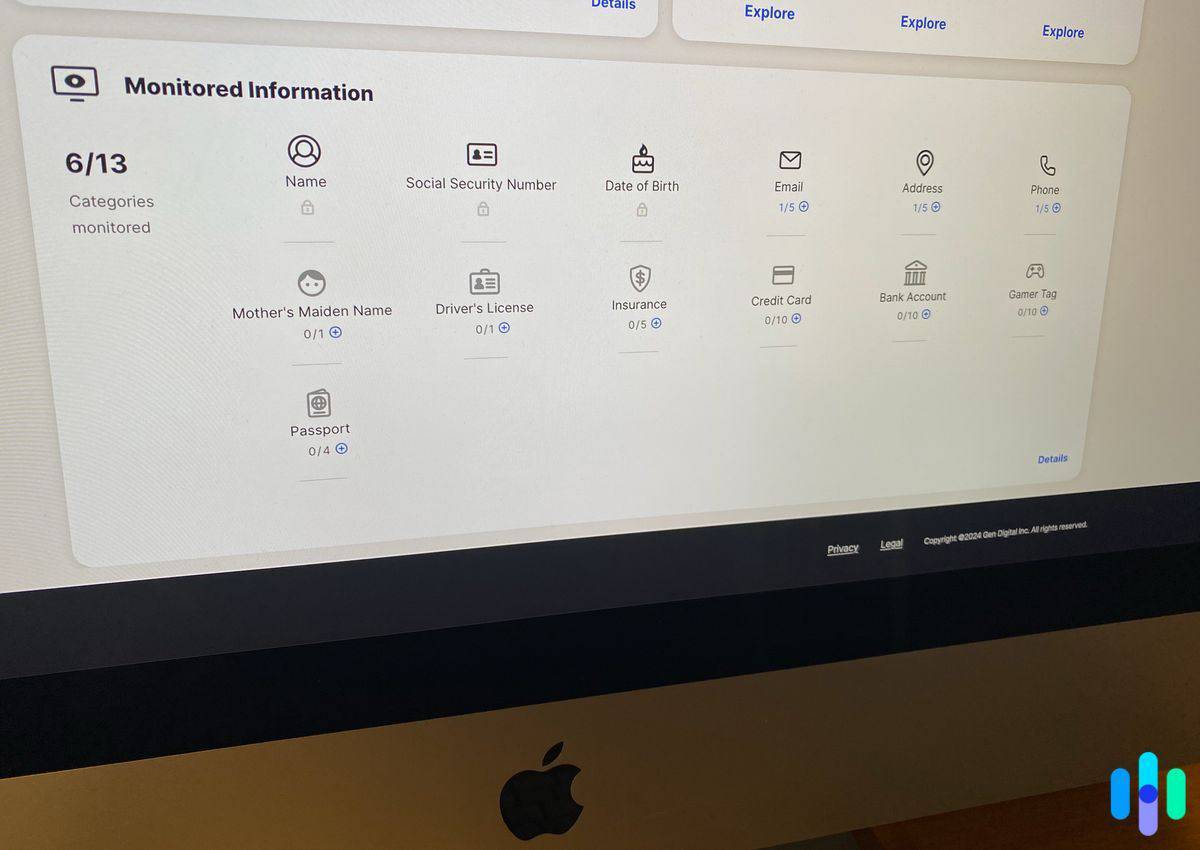
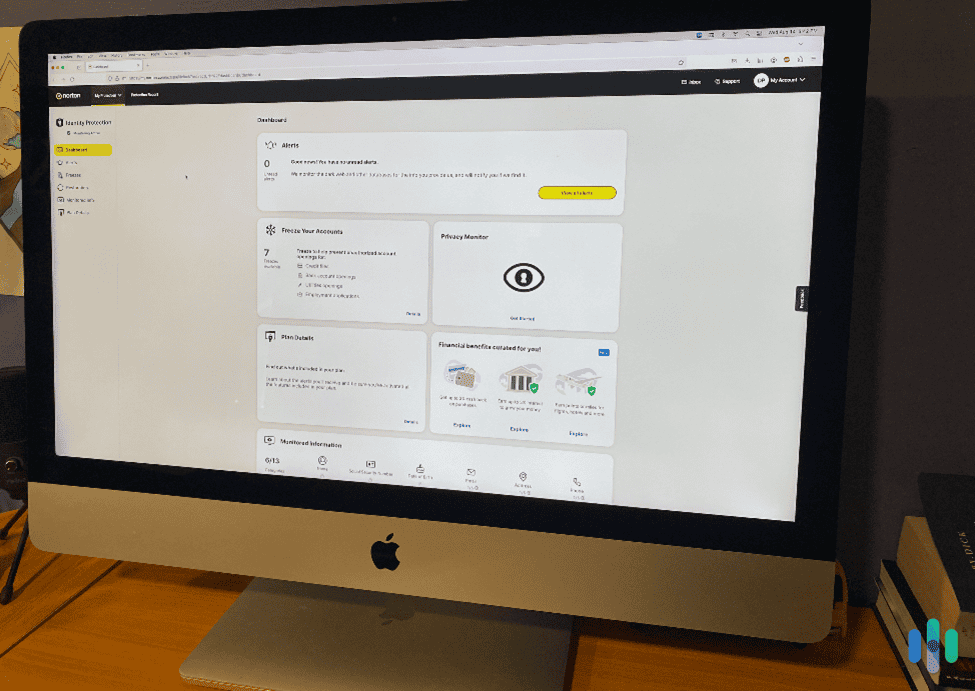
It took us a lot of time setting up all of LifeLock’s tools, but we think it’s worth it LifeLock’s coverage is split into two equally important layers. The first is monitoring breadth. Dark web marketplaces, financial accounts, criminal and synthetic identity theft records, home titles, phone takeover attempts (SIM swap fraud), and USPS address changes are all in scope on the Total plan. There is also no cap on how many financial accounts get monitored.
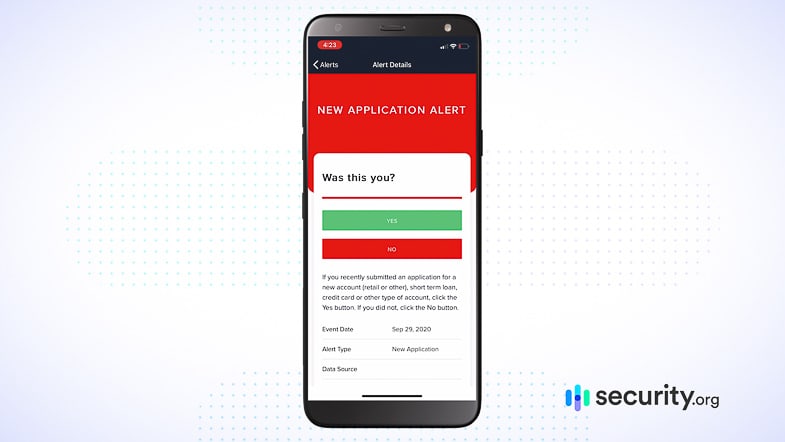
The second layer is the scam-detection assistant. It’s not a passive monitoring feed. The assistant is built to intercept scams as they’re unfolding, and LifeLock backs that up with standard scam reimbursement coverage of up to $10,000 if something still slips through. For a closer look at how this combination stacks up against our next pick, see our LifeLock vs. Aura comparison.
LifeLock Pricing
That breadth has a cost. The Total plan, the only tier that pairs phone takeover monitoring, home title protection, and unlimited account monitoring with the scam-detection assistant, runs $34.99 per month, or $29.17 per month billed annually at $349.99 per year. It’s not the only LifeLock plan, though. Drop down to the Core option and you lose phone takeover and home title coverage entirely, plus your monitoring caps out at two financial accounts. It’s better than nothing, but we think LifeLock’s fraud-detection features are most worth it if you invest in Total.
-
2. Aura - Best for Fastest Fraud Alerts

Product Specs
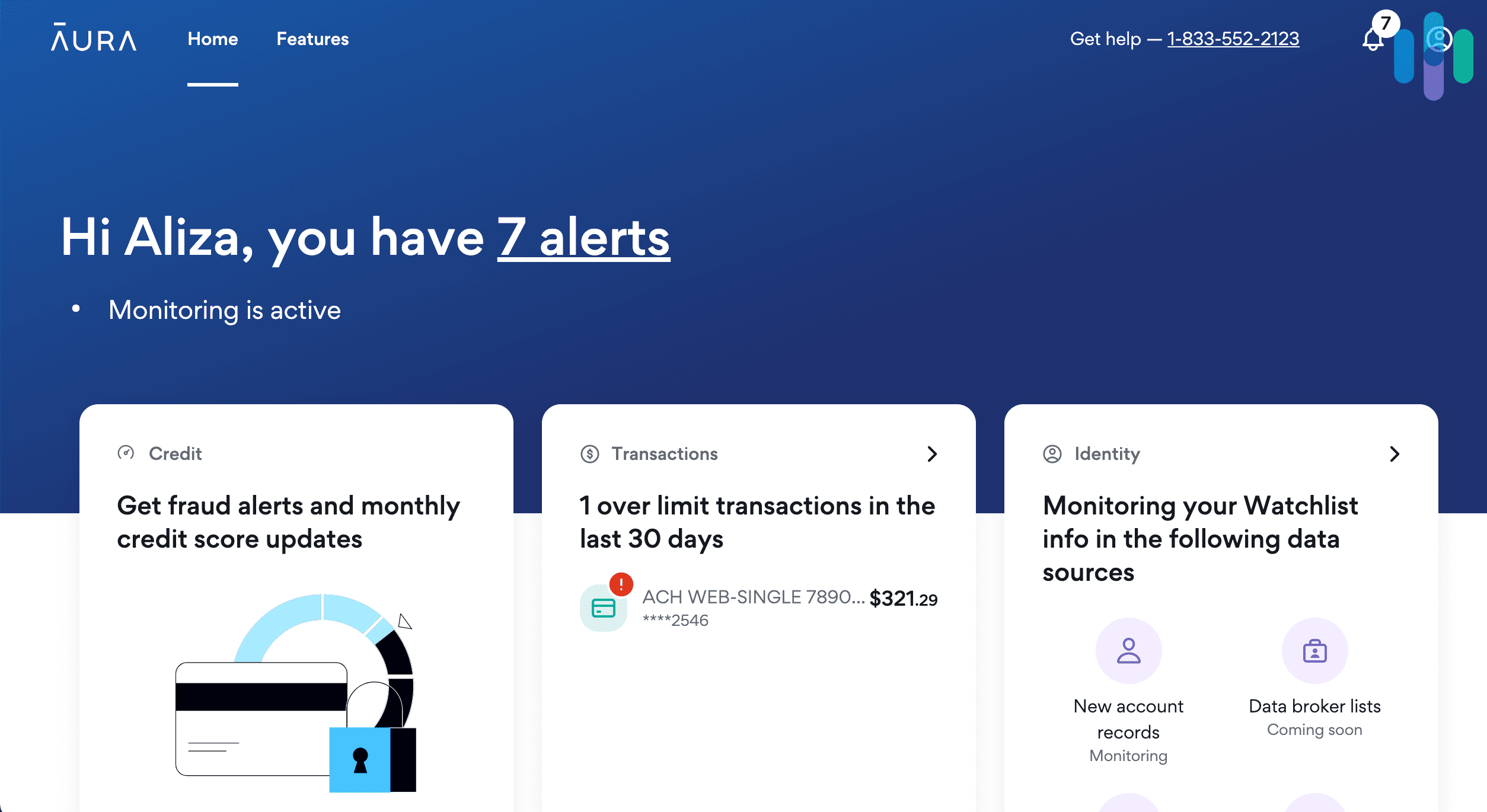
Dark Web Monitoring Yes Credit Reporting Yes Insurance Coverage Up to $1 million Free Trial 14-day Individual Monthly Plans $12 Family Monthly Plans $32 “Up to 650x faster than the competition” is a bold statement for any company to put on its own homepage. That’s not a figure we measured in our testing, but our alerts consistently arrived quickly and without the lag we’ve seen elsewhere. What sold us on Aura, though, is simple. You don’t have to waste time comparing tier features. Every plan gets the same monitoring, so the decision comes down to how many people you’re covering, not which features you’re willing to give up.
What We Like
- Fast advertised fraud alerts
- Dedicated U.S.-based case manager with three-way calls to banks/bureaus
- Same monitoring features available on every tier
What We Don’t Like
- AI scam call/text protection is an add-on for Individual/Couple
- No published cyber extortion or scam-specific insurance
- Expensive compared to some other services
- Apps take a while to get used to
Fraud Detection and Monitoring Inclusions

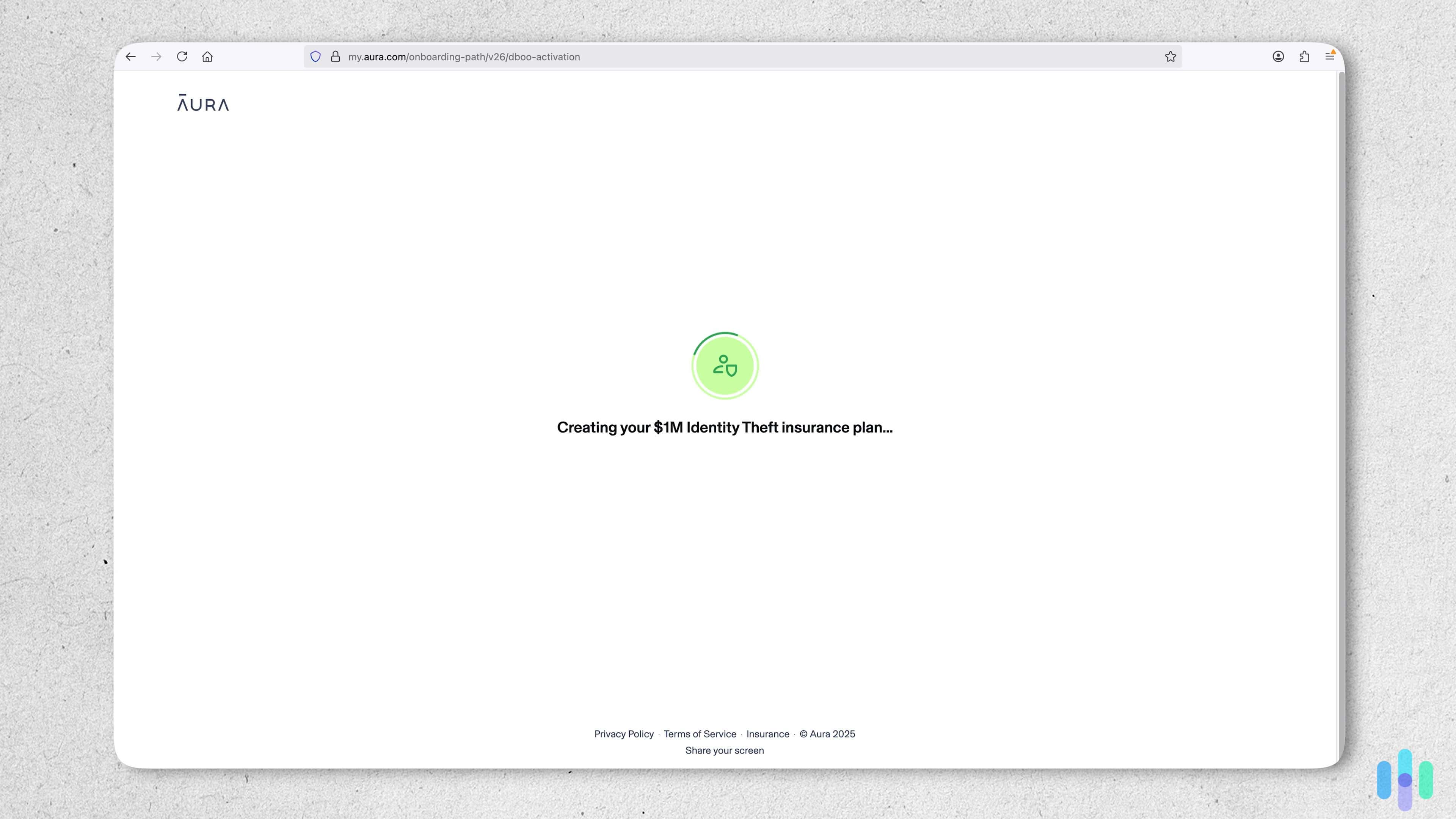
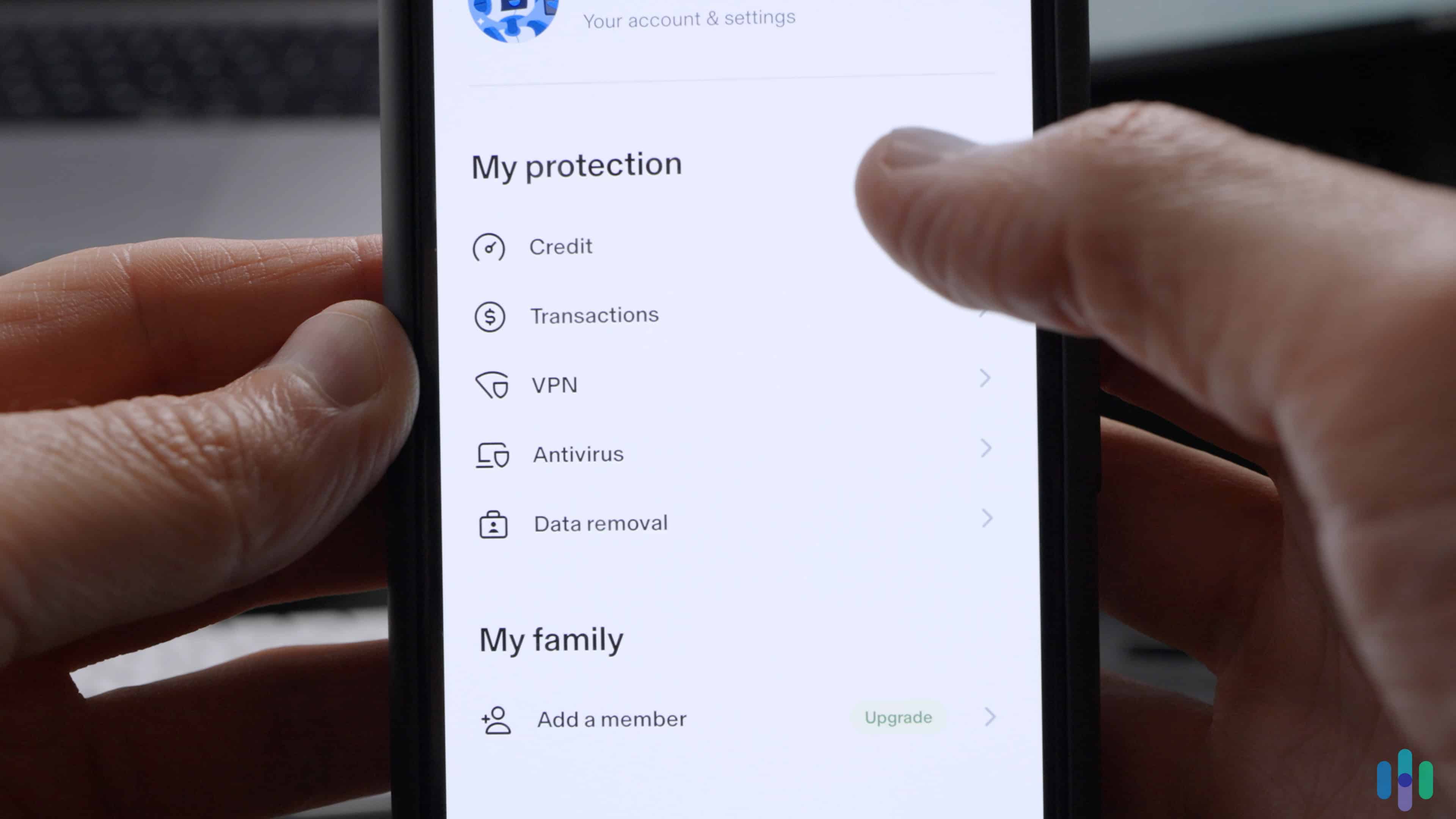
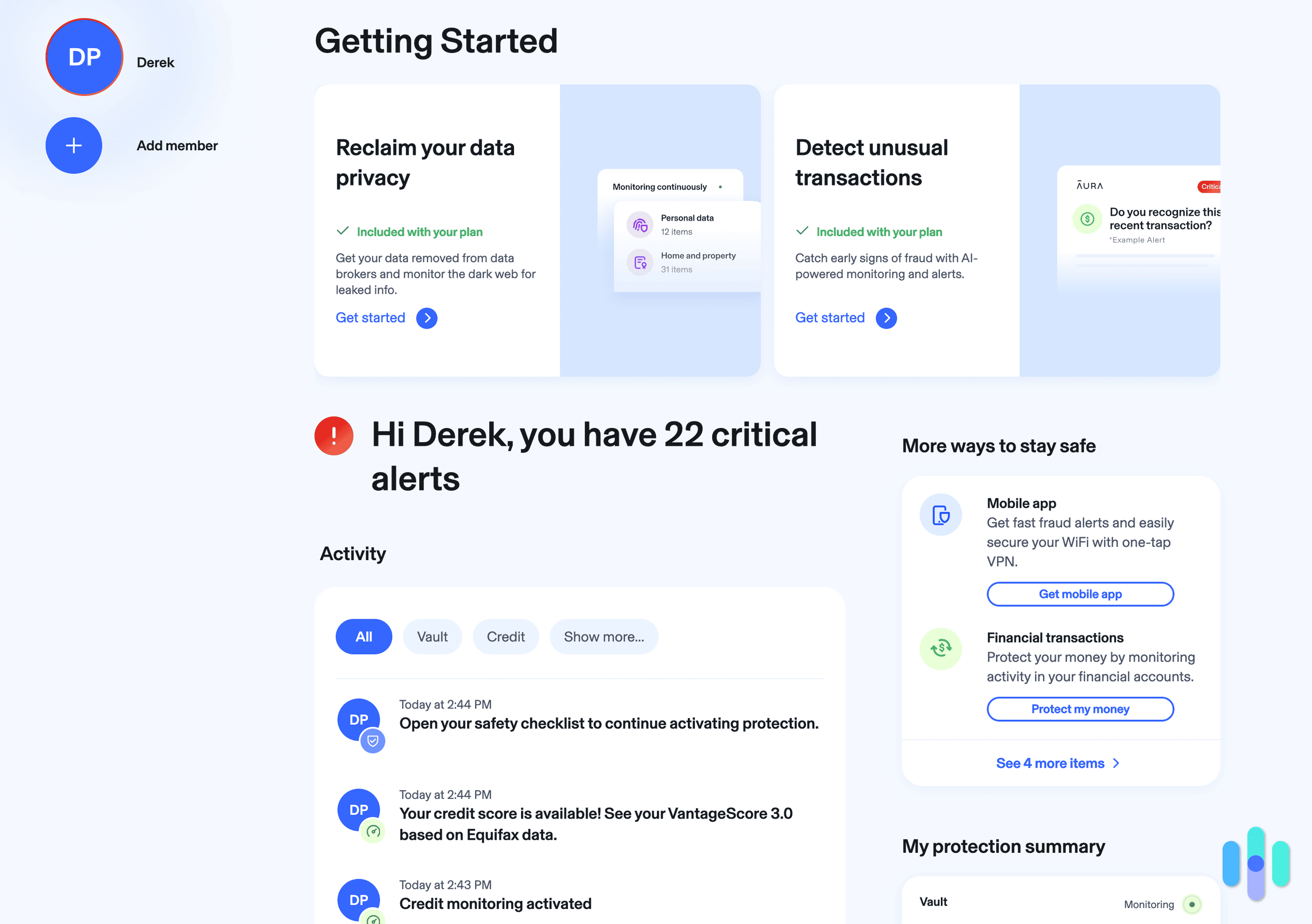
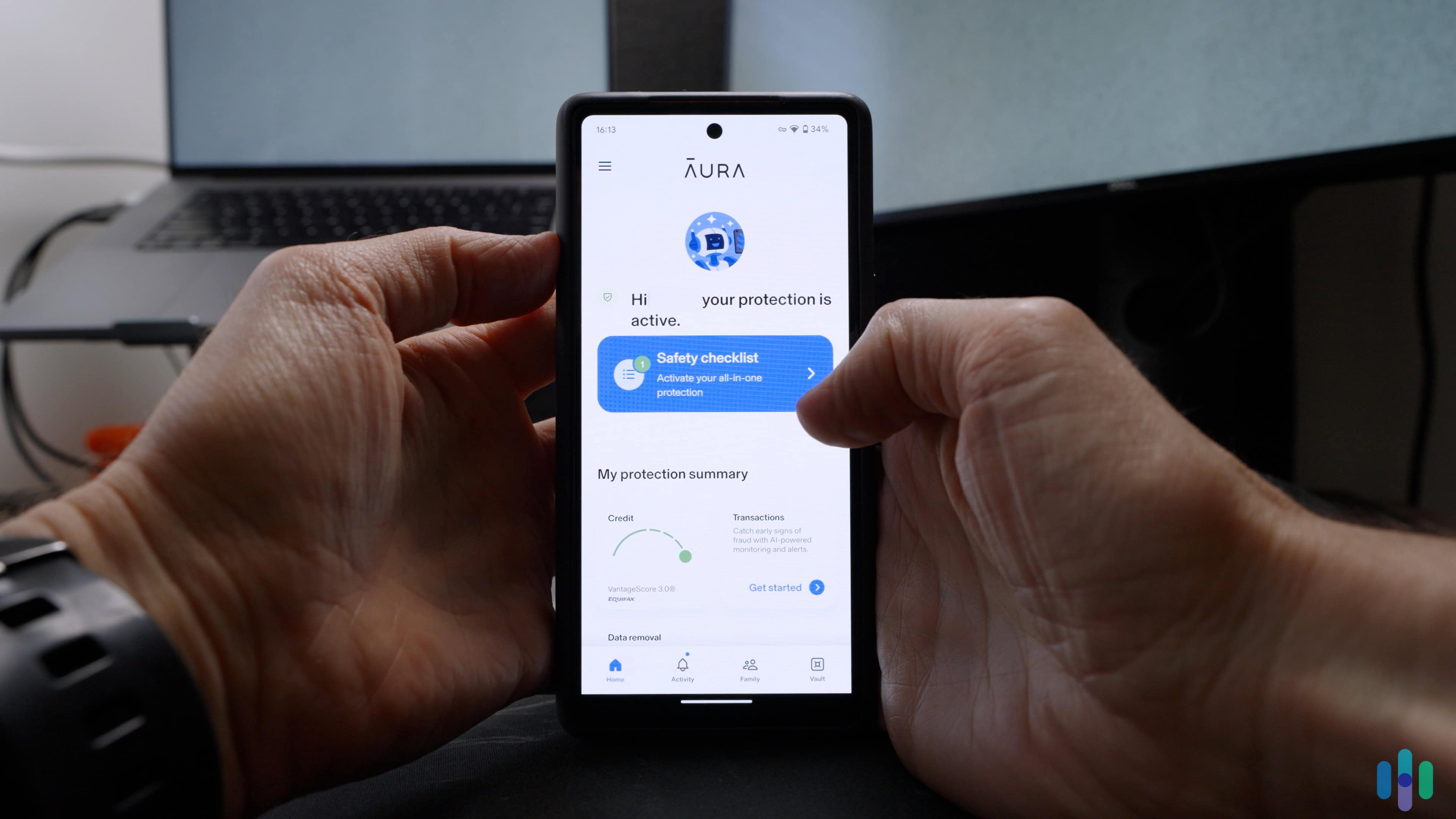
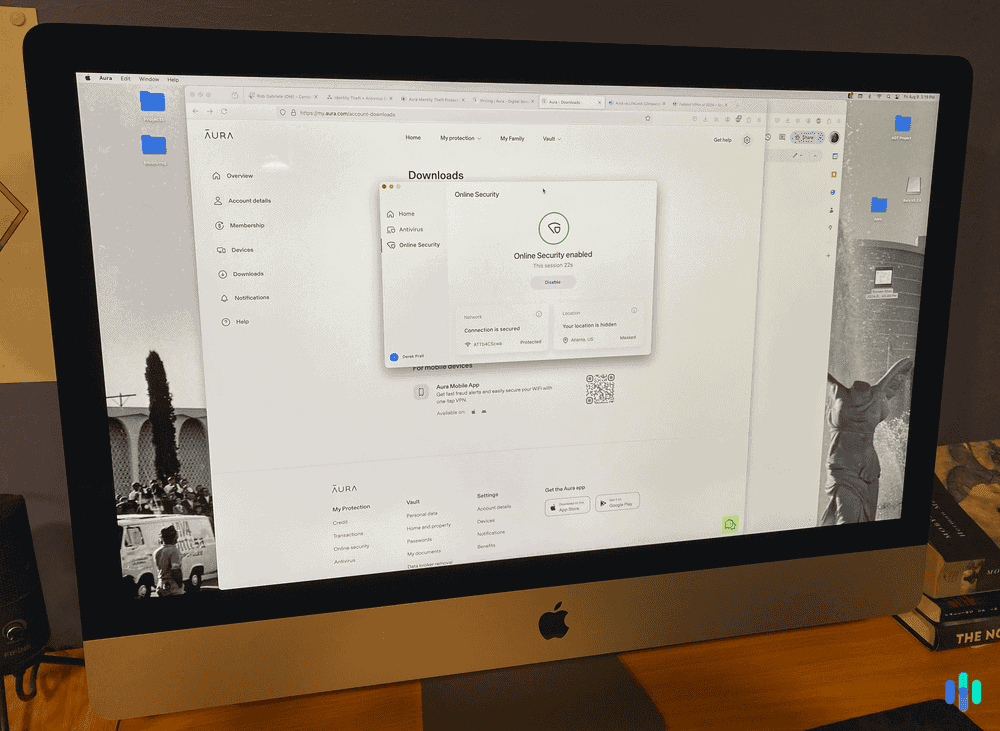
Aura gave us a safety checklist that included antivirus protection, password management, and identity theft protection Every Aura plan covers dark web sources, your SSN and personal information, financial accounts across banking, credit, and investments, home and auto titles, and criminal and court records. The one place that consistency breaks down is scam call, text, and email protection. This comes standard on Family plans, but Individual and Couple subscribers have to add it on.
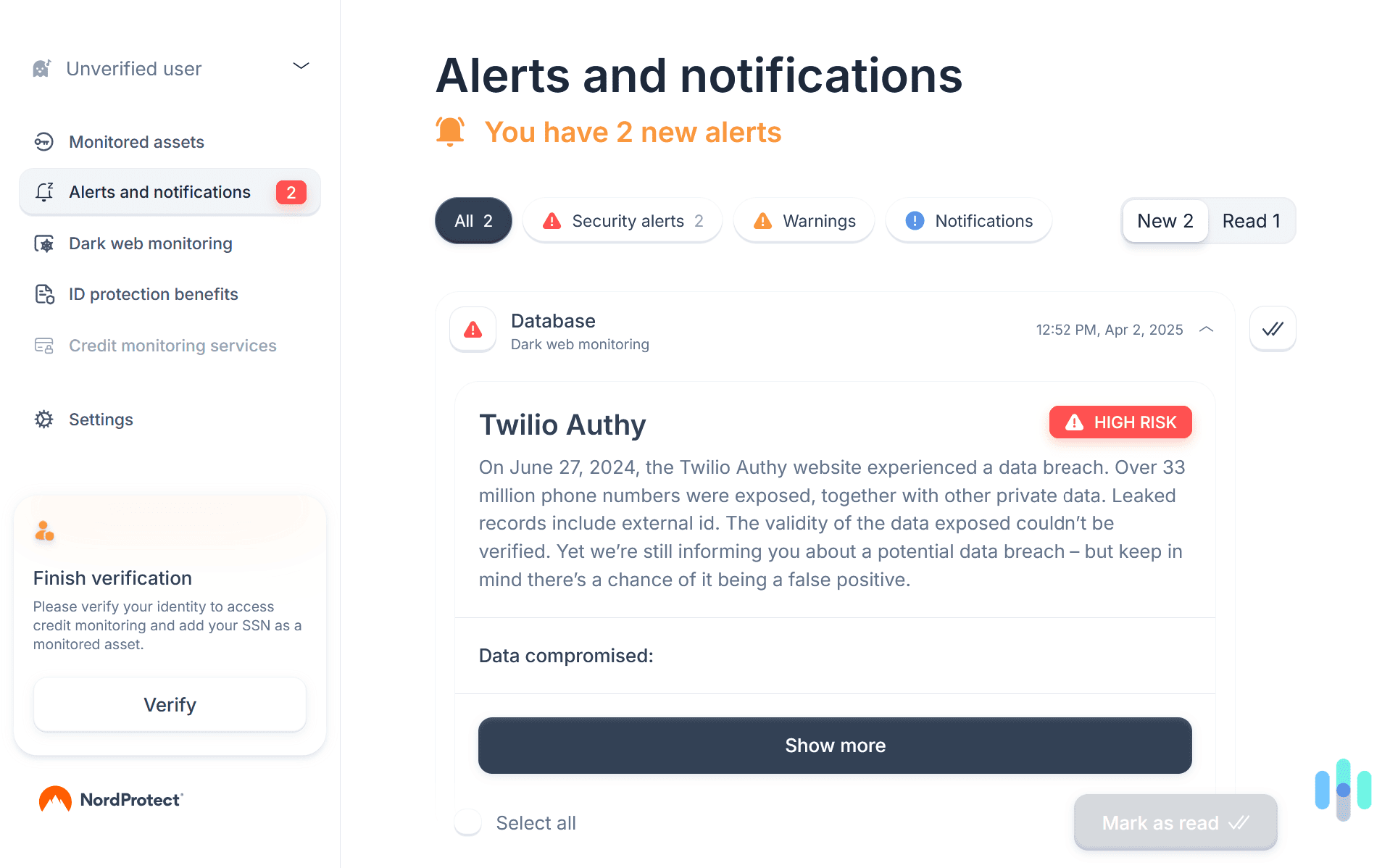
Where Aura impressed us was the speed of alerts. We went through Aura’s fraud remediation process ourselves and were handed off to a dedicated U.S.-based case manager who set up three-way calls with our bank and credit bureaus on our behalf. It felt like a real hands-on resolution, rather than a generic checklist to follow. Paired with dark web monitoring that caught a past breach shortly after we finished setup, Aura is a service built to move fast on detection and recovery.
Aura Pricing
At $15 per month, or $12 per month on average billed annually, Aura’s Individual plan is the only one on this list where the price doesn’t buy you a smaller feature set. Other Aura plans scale the same monitoring and remediation support to more people rather than gating features behind a higher tier. The scam call add-on is one of the exceptions, available only through the Family plan or as an add-on. We suggest picking a plan based on how many people will be needing it — Individual if it’s just you, Couple if it’s you and one other household member, and Family if you’re protecting the entire household (up to 5 adults). Then, you can layer in Scam and Spam Call Protection via the app once set up.
-
3. Coveron - Best for Budget-Friendly Scam and Fraud Insurance
 Get Coveron Links to Coveron
Product Specs
Dark Web Monitoring Yes Credit Reporting Yes (Full Protection tier only) Insurance Coverage Up to $2 million Free Trial None — 30-day money-back guarantee Individual Monthly Plans $2.99 and up (2-year plan) Family Monthly Plans $15.99 and up (2-year Couple plan)
Instead of leading with detection breadth, Coveron leads with the payout. Online fraud reimbursement comes bundled into every Coveron plan, with cyber extortion coverage added starting on the Identity Theft Protection tier. This makes Coveron worth a look for anyone who cares less about monitoring every possible angle and more about having access to funds if a scam-specific loss actually happens.
What We Like
- Affordable plans starting at $2.99 a month
- Online fraud reimbursement on every tier, with cyber extortion coverage starting at the Identity Theft Protection plan
- Malware breach alerts on all plans
What We Don’t Like
- Cheapest plan offers no identity or credit monitoring
- $100 deductible per incident
- Not available in all U.S. states
- Credit monitoring limited to one bureau unless you upgrade to top plan
Fraud Detection and Monitoring Inclusions

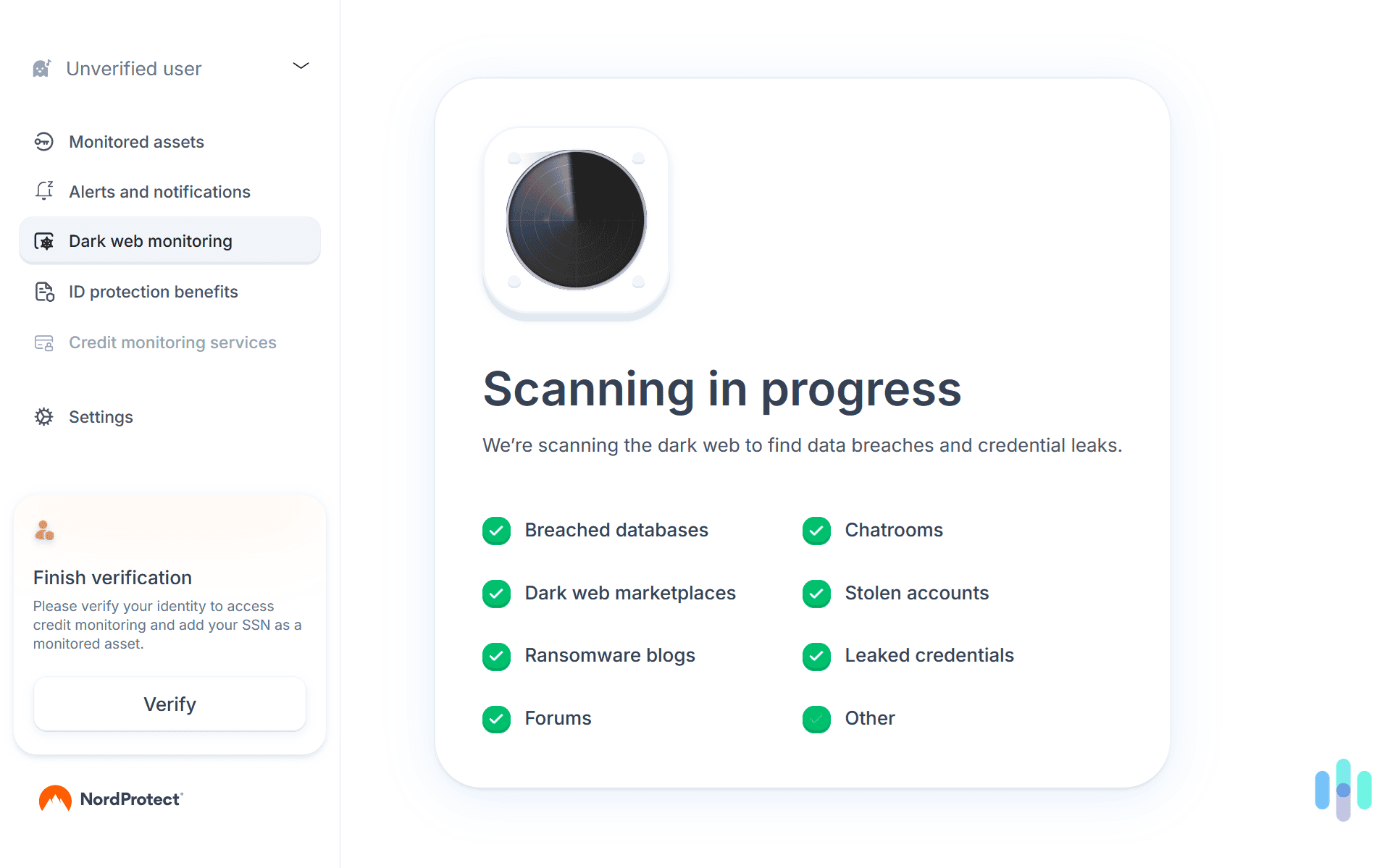
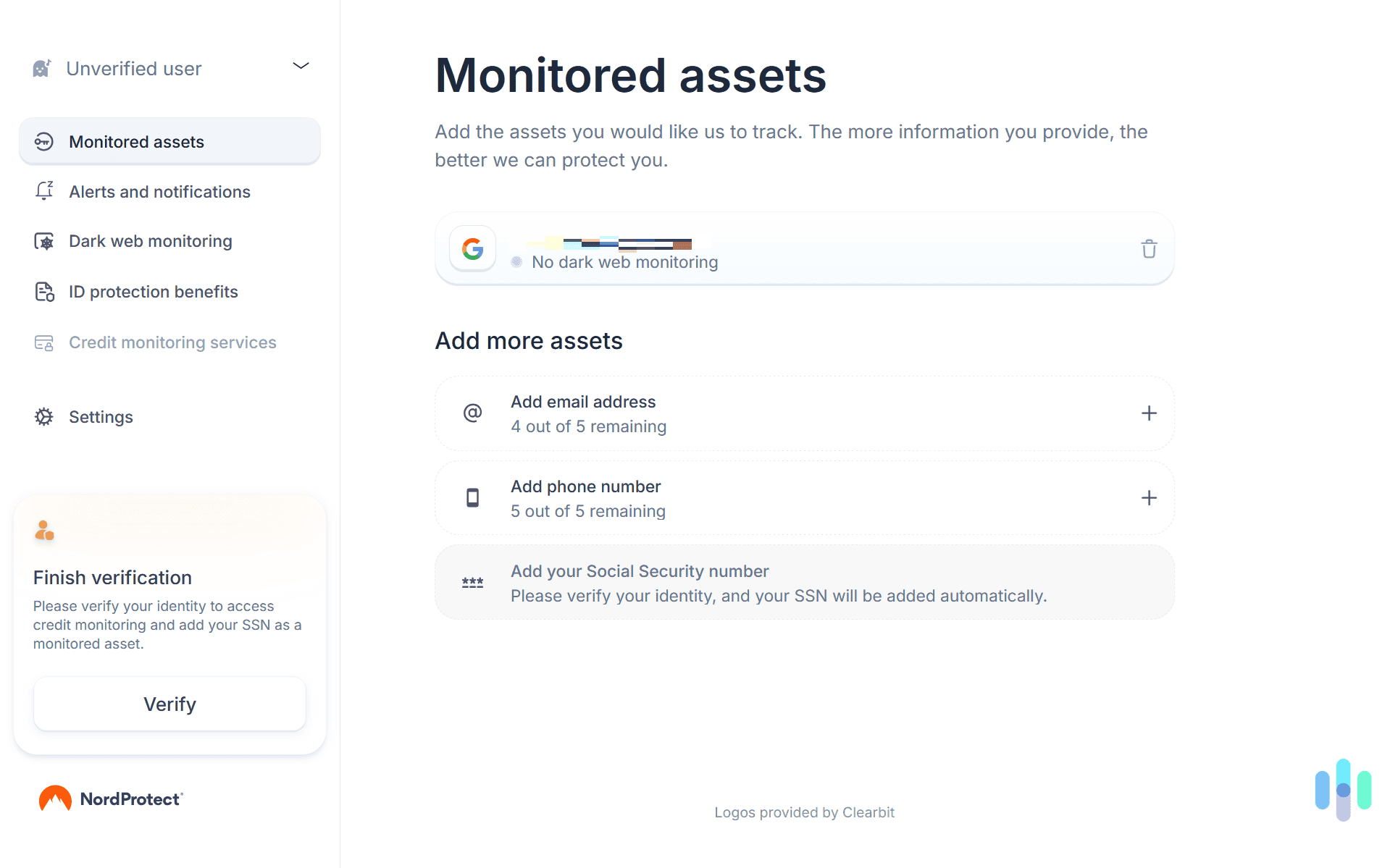
Coveron is upfront about how many assets it can monitor on the dark web. Scam Protection, the cheapest Coveron plan, skips identity and credit monitoring and only offers cyberattack and online fraud insurance. If you want identity theft protection, the next tier keeps that same insurance and adds credit and financial account tracking, up to $2 million in identity theft recovery coverage, a $50,000 cyber extortion policy, and $25,000 in home title fraud coverage. Full Protection adds three-bureau credit monitoring and a Nord Security bundle (VPN, antivirus, data removal).
We put the dark web monitoring to the test and it caught a data breach involving our email address that several other services missed. Coveron’s dashboard capped us at 10 assets, which can be an email address, SSN, credit or debit card, or phone number. That’s not a deal breaker for us, but it could be for anyone with multiple accounts or identifiable assets. If you want to see how its cyber extortion coverage stacks up elsewhere, our roundup of the best cyber insurance providers digs into that specifically.
Coveron Pricing
Coveron’s Identity Theft Protection plan runs $17.99 per month, or as low as $4.99 per month on a two-year term. That’s a fraction of what LifeLock or Aura charge for comparable tiers. The tradeoff shows up in the fine print rather than the sticker price. For example, Coveron’s insurance carries a $100 deductible per incident, something neither LifeLock nor Aura charges.
Why Fraud Detection Speed Matters
The gap between when fraud happens and when you find out about it is often the difference between a minor inconvenience and a major financial loss. A scammer with even a few hours of unnoticed access to your accounts can open new lines of credit, drain a bank account, or use your Social Security number to file a fraudulent tax return. Watching for early signs of identity theft and having a service that flags them quickly gives you a chance to shut things down before they escalate.
According to identity theft statistics tracked by researchers and the FTC, fraud reports continue to climb.1 Scammers are becoming more savvy and relying on speed and urgency to keep victims from noticing until it’s too late.
FYI: Not every identity theft protection service defines “real-time” the same way. Some monitor continuously and alert you the moment something changes. Others batch alerts daily or weekly. We recommend asking specifically about alert frequency before assuming a service is monitoring around the clock.
Common Scams to Watch For
Fraud detection services exist because scams have gotten harder to spot on your own. A few of the most common tactics worth knowing before they land in your inbox or on your phone:
- Phishing emails and texts that impersonate your bank, employer, or a government agency to get you to click a malicious link. Our phishing guide breaks down the most common red flags.
- Smishing, the text-message version of phishing, which often spoofs a delivery notification or account alert. See our smishing guide for how to spot one.
- Spoofing, where a scammer fakes a caller ID or email address to look like someone you trust. Our spoofing guide covers how it works and what to do if you suspect it.
- Romance scams, where a scammer builds a long-term relationship online before asking for money. Our guide to romance scams walks through the warning signs.
- Pig butchering scams, a longer-running investment fraud that combines elements of romance scams with fake crypto or trading platforms. We break down how it works in our pig butchering scam guide.
Reducing how much real personal information is floating around online is a good place to start. For low-stakes signups (think newsletters, forums, one-off shopping accounts), our free random name generator and random number generator let you create realistic but fake details instead of handing over your real name or a personal PIN. If that service gets breached later, there’s less of your actual identity exposed for a scammer to work with.
What to Do If You’ve Been Scammed
If you think you’ve fallen for a scam or your identity has already been compromised, don’t wait to see what happens. Contact your financial institutions immediately to freeze affected accounts, document everything related to the incident, and file a report with the FTC. Our guide on how to report a scam walks through who to contact and in what order. We also have a guide on what to do if your identity is stolen. It covers the broader recovery process if the fraud went beyond a single scam attempt.
Pro Tip: If a message creates urgency, threatens a deadline, or asks you to act before you can verify who’s really contacting you, treat it as a red flag, especially on social media. Imposter scams resulted in $3.5 billion lost in 2025 and continue to be an ongoing problem.2
Methodology: How We Chose the Best ID Theft Protection Services with Fraud Detection
How We Test Identity Theft Protection Services
Identity theft protection services are not created equal, and our job is to find the ones that provide real protections. Our reviewers enroll in and evaluate every service over a minimum of four weeks, They check bureau depth across Experian, Equifax, and TransUnion, how quickly compromised personal data is flagged, restoration team responsiveness, and identity theft insurance amounts. Our team also evaluates how comprehensively each service tracks personal identifiers, reviews financial monitoring coverage across credit lines and bank accounts, mobile app performance and notification delivery, and whether extras like VPN, antivirus, or password manager add value. We also weigh monthly and annual costs across individual and family plans, what each plan adds at higher price points, and money-back guarantees and refund policies. We make sure the services we recommend hold up when your personal information is actually at risk, in line with our Editorial Guidelines.
What We Looked For
For this guide, we specifically focused on fraud detection performance in addition to identity theft protection. As such, we assessed each service based on:
- Monitoring breadth. We looked at what the services monitored and how effective they were at identifying anomalies.
- Alert speed. We timed how quickly the services notified us of unusual activity and noted the method they used to get our attention.
- Ease of setup and use. We assessed how easy it was to give platforms access to our information and how easy it was to review alerts and recommendations.
- Pricing and value. We calculated the total cost of the service and whether higher tiers are worth the extra investment.
We tested each identity theft service on the same hardware, so we could assess fairly across platforms. Our team also cross-referenced results with independent data from third-party organizations to ensure our findings held up against standardized industry benchmarks.
About Our Team
Security.org is made of an independent team of security experts committed to honest, unbiased identity theft protection recommendations. We have over 20 identity protection and cybersecurity experts who have collectively spent over 25,000 hours of hands-on testing across more than 740 security reviews since 2018. Our work has been cited by The New York Times, TechRadar, and CBS News.
Our identity theft protection testing is headed by Cort Honey, a consumer privacy expert and identity theft protection specialist who has tested hundreds of identity theft protection services, VPNs, and digital privacy tools with a detail-oriented, consumer-first methodology.
The wider team behind our identity protection and privacy coverage includes:
- Brett Cruz. Cybersecurity expert and hands-on product tester, contributing expertise across password managers, VPNs, and cybersecurity software as a contributor
- Ozzie Enriquez. West Point graduate and former Deputy Director of Security at the Missile Defense Agency, U.S. Pentagon, contributing expertise in federal security operations and digital risk assessment as a senior advisor
- Gene Petrino. Former S.W.A.T. commander and law enforcement veteran, contributing 30+ years of law enforcement and security expertise as a senior advisor
- Matthew Adkins. Ph.D.-holding researcher with a track record of testing and ranking 100+ security and privacy products
Our editorial recommendations are never shaped by advertiser relationships or affiliate compensation.
Conclusion
Fraud detection comes down to a tradeoff between how much ground a service watches, how fast it speaks up, and what it costs you to get there. We found that LifeLock covers the most ground and backs it with a scam-detection assistant built to catch trouble as it’s happening, not after.
Aura bets everything on speed and simplicity. Keep in mind that the scam call and text protection requires the Family tier or an add-on. Coveron takes the opposite approach by offering less monitoring depth and more targeted insurance. None of these services can stop a scammer from trying. What separates them is how much time you get back once one does.
FAQs
-
Which identity theft protection service detects fraud the fastest?
Based on our testing, all three services offer real-time detection. LifeLock uses a 24/7 AI scam-detection assistant, while Aura and Coveron send instant alerts when they discover issues.
-
What's the difference between fraud detection and credit monitoring?
Credit monitoring focuses specifically on your credit file and score. Fraud detection covers things like dark web exposure, scam calls and phishing attempts, financial account takeovers, and identity misuse that may never show up on a credit report at all.
-
Do these services stop fraud before it happens?
No. All three are reactive tools that alert you once suspicious activity is detected. They can’t physically prevent a scammer from acting. What they can do is shorten the time between when fraud occurs and when you find out about it, which limits the damage.
-
Does identity theft protection cover scam losses, not just identity theft?
LifeLock includes scam reimbursement up to $10,000. Coveron offers online fraud reimbursement on every tier, with cyber extortion coverage included in the Identity Theft Protection plan.
-
What should I do if I think I've been scammed?
Contact your bank or credit card company immediately to freeze affected accounts, document the incident, and file a report with the FTC. If your broader identity was compromised you’ll also want to place a fraud alert or freeze with the credit bureaus.
-
CNBC. (2026). Imposter scams led fraud reports to the FTC for fifth straight year in 2025, causing $3.5 billion in losses.
-
Federal Trade Commission. (2026). FTC Data Show People Reported Losing $3.5 Billion to Imposter Scams in 2025.